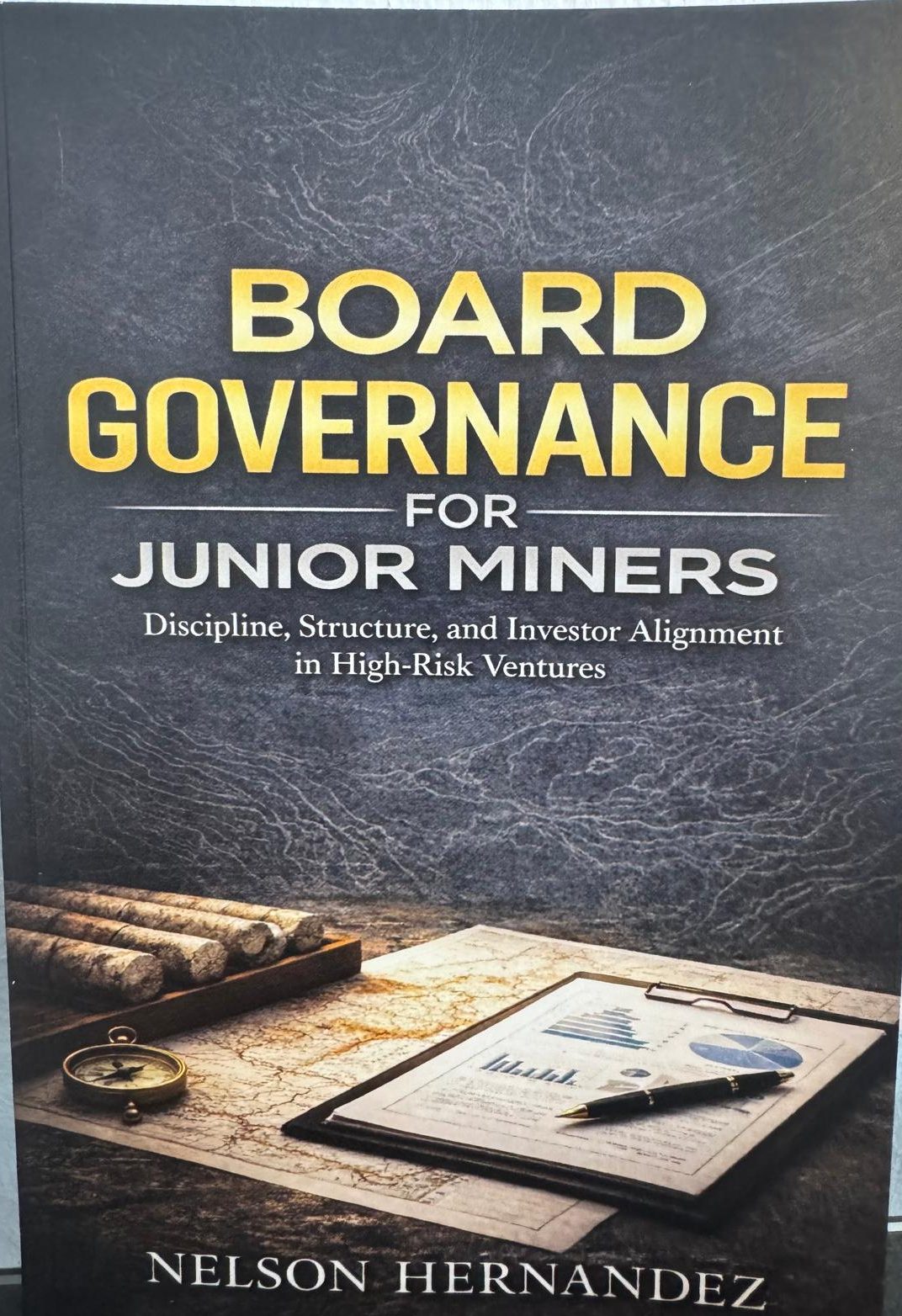
Opportunity — The Third Pillar of the Mining SCOREcard™
by Yogi Nelson
Welcome to the third pillar of the SCOREcard: O for Opportunity! This is where junior mining investing gets really interesting–potential profits or dollar disaster! No longer is the question what does the company have today. We ask what it might have tomorrow. Keep in mind, the word “might” could mean possibility or strength!
What Are We Really Buying?
Invest in a junior mining company, equals buying an unfinished business. There may be no mine. No revenue. No earnings. Perhaps not even a defined mineral resource. Ouch! If true what am I buying? The big “O”–Opportunity.
Maybe the company has a substantial resource that could become a mine. Or drilling could expand the existing deposit. Perhaps the company controls an entire district containing multiple targets. What if management believes the geology suggests something much larger than anything yet demonstrated. Note the modal verbs in bold, e.g. could, maybe, believes, etc. Are there possibilities? Yes. Could there be value. Yes. Show me–yes!

Existing Value: Show Me What You Have
Start with Existing Value. What has the company already demonstrated? Not press releases? Technical studies from creditable sources. Has it identified a mineral resource? How large is it? What is the grade? How much is inferred, indicated or measured? Has metallurgy been tested? Has the company completed an economic study?
In other words: Show me what you have—not what you hope you have.
This distinction matters. Under established mining disclosure standards, confidence increases as resources move from inferred to indicated to measured. A resource is not automatically a reserve, and mineralization is not automatically an economically viable mine. Sounds like technical or legalse, right? Not to a sophisticated investor using the SCOREcard. They are fundamental.
A million ounces demonstrated through sufficient drilling and geological work are not comparable to management saying, “We think there could be several million ounces here.” Could they be right? Who care! Don’t give equal points for evidence and enthusiasm.
Expansion Value: Can It Get Bigger?
Next comes Expansion Value. Suppose the company has already discovered a legitimate deposit. Excellent. Now I want to know: Is that all there is?
Perhaps the deposit remains open along strike. Maybe it remains open at depth. Maybe additional drilling between existing holes could add ounces or increase geological confidence. Maybe, perhaps, could be, etc. Keep in mind, opportunity without uncertainty wouldn’t be opportunity—it would already be value. That’s the right sentiment.
This is one of the attractions of junior mining. A company can create value not only by finding a deposit but by demonstrating that the deposit is considerably larger than originally believed. But again, show me the evidence.
Where are the existing drill holes? Where is the mineralization open? What geological evidence suggests continuity? Is management drilling logical extensions of something already discovered, or drawing colorful arrows on a presentation? Arrows are cheap. Drill holes are not.
District Value: One Deposit or Something Much Bigger?
District is the word every explorer or junior mining company dreams. A world of multiple deposits. Various types, e.g. gold, copper, and silver. Many deposits. Oh the joy! District Value is the term.
Perhaps the flagship deposit is only the first discovery. Nearby targets may share the same geological structures, alteration patterns or mineralization. There may be multiple deposits capable of eventually sharing roads, power, processing facilities and other infrastructure. The opportunity potentially changes.
“How big can this deposit become?” is the inquiry. That’s a much bigger question. However, big claims require bigger evidence. After all, we all know land packages look wonderful on investor presentations. Thousands of hectares sound impressive. But owning a large amount of dirt doesn’t necessarily mean you own a large amount of value. I want to know why management believes additional deposits exist.
Geophysics? Geochemistry? Surface samples? Historic workings? Previous drilling? Geological analogues?Investors need to take the Missorui motto to heat: Show me the evidence.
Blue Sky: Where Dreams Meet Drill Bits
Finally, we arrive at perhaps the most exciting phrase in junior mining: Blue-sky potential. This is where to quote Linda Ronstadt: “Its so easy to fall in love, its so easy to fall in love…” Everyone loves a blue sky, including your truly. The possibility of a transformational discovery is one of the reasons people invest in junior explorers in the first place.
A few drill holes can sometimes completely change how the market views a company. Red alert–blue sky is also where imagination can outrun evidence. Management presentations are filled with words such as “potential,” “prospective,” “district-scale,” “world-class” and “analogous.” Sure. Maybe.
The Mining SCOREcard™ doesn’t tell me to ignore blue-sky potential. Quite the opposite. I want to identify it. I put it in the correct box: Conceptual Opportunity. Conceptual opportunity deserves consideration, not necessary your dollars.
Not All Ounces Are Created Equal
Opportunity isn’t merely about getting bigger and better. I’ll explain. Suppose additional drilling adds another million ounces of gold. Wonderful. But where are those ounces?
Are they close to existing infrastructure? Are they deeper? Lower grade? Metallurgically complicated? Do they potentially extend mine life? Could they improve project economics? In other words, more isn’t automatically better.
The same principle applies to resource conversion. Drilling that converts inferred resources into higher-confidence categories may not produce a spectacular headline. No giant new discovery. No fireworks. Yet reducing uncertainty can create substantial value. Sometimes proving what you already think you have is just as important as discovering something new.
Catalysts Matter
Does opportunity have a time dimension–it sure does. I want to know what catalyst could cause a re-rate of market value, e.g. drilling, permitting, etc.
I also ask another question: How much money will it take to get there?
A company may have extraordinary geological opportunity but require $50 million of additional exploration before investors know whether the thesis works. Where does that money come from? Remember our first pillar: Strategy & Stewardship. Opportunity does not exist in isolation from capital allocation.
Opportunity Must Be Earned
The Mining SCOREcard™ therefore separates Opportunity into four broad categories:
Existing Value — What has already been demonstrated?
Expansion Value — How much larger or better could the existing deposit become?
District Value — Could the property contain multiple deposits or a much larger mineralized system?
Conceptual Opportunity — What plausible blue-sky potential exists beyond what has been demonstrated?
As we move down that list, potential may increase; certainty decreases. That’s the trade-off. The purpose of the SCOREcard isn’t to eliminate speculation. Junior mining would be pretty boring without speculation! The purpose is to distinguish informed speculation from wishful thinking. We can recognize extraordinary potential without pretending that potential has already become reality. That’s Opportunity and it requires a Show Me attitude!
Sincerely,
Yogi Nelson