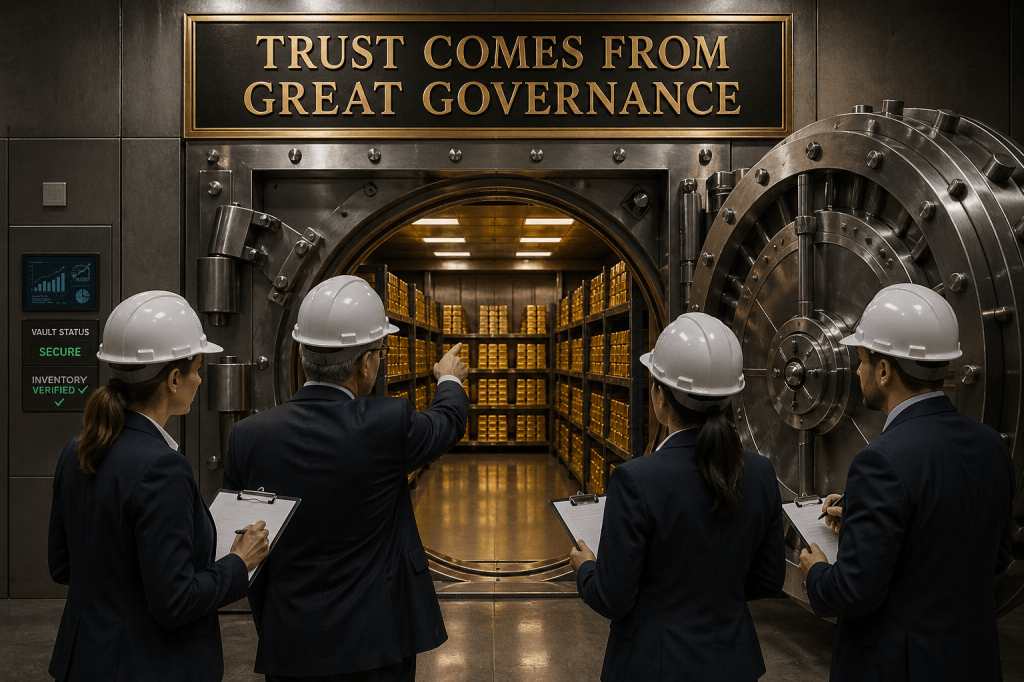
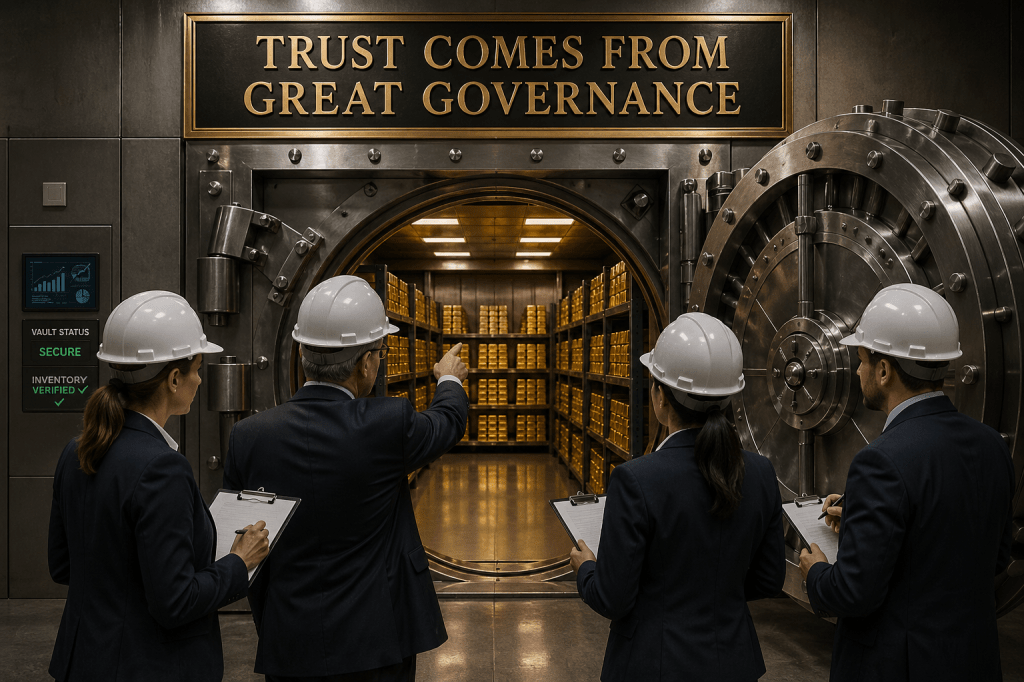
You can own gold tokens on the blockchain. Many people do. You can track every transaction. You can see your balance instantly. It feels precise. Modern. Reliable. But one question changes everything: Where is the metal?
And just as important: Who verifies that it’s actually there?
Tokenization does many things well. It improves efficiency, transparency, and access. But it does not eliminate the need for custody, verification, and governance.
Blockchain can record ownership.
It cannot inspect vaults. It cannot audit inventory. It cannot confirm whether assets are unencumbered.
That responsibility falls to custodians, auditors, and governance structures.
“Proof of reserves” helps—but it is not a complete solution. It can confirm consistency, not necessarily reality. At the end of the day, trust has not disappeared. It has simply moved. And that raises a critical point:
Investors are not just buying a token—they are buying a system of trust behind it.
That system must be examined carefully. Because in tokenization, as in investing generally: Precision is not the same as truth.
You can own gold tokens on the blockchain. Yes, many do. After purchase, the tokens are visible on their screens. Using blockchain, gold token holders can track every transaction ever made. Of course, that feels precise. You might say modern… and perhaps reliable. However, one small, pesky question can ruin the moment: Where is the metal? And just as important: Who says it’s there—and how do you know?
Let’s not be naive—a token representing gold is only as good as the system that ensures that gold actually exists. Is that system a blockchain? Yes, but there is more to it—a lot more. The keys are custody, verification, and proof.
The Chain Behind the Token
Much has been written about blockchain as a trust mechanism—and for good reason. For instance, it records transactions. Blockchain also prevents double-spending. Moreover, it creates a permanent ledger. Everyone who understands blockchain agrees. However, when you understand the tech, you know blockchain does not:
Store gold
Inspect vaults
Verify bar numbers
Audit inventory
Those responsibilities fall to a chain of real-world actors:
Custodians (vault operators)
Auditors (third-party verifiers)
Issuers (token creators)
Sometimes insurers
Each of these introduces:
Judgment
Process risk
And each becomes a point where trust must be earned. Governance teaches what questions to ask. Let’s walk through that exercise now.
Custody: The First Point of Failure
What is the foundation of tokenization? If you answered custody, move to the front of the class. The basic premise is simple: a physical asset is stored somewhere, and a digital token represents it. However, life is often not simple, because beware—simplicity is often deceptive. Therefore, you need to ask penetrating questions such as:
Is the metal allocated or unallocated?
Is it segregated or pooled?
Is it held in a recognized vault?
Who has legal claim in the event of insolvency?
These are not technical distinctions. They are legal and operational realities.
A token holder may believe they “own gold,” but what they actually own depends entirely on the custody structure. In some cases, they own a specific bar, but it could instead be a claim on a pool or, worse yet, a claim on a claim. That’s why we need to discuss verification.
The Problem of Verification
Let us assume, for the moment, that the gold is indeed stored in a reputable vault. Fine. The next question becomes: Who verifies that it is actually there? This is where the concept of “proof” enters the discussion. Tokenized systems often rely on:
Periodic audits
Attestations
Internal reporting
These vary significantly in quality. For example, an audit typically involves:
Independent verification
Physical inspection
Reconciliation of records
By contrast, an attestation may simply confirms that a statement provided by management appears reasonable Those are not the same thing. Yet in many tokenized systems, the distinction is not clearly communicated. As is said in India, “what to do”? The answer: proof of reserves.
Proof of Reserves: A Partial Solution
In response to growing skepticism, many token issuers now promote “proof of reserves.” Promoters may try to present proof of reserves as a technological breakthrough. It’s not. In reality, it is a hybrid concept. Proof of reserves may show:
The number of tokens issued
The assets claimed to back them
But it does not always prove:
That the assets are unencumbered
That they are not pledged elsewhere
That they are held in the stated form
In other words: proof of reserves can confirm consistency—but not necessarily reality. Is it a step forward? You bet. When it comes to governance, there is no substitute for precision, and even that has its challenges, as explained below.
The Illusion of Precision
One of the more subtle, but real, risks in tokenized systems is the illusion of precision. After all, it’s a system built on a foundation of math and cryptography. A blockchain ledger may show:
Precise quantities
Exact timestamps
Strict ownership
This creates a sense of certainty. But precision in the digital layer does not guarantee accuracy in the physical layer. You can have perfect records of imperfect information
This is not a flaw in the technology. It is a limitation of what the technology can verify.
Trust Has Not Disappeared—It Has Moved
The idea of “trustless” systems suggests that trust is no longer required. Wrong. In reality, trust has not disappeared—it has simply moved. For the better? Maybe. Instead of trusting banks, you are trusting:
Custodians
Auditors
Issuers
The question is not whether trust exists. That question is evergreen. The questions are: Where does trust reside—and whether it is justified. Align those questions, and trust increases. Hence, we next examine alignment and misalignment.
When Custody and Governance Align
Strong systems recognize these limitations and address them directly. They incorporate:
Reputable, third-party vaults
Clear legal ownership structures
Regular, independent audits
Transparent reporting
More importantly, they establish:
Oversight mechanisms
Accountability frameworks
In such systems, custody is not just a function—it is governed. And governance ensures that:
Processes are followed
Risks are identified
Discrepancies are addressed
Misalignment–When Governance Fails
Weak systems tend to rely on:
Brand perception
Marketing language
Selective disclosure
They may may also emphasize:
Technology
Innovation
Accessibility
While minimizing discussion of:
Custody arrangements
Audit rigor
Legal structure
These are the systems where problems emerge. Not immediately. Eventually. And always. As an investor, your duty is to ask 100+ probing questions.
The Role of the Investor
This raises an uncomfortable reality: The burden of understanding often falls on the investor. Investors must ask:
Where is the asset?
Who holds it?
How is it verified?
What happens if something goes wrong?
These are not easy questions—but necessary ones. Without clear answers, the token becomes an assumption—not an asset. You know what they say about assumptions!
What Does It All Mean
Tokenization promises efficiency, transparency, and access. Awesome benefits. However, it does not eliminate the need for:
Custody
Verification
Governance
Judgment
Tokenization makes those elements more important. Once an asset is tokenized, it becomes:
Easier to trade
Faster to distribute
Simple to scale
Which also means weaknesses become magnified.
In conclusion the buyer is purchasing more than a token. Investors are buying a system of trust—a system that must be scrutinized, not assumed.
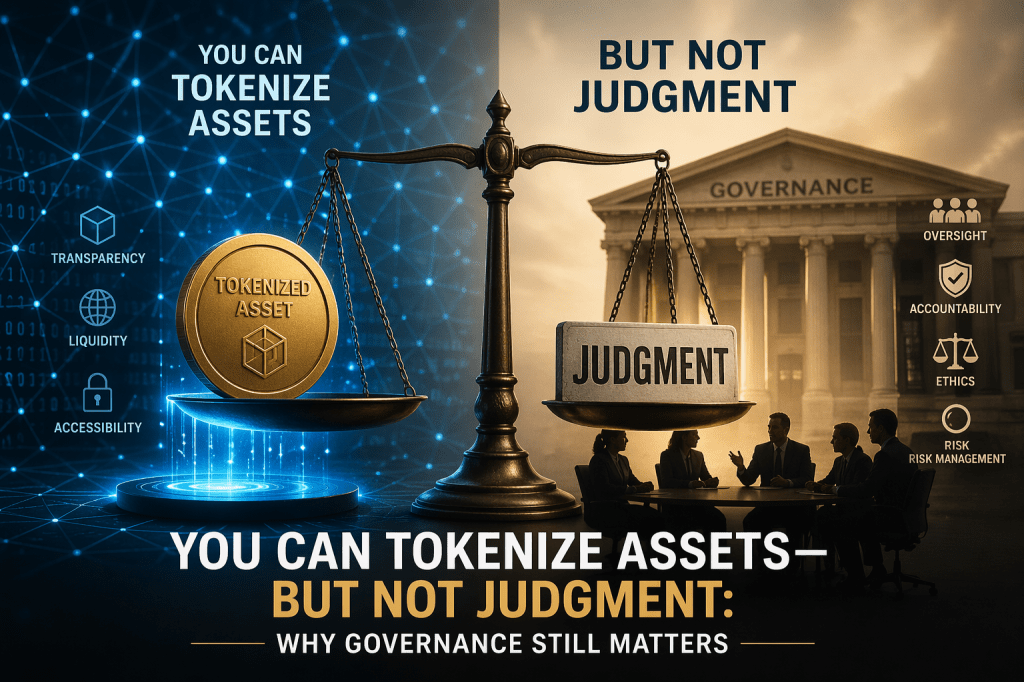
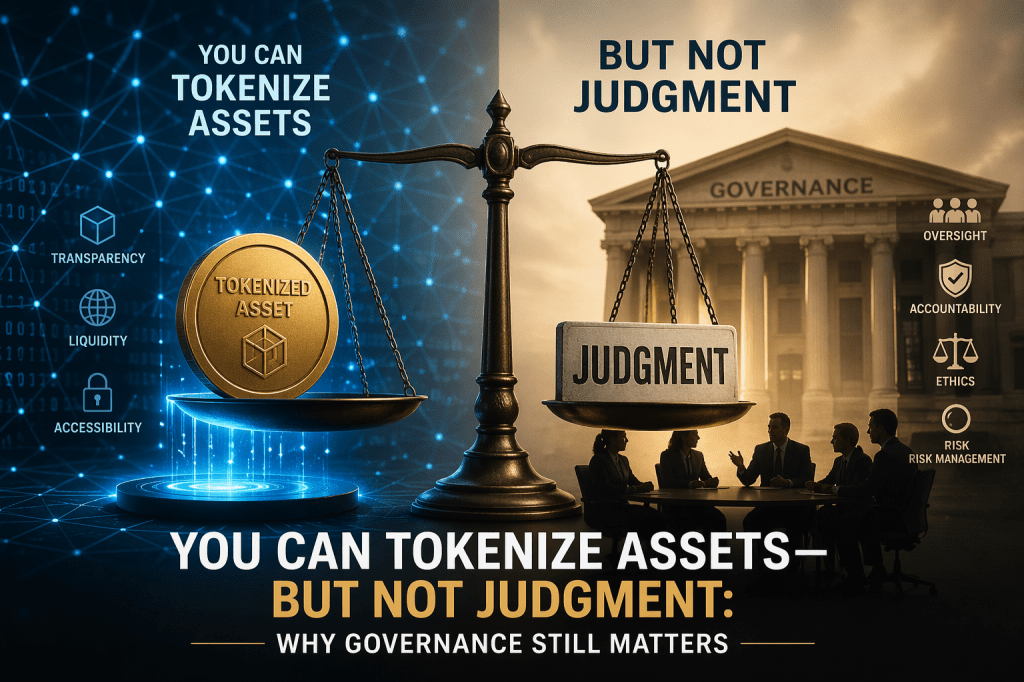
You can tokenize assets. You can tokenize gold, silver, and just about anything of value. But you cannot tokenize judgment. That may be the most important limitation in the entire digital asset conversation.
Tokenization promises transparency, liquidity, and accessibility. It’s a compelling vision—and one that is partially true. But behind every tokenized asset lies something far more fundamental than code: Governance.
Who verifies the asset exists? Who ensures it is properly stored? Who makes capital decisions? Who is accountable when things go wrong?
These are not technical questions. They are governance questions.
The idea of “trustless” systems is often misunderstood. Tokenization doesn’t eliminate trust—it simply shifts it. And without strong governance, that trust becomes more fragile, not less.
As tokenized metals evolve, the real challenge won’t be technological. It will be structural. Investors are not relying on code alone—they are relying on the people, systems, and decisions behind it. Those are governed—not programmed.
Can assets be tokenize? Absolutely yes. The more important question is, can judgement be tokenize? Absolutely not. Ironically, our inability to replace human judgment is the most important limitation in the entire digital asset conversation—because while ownership can be digitized, governance, with its inherently human only elements, cannot be automated away. Decision making requires people. Risk management is a people business. Accountability is evergreen. There is no alternative.
Tokenization has indeed captured the imagination of markets, technologists, and investors alike. By converting real-world assets—such as gold, silver, and other metals—into digital tokens on a blockchain, proponents promise greater transparency, liquidity, and accessibility. It is a compelling vision–one that is also incomplete. Why is that? Because behind every tokenized asset lies something far more fundamental than code: a system of trust, accountability, and decision-making called governance!
What Tokenization Actually Does—and Does Not Do
At its core, tokenization is a method of representation. A token may represent:
A bar of gold in a vault
A share of a mining project
A claim on future production
The blockchain on the other hand provides:
A ledger
Transparency of transactions
Immutable record-keeping
These are important innovations. Nevertheless, neither answer critical questions:
Who verifies that the gold actually exists?
Who ensures it is properly stored and insured?
Who decides how a mining project allocates capital?
Who steps in when something goes wrong?
These are not technical questions. They are governance questions.
The Illusion of “Trustless” Systems
One of the most common narratives in tokenization is the idea of a “trustless” system—one in which technology replaces the need for trust. This is misleading and here’s why.
Tokenized metals still depend on:
Custodians
Auditors
Operators
Issuers
Each of these actors introduces:
Judgment
Incentives
Potential conflicts
Blockchain may reduce certain forms of risk, but it does not eliminate the need to trust: it simply shifts where that trust is placed. What’s worse, without excellence in governance the trust becomes more fragile and opaque–not less.
Where Governance Enters the Equation
Governance is not a theoretical construct. It is a practical framework that answers fundamental questions:
Who is responsible for what?
How are decisions made?
How are risks monitored and managed?
How are stakeholders protected?
In the context of tokenized metals, governance must address several layers:
1. Asset-Level Governance. Is the Underlying Asset:
Real
Properly stored
Independently verified
2. Operational Governance. Are the Entities Involved:
Competent
Accountable
Subject to oversight
3. Financial Governance. How are:
Revenues managed
Costs controlled
Capital allocated
4. Disclosure and Transparency. Are investors receiving:
Accurate information
Timely updates
Balanced reporting
These are the same governance questions that exist in traditional finance. Tokenization does not remove them. It amplifies them.
The Mining Parallel
The tokenization of metals ultimately connects back to physical mining. Before a token can represent gold or copper, that metal must be:
Discovered
Developed
Extracted
Mining is capital-intensive, high-risk, and operationally complex. To paraphrase legendary natural resources investor, Rick Rule, weak governance in mining leads to poor outcomes—regardless of asset quality.
Projects fail not only because of geology, but because of:
Poor capital discipline
Lack of oversight
Conflicts of interest
Weak boards
Tokenization does not fix these problems. If anything, it can obscure them—by placing a digital layer over an imperfect foundation.
Governance as a Value Multiplier
When governance is strong, it does more than reduce risk. It creates value. In tokenized metals, strong governance can:
Increase investor confidence
Improve capital access
Enhance credibility with institutions
Support long-term sustainability
Investors are not simply buying tokens. They are buyingthe integrity of the system behind those tokens and that integrity is built through governance.
The Role of Boards and Oversight
At the center of governance is oversight of management. Boards and governing bodies must ensure that:
Systems are functioning as intended
Risks are identified and addressed
Decisions are aligned with long-term value
In many tokenization discussions, governance is treated as secondary—an afterthought once the technology is in place. What a mistake! To be most effective governance must bedesigned in from the beginning—not added later.
The Risk of Getting It Wrong
The risks of weak governance in tokenized metals are significant:
Misrepresentation of assets
Operational failures
Loss of investor confidence
Regulatory intervention
In a worst-case scenario, technology can accelerate the spread of problems rather than contain them. A flawed system, once tokenized, becomes:
More scalable
More visible
More fragile
Regulation Is Not a Substitute
Commentators may argue that regulation will fill the governance gap. That is not the job of the government, nor should it be. As a former government regulator I understand regulation is important—but it is not sufficient. Regulators:
Set minimum standards
Enforce compliance
They do not:
Run companies
Make daily decisions
Replace effective boards
Building Governance into Tokenization
For tokenized metals to reach their potential, governance must be integrated into the design of the system. This includes:
Clear roles and responsibilities
Independent oversight
Robust audit processes
Transparent reporting
Alignment of incentives
It also requires a shift in mindset, from technology-first, to structure-first.
What This Really Means
Tokenization is a powerful tool. It has the potential to reshape how assets are owned, traded, and accessed. However, it is not even a poor substitute for governance. Rather, it is a layer built on top of governance.
Get the governance right, and tokenization can enhance value, transparency, and trust. Get it wrong, and no amount of technology will compensate. Because in the end investors do not rely on code alone. They rely on the people, structures, and decisions behind it. And guess what? Those are governed–not programmed.
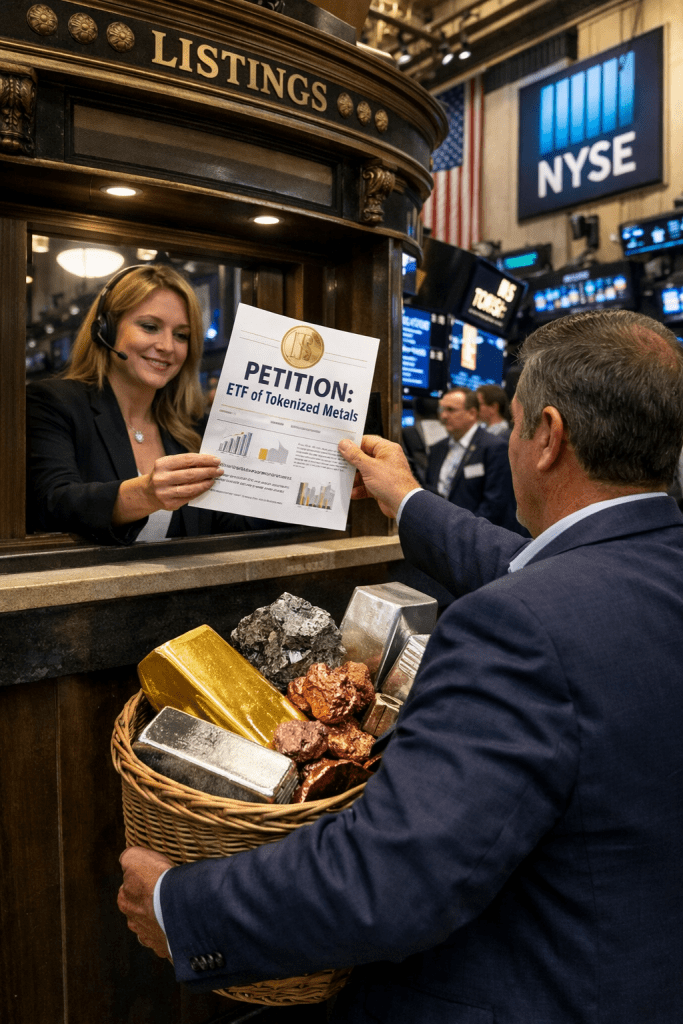
One basket. Multiple metals. A new way to think about exposure.
Multi-metal token baskets could become the digital version of a metals ETF—combining gold, silver, and industrial metals into a single, tokenized instrument.
Simple on the surface. Complex underneath.
They promise:
Diversification
Transparency
Global access
But they also raise important questions:
Who holds the metal? Where is it stored? What happens under stress?
Tokenization doesn’t eliminate these issues—it reveals them.
The future of metals may not be just about what you hold… But how it’s structured.