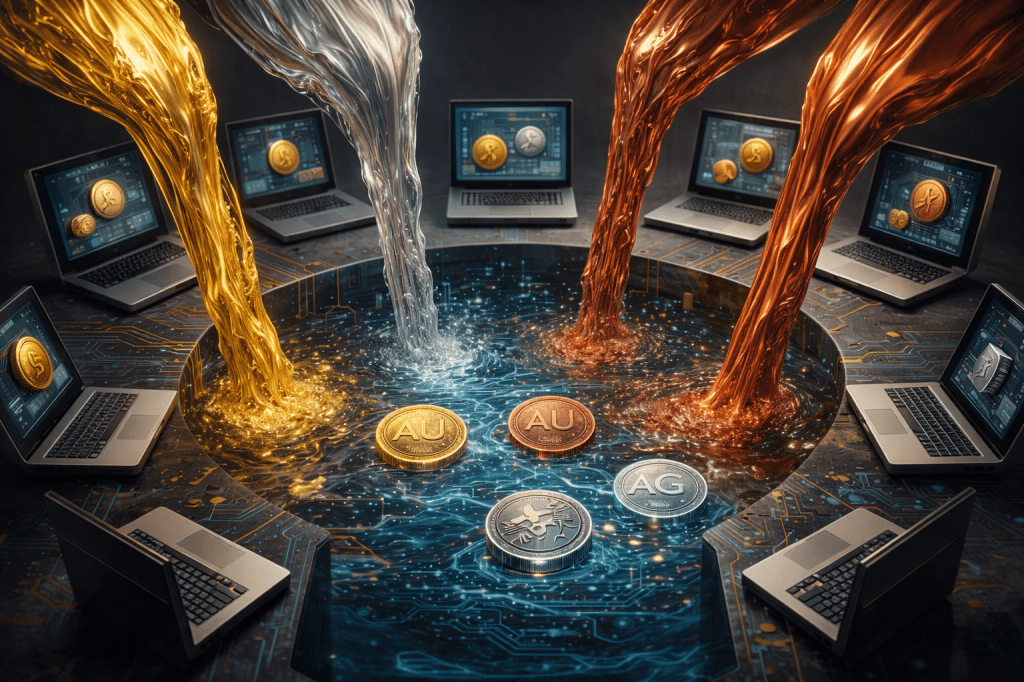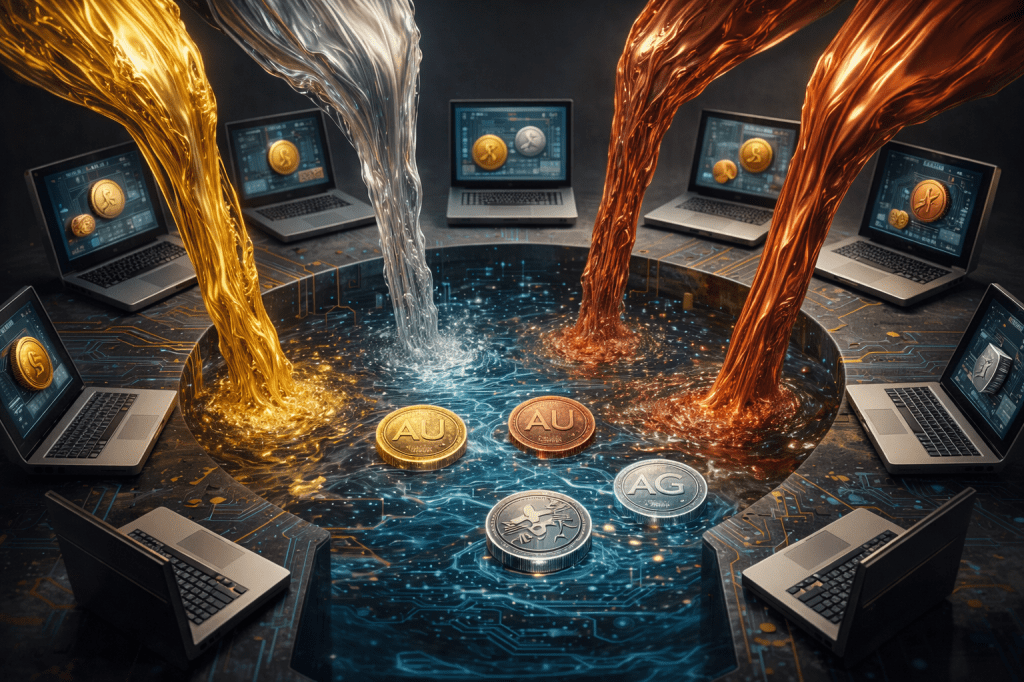
Rhodium is one of the rarest metals on Earth—far rarer than gold or silver—and yet it plays a critical role in modern life. Most people never see it, but without rhodium, today’s emissions standards would be nearly impossible to meet.
As real-world assets (RWAs) move onto blockchain rails, it is natural to ask: Can rhodium be tokenized?
After digging into its supply structure, price behavior, and industrial demand, the answer—for now—is not really.
Rhodium is:
Almost entirely a byproduct metal
Geographically concentrated in a handful of countries
Extremely volatile, with thin and opaque spot markets
Driven by regulation, not investor demand
Tokenization works best where liquidity, transparency, and broad participation already exist. Rhodium meets none of those conditions today.
That does not mean rhodium has no digital future. In a mature RWA ecosystem, tokenized rhodium may emerge quietly—used by industry players for settlement, inventory finance, or compliance rather than speculation.
Not every metal belongs on a blockchain. And rhodium reminds us that “not yet” is sometimes the most honest answer.
Gold tells the story of money. Silver tells the story of versatility. Palladium tells the story of technology, regulation, and fragility.
Long before catalytic converters made palladium famous, it was already a high-tech metal—used in electronics, chemical catalysis, and dentistry. What changed everything was environmental regulation. As emissions standards tightened, palladium became indispensable to gasoline-powered vehicles, eventually accounting for roughly 80% of global demand.
At the same time, supply remained extremely constrained. Palladium is mined primarily as a byproduct, with production concentrated in just two nations. That combination—industrial necessity and limited supply—has made palladium one of the most volatile precious metals of the past two decades.
This is precisely why palladium is a compelling candidate for tokenization.
Tokenized palladium can provide: • Transparent, on-chain ownership • Faster settlement in volatile markets • Fractional access to a scarce industrial asset • Improved supply-chain visibility
Unlike traditional futures or ETFs, tokenization is not synthetic exposure layered on top of complexity. It is direct, verifiable access to a real-world metal that modern technology depends on.
Palladium is not a monetary metal. It does not rely on mythology or tradition. Its value comes from physics, chemistry, and regulation—and in a high-tech age, that makes it a natural fit for blockchain-based infrastructure.
Tokenized palladium is not about hype. It is about alignment—between physical reality and digital systems.
Platinum has been tokenized, albeit in limited and experimental forms, since roughly 2019, but unlike gold and silver, it has yet to see a globally liquid, institutional-grade on-chain breakthrough—making it one of the most compelling “next metals” for tokenization. Of course, we already know tokenized gold first emerged in 2017, when blockchain technology was used for the first time to represent direct ownership of vaulted physical gold on-chain. What about silver? When was it first tokenized? Not surprisingly, after gold, in 2018. One year later came platinum.
Platinum does not rely on tradition, mythology, or monetary nostalgia to justify its relevance. If those factors don’t drive platinum, what does? Platinum matters because modern civilization cannot function without it. Platinum is a quiet essential metal. It is embedded in emissions systems, chemical processing, medical technology, and the emerging hydrogen economy.
Blockchain technology has moved beyond novelty to necessity. What’s more the evolution of blockchain is fantastic news for platinum. That means platinum enters the conversation at precisely the right moment—not as a store of ancient wealth, but as a critical industrial asset whose supply, custody, and pricing demand modernization. Although platinum is clearly different from gold and silver, that doesn’t mean tokenization is not viable, to the contrary. Despite the differences, the bull case for tokenized platinum is strong. Let’s start with a few fundamental differences between the metals.
What Makes Platinum Different
Platinum belongs to the platinum-group metals (PGMs), a family known for exceptional catalytic properties, heat resistance, and chemical stability. Keep those characteristics; they drive the demand for platinum.
Several characteristics distinguish platinum sharply from gold and silver:
Extreme scarcity: annual global platinum production averages under 200 metric tons. Annual production of gold is 3,000 metric tons, while silver is approximately 26,000 metric tons.
Geographic concentration: roughly three-quarters of supply comes from South Africa, with most of the remainder from Russia. Two nations rather than the 194 worldwide!
High production costs: platinum is difficult and expensive to extract and refine
Limited substitution: in many applications, platinum has no perfect replacement
These constraints make platinum uniquely sensitive to supply disruptions, geopolitical risk, and technological demand shifts. Tokenization does not change these fundamentals—but it makes them visible, auditable, and tradable in ways legacy markets struggle to achieve.
Monetary Metal or Industrial Metal? (The Platinum Distinction)
Gold is money, a store of wealth. Period. It is not currency. Silver is a combo platter. It straddles the line between money and industry. It has been, is, and will likely continue to be, money, a currency and industrial metal. Platinum, as with gold, has one primary use. But unlike gold, with its use as money, platinum is industrial, and industrial only. And what are those industrial applications? I’ll give you five:
Catalytic converters for emissions control
Chemical and petroleum refining
Medical devices and pharmaceuticals
Electronics and data storage
Hydrogen fuel cells and clean-energy systems
The upshot is platinum’s price behavior is driven less by investor sentiment and more by regulation, technological adoption, and industrial growth cycles. Tokenization allows markets to better reflect this reality—connecting industrial demand directly with transparent supply and ownership.
Why Platinum Is a Natural Fit for Tokenization
Tokenization solves certain problems and does so exceedingly well, under certain circumstances. Tokenized platinum just so happens to fit the bill. Consider the following:
Scarcity and Verifiability Platinum bars are already standardized, serialized, and assayed. (Assayed means a metal that has been tested for purity, metal content, authenticity, and conformance to standards). This makes platinum bars ideal candidates for 1:1 on-chain representation backed by vaulted physical metal.
Liquidity Constraints Platinum markets are tiny–much smaller than gold or silver. Tokenization enables fractional ownership, global access, and continuous trading without requiring physical delivery. Analogous to COMEX and LBMA markets, but with verified inventories!
Settlement Inefficiencies Traditional platinum trades can involve long settlement cycles and counterparty risk. Blockchain settlement dramatically reduces settlement time to minutes or perhaps seconds, and significantly does away with counterparty risk.
Global Accessibility Tokenized platinum can be accessed without brokerage accounts, national market hours, or legacy intermediaries. On-chain transaction tomorrow means, breaking the chains that limit markets today.
While all that is true, remember tokenization does not reinvent platinum—it modernizes access to it.
Tokenized Platinum vs. Traditional Platinum Products
Platinum exchange traded funds (ETFs) and futures contracts already exist. However, those financial products are abstractions layered atop complex custodial and regulatory structures. In 2026 and beyond, investors want what tokenization offers, specifically:
Direct ownership rather than synthetic exposure
On-chain transparency of reserves and transfers
Programmable compliance and auditability
Global reach independent of local financial infrastructure
Where ETFs represent claims, tokenized platinum represents digitally native possession backed by physical reality. This distinction mirrors the evolution seen in tokenized gold and silver—and completes the progression.
Real-World Use Cases Beyond Investment
Tokenized platinum’s utility extends well beyond speculation.
Industrial Hedging Manufacturers can hedge platinum exposure directly on-chain, reducing reliance on opaque derivatives markets. What you see is what you get!
Supply-Chain Traceability Blockchain tokens can track platinum from mine to refinery to end use, supporting ESG compliance and regulatory reporting. Platinum buyers can be sure of what is happening as it happens.
Corporate Treasury Assets Energy, transportation, and clean-technology firms may hold tokenized platinum as a strategic reserve asset aligned with operational needs. For instance, a car manufacturer may want to buy platinum, put it in storage, and draw it down as needed and where needed, using the blockchain.
On-Chain Collateral Platinum tokens can serve as collateral in decentralized finance systems, anchoring digital credit to physical industry. It’s unlikely a bank will offer a high debt to loan value if the collateral is platinum due to the limited number of potential buyers in case of a liquidation. Nevertheless, for a sophisticated lender, who understands the platinum market well the possibility exist.
This is where tokenization becomes infrastructure, not ideology.
Risks, Constraints, and Realism
Is tokenization risk-free. No way. Nothing is risk-free. In the case of platinum, below are some risk factors:
The market is smaller, increasing volatility
Custody standards must remain rigorous
Regulatory frameworks vary by jurisdiction
Adoption will be gradual rather than explosive
Tokenization does not eliminate these challenges—but it forces transparency, which is often the first step toward stability.
Long-Term Outlook: Platinum’s Quiet Permanence
Gold appeals to philosophy. When gold is strong, that often means geopolitical trouble is brewing. Silver is Mr. Versatility. He can be money. He can be industrial. He can be both. Platinum equals necessity. Platinum isn’t going to dominate headline news in the tokenized metals space—that is not a weakness.
As blockchain infrastructure matures and real-world asset tokenization becomes standard, platinum’s combination of scarcity, industrial indispensability, and constrained supply positions it as a permanent on-chain asset, not a speculative trend. Once tokenized properly, platinum is unlikely to leave the blockchain—because modern industry is unlikely to function without it.
Until next time,
Yogi Nelson
Sources
World Platinum Investment Council (WPIC) – Platinum Quarterly Market Review U.S. Geological Survey (USGS) – Mineral Commodity Summaries: Platinum Group Metals Johnson Matthey – Platinum Group Metals Market Report International Energy Agency (IEA) – Critical Minerals and Clean Energy Transitions World Bank – Minerals for Climate Action
For hundreds of years, perhaps more, silver has lived in gold’s long shadow as a store of value. That’s why some folks call silver “poor man’s gold”. Silver stackers don’t mind being called “poor”. Lol! And yes, it’s true silver is more volatile than gold. And it’s also true silver has often been overlooked except during brief moments of speculative frenzy. Fine. But the question we face today is what will tokenized silver mean for utility, value, use, and price? Since tokenized silver is clearly a possibility, let’s explore all those questions and more. Remember, tokenized silver is not merely about price appreciation. It is about structure, accessibility, industrial relevance, and a monetary metal finally finding a digital form that suits its dual identity.
Silver’s Dual Personality: Money and Machine
Silver is unique among precious metals because it straddles two worlds. On one side, it is a monetary metal with thousands of years of history as coinage, savings, and settlement. On the other, it is an industrial metal embedded in the modern economy—electronics, solar panels, medical devices, electric vehicles, and advanced manufacturing all depend on it. A combo all investors love.
This dual role has long complicated silver’s investment narrative. Gold is a safe haven; it often thrives when fear rises and trust erodes. Silver responds to monetary stress, industrial cycles, technological adoption, and supply bottlenecks. The result is volatility—sometimes dramatic, sometimes punishing. For instance, in 1980 silver surged to $50 only to crash to $10 by 1982.
Yet that same complexity makes silver a natural candidate for tokenization. Does a blockchain ask whether an asset is “purely monetary” or “purely industrial?” Nope. Blockchains only ask whether ownership can be clearly defined, transparently recorded, and efficiently transferred. Silver checks every box. Read on, to understand why silver lagged gold in tokenization.
Why Silver Lagged Gold in Early Tokenization
Destiny ensured that gold was always going to be tokenization’s first success in the metals space. Central banks hold it. Vaulting standards are globally harmonized. The market is deep, liquid, and culturally entrenched. In other words, silver can’t compete with gold’s resume. Moreover, unlike gold, silver production is a by-product of other mining activities. While silver has a greater retail base, which means coins are preferred, industrial users care about delivery timing and purity specifications rather than symbolism.
Early tokenization projects prioritized simplicity and that gave gold the advantage. One token equals one ounce of vaulted gold, audited and insured. Silver’s logistical reality—greater bulk, higher storage costs per dollar of value, and more complex industrial flows—made it a less obvious starting point. But tokenization technology has matured. Smart contracts now accommodate fractional ownership, batch settlement, and multi-use claims. Custody providers have expanded their silver vaulting capabilities. What once looked like friction now looks like opportunity.
The Industrial Case for Tokenized Silver
Silver’s industrial demand is no longer a footnote; it is the headline. Solar energy alone consumes a meaningful and growing share of global silver supply. Each photovoltaic panel requires silver paste for conductivity. As nations push for electrification, grid upgrades, and renewable deployment, silver demand becomes structural rather than cyclical. It may sound unbelievable, but true–there are hundreds of millions of people around the world without reliable electricity. They want it, and silver is required.
Tokenization introduces a powerful new mechanism here. Industrial users can hedge future silver needs using tokenized inventory. Manufacturers can settle supply contracts on-chain. Producers can tokenize output before it leaves the ground, creating pre-financing structures that reduce reliance on debt.
This is where silver begins to differentiate itself from gold in the RWA universe. Gold is stored. Detractors say it only collects dust. Silver is used. Tokenization allows the same ounce to move fluidly between investment, collateral, and consumption states without leaving the digital ledger.
Accessibility: Silver’s Hidden Advantage
Gold’s price per ounce (about $4,400) is both a strength and a barrier. It conveys seriousness, but limits participation to the wealthy. Silver’s lower unit cost makes it inherently more accessible to the 99%—especially when paired with fractionalized tokens.
For younger investors, emerging-market savers, and on-chain participants accustomed to granular positions, tokenized silver feels intuitive. It aligns with the ethos of decentralized finance: small units, high velocity, global reach. This accessibility matters. Tokenization is not only about efficiency; it’s also about democratization. Silver has always been the people’s metal. Tokenization creates a 21st century distribution channel to the natural union of silver and blockchain.
Trust, Custody, and the Importance of Standards
Let’s be honest, no discussion of tokenized metals is complete without addressing trust. The promise of tokenization collapses if the underlying metal is not real, allocated, and verifiable. Tokenization adheres to the old Russian proverb: trust but verify.
Silver investors, perhaps more than gold investors, are acutely aware of paper claims, re-hypothecation, and opaque inventories. Are the Commodities Exchange (COMEX) and the London Bullion Market Association (LBMA) trustworthy institutions? Silver investors wary; hence, they will gravitate to a technology based on zero trust where independent audits, clear redemption rights, and transparent reporting are transparent and the industry standards. Tokenization embeds the standards into code. This is big!
Here is the takeaway: The winners in this space will be those who understand that blockchain is a trust amplifier, not a trust substitute.
Monetary Reset Narratives and Silver’s Optionality
Plain and simple, gold dominates conversations about monetary reset, de-dollarization, and central-bank accumulation. Silver is rarely mentioned in the same breath, yet history tells a more nuanced story. For centuries, silver was money—not a derivative of gold, but a parallel standard. In fact, in the U.S. Constitution, Article 1, Section 10, Clause 1, says: “No State shall … make any thing but gold and silver coin a tender in payment of debts.” That was then what about now? India, the world’s most populous nation, has announced its bank can accept silver as collateral. Some things never go out of fashion!
In a world where sovereign currencies face structural debt burdens and confidence erosion, silver’s optionality becomes valuable. It offers monetary exposure with embedded industrial demand. Tokenization enhances this optionality by making silver portable, programmable, and interoperable with digital financial systems.
If gold is the anchor, silver may be the bridge.
Silver vs. Gold Tokens: Complement, Not Competition
It is tempting to frame tokenized silver as a challenger to tokenized gold. That framing misses the point. These assets serve different functions within a tokenized portfolio.
Gold tokens excel as long-term reserves, collateral for large settlements, and institutional balance-sheet assets. Silver tokens shine in liquidity, payments experimentation, industrial hedging, and retail participation. Together, they form a digital precious-metals stack that mirrors their historical relationship—distinct, complementary, and mutually reinforcing.
In this sense, silver’s underdog status becomes an advantage. It is not burdened by expectations of perfection. It is free to innovate, and innovators change the world.
Risks and Realism
No asset story is complete without acknowledging risk. Silver remains volatile. Industrial demand can fluctuate. Tokenization introduces regulatory complexity, especially across jurisdictions. Custody failures or poorly designed token structures could undermine confidence.
Moreover, tokenized silver must avoid the trap of becoming merely “paper silver on a blockchain.” Without clear redemption mechanisms and enforceable legal claims, digital representations add little value. Yet these risks are not unique to silver. They are the growing pains of an emerging asset class. What matters is design discipline.
Conclusion
Is 2026 the year tokenized silver breaks out? I conclude yes, because of three powerful forces: 1) the long-term digitization of assets trend; 2) will electrification of the global economy march forward; 3) and the search for trustworthy stores of value outside fragile monetary systems. If those powerful forces occur, tokenized silver begins in 2026.
Until next time,
Yogi Nelson
*** This article is part of an ongoing weekly series examining the tokenization of precious metals—covering custody, standards, regulation, issuer structure, settlement infrastructure, and market design. The series is published on BlockchainAIForum and LinkedIn and is among the few sustained, multi-metal editorial projects focused on tokenized metals as financial infrastructure rather than product promotion.
Dating back thousands of years, well before the ancient Roman Empire, gold has maintained its role as a store of value. That’s impressive. That begs the question: what properties does gold have that allow it to endure while paper money always fails? The answer is—gold combines scarcity, durability, and universal recognition.
In 2026, and beyond, gold’s properties won’t change—of that I am sure. Nevertheless, major change is afoot—of that I am sure also. Am I contradicting myself? Not at all. The evolution of gold in 2026, and beyond, will be the manner and infrastructure used to own, transfer, and verify it—of that I am confident also.
As discussed in Week One, tokenization does not alter the nature of an asset—it changes how ownership is represented and transferred. It’s an update, not a revolution. In other words, tokenized gold applies all the same properties to fully backed physical gold, allowing it to function within modern digital financial systems without losing its physical foundation.
Tokenized Gold in Practice: T-Gold
Tokenized gold is no longer theoretical. Platforms such as T-Gold (by Peter Schiff) illustrate how this model works in practice. T-Gold uses blockchain technology (Ethereum) to digitally represent ownership of fully allocated physical gold.
On T-Gold, a client can purchase tokenized gold through the digital platform. Each token represents a defined quantity of physical, investment-grade gold held in professional, insured vaults. The gold remains stationary; ownership changes are recorded digitally. This distinction mirrors a core theme from Week One: custody and ownership do not need to move together. The token is not a derivative or a paper promise. It represents ownership of allocated gold, expressed through a digital record.
In practical terms, T-Gold allows clients to:
Acquire physical gold without handling or transport
Hold gold in divisible digital units
Transfer ownership efficiently
Retain the option of physical redemption, subject to platform terms
The result is gold ownership that combines physical backing with digital efficiency. Point on the scoreboard!
A Second Reference Point: Paxos Gold (PAXG)
Paxos Gold (PAXG) provides a second, widely recognized example of institutional-grade tokenized gold. Paxos decided to go with the most used layer one blockchain—Ethereum.
Each PAXG token represents one fine troy ounce of gold, allocated to specific London Good Delivery bars stored in LBMA-approved vaults. Token holders can verify the serial numbers of the bars backing their tokens and, under defined conditions, redeem tokens for physical metal. Trust and verify!
As outlined in Week One, transparency and auditability are non-negotiable requirements for credible real-world asset tokenization. PAXG demonstrates how those requirements are implemented in practice through allocation, reporting, and regulated custody.
Why Traditional Gold Ownership Is Operationally Limited
Physical gold ownership is risky. With physical ownership, a multitude of weak points are introduced. For example, you could have disasters in storage, insurance, security, and transport. That’s why I can’t imagine storing gold at home.
Paper gold products, on the other hand, reduce some frictions—but at what costs? With paper you have counterparty risk, opacity, and a lack of direct claims on specific bars.
Is there a solution to the dilemma? Yes, tokenization.
Why Blockchain Fits Gold
Tokenization, as framed in Week One, separates physical custody from ownership transfer. Gold remains physical; ownership becomes digital. This separation reduces friction without weakening asset integrity. A perfect solution. Moreover, blockchain systems provide verifiable ownership records, fine-grained divisibility, near-instant settlement, and cross-border transferability. These characteristics align closely with the functional goals described in Week One for modernizing hard assets without financial abstraction.
Applied to gold, blockchain improves how ownership is recorded and transferred—nothing more, and nothing less, at a reasonable price. Winner!
Why Gold Leads Tokenized Hard Assets
Gold is emerging as the lead tokenized hard asset. It’s not hard to understand why if you consider what I explained in Week One—gold has global acceptance, deep liquidity, high value density, mature custody infrastructure, and established legal treatment. T-Gold and Paxos Gold demonstrate the broader principle: blockchain can enhance hard assets without turning them into abstractions.
Could others follow? Sure. Over the course of 2026, I will cover the other possible candidates, including silver, copper, or farmland. Gold, rightly, is the pioneer—but others will most likely trail not far behind.
Is Big Money Open to Tokenization
BlackRock Asset Management and Franklin Templeton are tokenizing financial assets in record volume. In fact, BlackRock CEO, Larry Fink, has spoken openly about the tokenization of all assets. Therefore, why doubt that tokenization of gold is not inevitable? Already, we see tokenized gold is increasingly used within institutional and regulated environments, including digital custody platforms, on-chain settlement systems, collateral frameworks, and portfolio allocation tools. Basically, tokenization is evolving as infrastructure, not disruption. Tokenized gold improves efficiency while remaining compatible with existing financial systems. Great combo!
Due Diligence Never Goes Out of Style
Tokenization does not eliminate risk. Custodian quality, vault jurisdiction, audit transparency, legal enforceability of redemption rights, and blockchain governance all remain critical considerations. These risks align with the asset-layer framework introduced in Week One: weaknesses in the physical, legal, or digital layer undermine the entire structure.
Conclusion
As this series continues, the same framework introduced in Week One, and reinforced here in Week Two, will be applied to silver, copper, and other metals. However, I started with gold as it remains the benchmark—the asset that shows how traditional value can function in a digital system. Gold remains unchanged. What changes is how ownership is recorded and transferred. Technology enhances asset clarity, a necessity in today’s world!
Until next time,
Yogi Nelson
Selected Sources
This article is part of an ongoing weekly series examining the tokenization of precious metals—covering custody, standards, regulation, issuer structure, settlement infrastructure, and market design. The series is published on BlockchainAIForum and LinkedIn and is among the few sustained, multi-metal editorial projects focused on tokenized metals as financial infrastructure rather than product promotion.