There is a massive battle among nation states, central bankers, industrialists, and institutional investors to secure strategic metals supplies. They have driven up the price of precious metals over the last two years, not retail demand. That is well documented. What is new, and under reported, is the advent of a novel manner to demonstrate precious metals ownership–tokenization! That’s why beginning this January, I’ll be publishing the 2026 Tokenized Metal Series. Let me tell you what to expect.
Be prepared to read a one-year weekly series dedicated to the tokenization transformation—of gold, silver, copper, lithium, nickel, cobalt, and metals powering the global economy. A full year of insights on how commodities, AI, mining, and digital finance are converging. Very cool! These assets are now stepping onto blockchain rails, gaining faster settlement, greater transparency, and global portability. The implications are enormous—for investors, miners, manufacturers, and policymakers. The future isn’t just digital currency—it’s digital metals. Who else is offering this? No one other than Yogi Nelson. The costs? Free. What’s not to like.
Why This Series Matters
If you care about global markets, technology, energy systems, geopolitics, or investing, these changes will affect you. Listen, three major shifts are happening simultaneously:
1. Tokenization is moving into real utility.
Real assets—not meme coins—are being digitized on public ledgers. Forget stupid Pepe and his coins or a dog face token worth nothing; I’m talking about tokenized gold!
2. AI is revolutionizing mining.
Exploration, extraction, mapping, and mineral intelligence are evolving faster than most headlines suggest. A lot less drill and hope; a lot more boring and discover.
3. Institutions and regulators are preparing for digital commodities.
Compliance frameworks, custody solutions, and market infrastructure are aligning for the first time.
What You’ll See Each Week in 2026
Each installment of the series will explore one theme, including:
Tokenized precious metals
Industrial and energy metals on-chain
AI-driven mining and robotics
Digital twins of mines
Satellite-based mineral intelligence
Tokenized metals as collateral
Commodity-backed stablecoins
Regulatory developments
Institutional adoption trends
Some essays will be deep dives; others will be quick, engaging reads. All will be grounded in real-world developments.
Who This Series Is For
This series is for those who enjoy big ideas, clarity, and an occasional bad dad joke:
Investors
Financial advisors
Miners and engineers
Metals analysts
Crypto newcomers
Skeptics
Students of markets
Anyone exploring the intersection of technology and real-world assets
January: The Digital Metals Era Begins
Metals built our civilization. Now they’re about to move onto digital rails. Tokenization isn’t replacing commodities—it’s modernizing them. And 2026 will be the year the world finally notices.
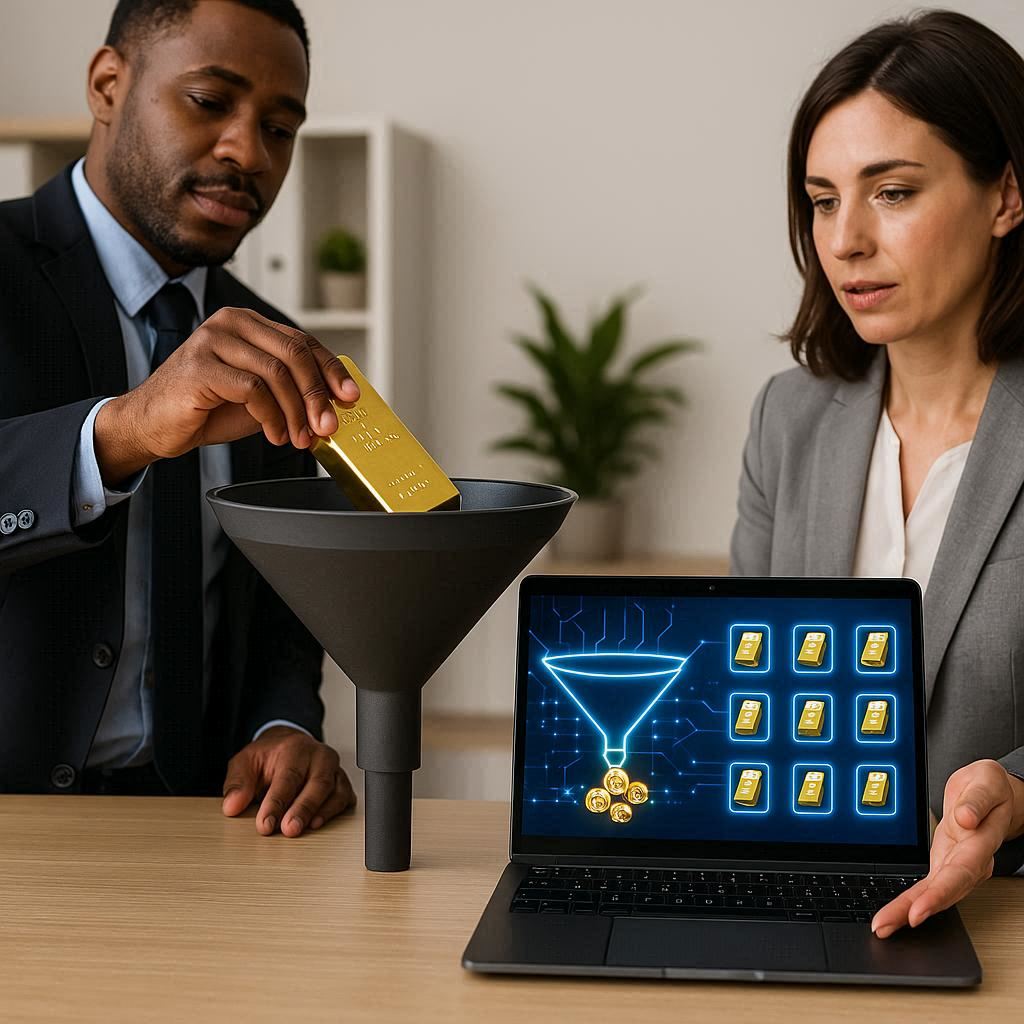
Long before there were governments, banks, or stock brokers, gold was a universal store of value, a hedge against chaos, and a cornerstone of global wealth. When Columbus stepped onto San Salvador, (Bahamas today), indigenous people were using it even though they had no contact with Europeans, Asians, or Africans! Fast forward to 2025 and gold is stepping into the digital revolution through tokenization — a process that turns tangible gold into blockchain-based assets. Hope, you like the image above–I couldn’t resist the shine! lol. Let’s explore what tokenized gold is, how it works, its advantages and risks, and how you can buy it.
What Is Tokenized Gold?
Tokenized gold is a digital representation of physical gold stored in a secure vault. Each blockchain token corresponds to a fixed quantity of real gold — for example, one token per troy ounce or per gram. It’s essentially “physical gold + digital convenience.” Yesterday plus today! Instead of storing bars yourself, (a dangerous proposition) you hold a blockchain token backed by gold that a trusted custodian safeguards. Example: Tokens such as PAX Gold (PAXG) and Tether Gold (XAUT) represent legally redeemable ownership rights in physical gold stored in London or Switzerland. With me so far? Good, then let’s discuss how tokenized gold works.
How Does Tokenized Gold Work?
The five step sequence below is how the ecosystem functions. Essentially, this blend of blockchain transparency and physical backing gives investors a bridge between traditional assets and digital finance. Old gold bugs, sound money supporters, and young millennials can bond!
Gold acquisition: The issuer purchases and stores gold bars in accredited vaults.
Token issuance: Smart contracts mint tokens (often, but not exclusively, on the Ethereum network) that represent the stored gold.
Trading and transfer: Tokens can be traded 24/7 on crypto exchanges or used in DeFi platforms as collateral.
Auditing: The issuer publishes proof-of-reserve or third-party audit reports confirming every token is backed by real gold.
Redemption: Token holders may redeem tokens for physical gold or fiat value, depending on the issuer’s rules.
Advantages of Tokenized Gold
Tokenized gold merges the security of gold with the flexibility of crypto thus making it a winner. In essence, tokenized gold gives you instant liquidity, borderless mobility, and verified backing. The six reasons below should convince anyone:
Fractional ownership: You can buy tiny portions of gold — even milligrams — democratizing access.
High liquidity: Tradeable 24/7 on exchanges, unlike traditional gold markets that close daily.
Transparency: Blockchain records all transactions; most issuers provide public audits of gold reserves.
No physical storage hassle: Custodians handle vaulting and insurance while you manage digital keys.
Global reach: Anyone with internet access can invest, regardless of geography.
DeFi integration: Tokenized gold can be lent, borrowed, or used as collateral in smart contracts.
Disadvantages of Tokenized Gold
Despite the strong arguments for tokenized gold, let’s be honest, tokenization isn’t a perfect replacement for physical gold ownership. As always, do your own due diligence — trust, verification, and transparency matter as much as the gold itself. Consider these drawbacks:
Custodial risk: You must trust that the issuer’s vault actually contains the gold it claims. Use a reputable custodian.
Smart contract vulnerabilities: Bugs or hacks could impact your tokens.
Regulatory uncertainty: Laws governing tokenized commodities differ across countries. The good news is everyday uncertainty diminishes.
Redemption limits: Many issuers require high minimums or fees for physical withdrawal. I would love to have this problem–high quantities! lol.
Market volatility: Gold’s price can fluctuate, and so will the token’s value. However, market volatility applies equally to physical ownership also.
Where and How to Buy Tokenized Gold
Persuaded? If the answer is yes, consider using these ideas to purchase tokenized gold safely:
Research issuers and audits. Confirm the custodian, vault location, and audit frequency.
Choose a token:
PAX Gold (PAXG) – 1 token = 1 troy ounce of gold held by Paxos in London vaults.
Tether Gold (XAUT) – 1 token = 1 troy ounce of gold stored in Swiss vaults.
Select a platform: Tokens trade on major exchanges like Binance, Kraken, or Bitstamp. Not an endorsement.
Use a compatible wallet: Most tokenized gold runs on Ethereum (ERC-20), so use MetaMask, Ledger, or Trust Wallet. Again, not an endorsement.
Verify proof-of-reserves: Reputable issuers publish audits or on-chain verification data.
Consider redemption: Some issuers allow redemption for physical gold or cash once minimums are met.
Conclusion
Tokenized gold transforms the world’s oldest safe-haven asset into a liquid, programmable, and globally accessible form and that’s the reason for loving it! It allows investors to combine the enduring value of gold with the efficiency of blockchain. Yet, it’s not risk-free: smart-contract flaws, custodial opacity, or unclear regulations can all erode confidence. Tokenized gold sits at the intersection of trust and technology, and success depends on maintaining both. As the world continues merging traditional assets with blockchain infrastructure, tokenized gold offers a glimpse of how digital finance can modernize centuries-old stores of wealth.
On October 22, 2025, T. Rowe Price — the venerable U.S. asset manager with roughly US $1.7–1.8 trillion under management — submitted a Form S-1 registration statement with the U.S. Securities and Exchange Commission (SEC) for its new T. Rowe Price Active Crypto ETF. This filing marks a significant step: a legacy investment-firm stepping decisively into the digital-asset arena with an actively managed exchange-traded product dedicated to multiple cryptocurrencies. In other words, T. Rowe Price has moved from Baltimore to the Blockchain!
What’s the Fund All About?
The proposed fund — to be listed on NYSE Arca — is structured as a trust offering shares that trade like stocks, representing fractional interests in a diversified crypto-asset portfolio. Let’s breakdown what that means:
Investment Objective: To outperform the FTSE Crypto US Listed Index over a long-term horizon (one year plus). That makes it an active product, not a passive tracker. To pull this off, T. Rowe Price would have needed to build internal staff capacity. Did it? Apparently, yes–the firm posted a senior analyst role in its Middle Office Trade Management for Digital Assets Operations, in Baltimore, 2025.
Active Strategy: The fund may hold between five and fifteen crypto assets under normal conditions. Managers can adjust exposure based on valuation, momentum, and risk analysis. Essentially, only the top 5 – 15 as defined by market cap.
Eligible Assets Only: Holdings must meet strict criteria — commodity tokens traded on compliant markets with adequate surveillance and liquidity. The proposed Clarity Act, making its way through Congress will play an important part regarding eligible assets.
No Leverage or Derivatives: The fund will not employ leverage or inverse positions.
Structure and Custody: Organized as a trust (not a 1940-Act investment company). Shares trade on NYSE Arca, with an indicative value published every 15 seconds.
Why It Matters — From Traditional Funds to Crypto Entry
For the blockchain and crypto community, this filing is a landmark moment. T. Rowe Price’s entry signals that mainstream institutional managers are taking digital assets seriously. Unlike most crypto ETFs that simply track Bitcoin or Ethereum, this one uses active management — giving the portfolio team discretion to select and weight different tokens dynamically. It’s designed as a regulated bridge between traditional finance and blockchain-based assets.
For blockchain infrastructure developers, this move suggests that custody, trading, and compliance systems are finally maturing to meet large-scale institutional standards. Every step toward a product like this strengthens the backbone of the crypto ecosystem.
Potential Benefits and Opportunities
Simplified Access: Investors gain exposure to a diversified basket of crypto assets through a single exchange-listed fund — no self-custody required.
Active Management Edge: Skilled managers can tilt allocations toward assets they believe have stronger fundamentals or momentum.
Diversification: Exposure to up to 15 tokens reduces single-asset risk and allows tactical rotation.
Infrastructure Impact: Large-scale ETFs increase demand for professional custody, reference pricing, blockchain data analytics, and compliance tools.
Legitimacy Signal: A major traditional asset manager’s crypto launch helps normalize digital-asset investing for institutional audiences.
Key Risks — Read the Fine Print
As the S-1 makes clear, this product also carries real risk:
Volatility: Crypto assets remain highly volatile and can experience dramatic drawdowns.
Operational Risk: Eligibility, liquidity, and valuation challenges for newer tokens could affect performance.
Regulatory & Tax Uncertainty: Evolving crypto regulation could impact fund operations, tax treatment, or asset legality.
No 1940-Act Protection: The trust is not a registered investment company, so it lacks certain mutual-fund safeguards.
Index and Benchmark Risk: The FTSE Crypto Index is new; results may differ sharply from passive benchmarks.
What To Watch Next
SEC Approval: Filing does not equal approval. The SEC will review structure, custody, and disclosure rigorously.
Final Details: Investors await the official ticker symbol, expense ratio, and custody provider.
Portfolio Disclosure: How active management plays out — which tokens are chosen and how often rebalanced — will define the fund’s edge.
Infrastructure Ripple Effects: Increased demand for secure custody and compliant trading across multiple token networks.
Competition: The fund joins an expanding lineup of crypto ETFs; differentiation will depend on performance and costs.
Final Thoughts
The T. Rowe Price Active Crypto ETF represents another bridge between the old world of finance and the emerging digital economy. For nearly a century, T. Rowe Price has managed traditional portfolios; now it is turning its analytical discipline toward digital assets. For investors, this product could provide a balanced, regulated entry into crypto exposure. For the blockchain-AI community, it highlights how institutional design — custody, audits, compliance, token vetting — is evolving alongside decentralized innovation. As we await SEC approval, all eyes will be on how T. Rowe Price implements its active strategy and whether it can truly deliver alpha in the notoriously volatile crypto landscape. Did T.Rowe Price wait too long? Time will tell!
The evolution of money is perpetual. Asset managers, such as Franklin, must constantly evolve our face extinction. Franklin was early to adopt a nascent technology in the 1990’s–the internet. Thirty years later, Franklin remains at the forefront–this time with blockchain. Back in the 1990s, Franklin had an “internet-department” that settled transaction! Eventually, of course, the entire organization adopted the internet. Once again, Franklin and the financial world is experiencing a steady convergence between traditional finance (TradFi) and decentralized finance (DeFi). One of the clearest examples of this integration is Franklin Templeton’s Franklin OnChain U.S. Government Money Fund, commonly referred to as Benji. This pioneering initiative represents one of the first regulated U.S. mutual funds to record shares on a public blockchain. While blockchain has often been associated with volatile cryptocurrencies, Benji shows how the technology can be used to modernize stable, regulated financial products—and potentially reshape how capital markets operate.
What Is Benji?
Benji is Franklin Templeton’s blockchain-based version of its U.S. Government Money Market Fund. Launched in 2021, the fund is registered with the SEC under the Investment Company Act of 1940, just like any other regulated mutual fund. However, what makes Benji unique is where its shareholder records live. Instead of relying exclusively on traditional databases, the fund records ownership on the Stellar blockchain, with secondary support later expanded to Polygon.
At its core, the fund invests in short-term U.S. government securities—Treasury bills, government agency debt, and repurchase agreements backed by these instruments. This means investors are not exposed to crypto volatility. Rather, they are accessing a conservative, low-risk investment vehicle—but one enhanced with blockchain technology.
How It Works
Investors access the fund through the Benji Investments app, a mobile platform that simplifies account opening, management, and transactions. Each share of the fund is represented by a tokenized security on-chain. Behind the scenes, Franklin Templeton continues to act as the fund manager, custodian, and transfer agent—ensuring compliance with existing U.S. regulatory frameworks.
From the investor’s perspective, the workflow is straightforward:
Onboarding – Investors complete KYC/AML checks just as they would with any regulated investment account.
Purchase – When buying into the fund, they receive blockchain-based tokens representing their shares.
Ownership Records – These shares are recorded and verifiable on the Stellar blockchain.
Liquidity – Investors can redeem their holdings for cash through the app, just as they would with a traditional money market fund.
This hybrid model combines the legal protections of a regulated fund with the transparency and efficiency of blockchain.
Why It Was Created
The motivation behind Benji can be understood on two levels.
1. Modernizing the back office The traditional asset management industry relies on layers of intermediaries—custodians, transfer agents, clearinghouses, and settlement systems. These processes are expensive and prone to inefficiencies. By recording fund shares on a blockchain, Franklin Templeton seeks to reduce operational friction, automate reconciliation, and lower costs.
2. Bridging traditional and digital finance As digital assets gain adoption, institutional and retail investors alike want safer ways to access blockchain-powered financial products. A government money market fund offers familiarity and trust, while its on-chain representation allows participation in emerging blockchain ecosystems. This could pave the way for integrating traditional assets into DeFi protocols in a compliant manner.
The Problems Benji Addresses
Benji is designed to solve several persistent challenges in the investment industry:
Inefficiency in recordkeeping: Traditional fund operations rely on complex reconciliation processes across multiple intermediaries. On-chain records create a single, immutable source of truth.
Limited transparency: Blockchain enables near real-time visibility into share ownership, increasing trust and reducing the potential for errors or disputes.
Barriers to access: By packaging the fund into a user-friendly mobile app, Franklin Templeton lowers the threshold for retail investors to participate. Over time, tokenized shares could be integrated into digital wallets and interoperable with other blockchain-based services.
Liquidity and speed: Traditional settlement cycles can take days. Blockchain-based records allow for faster, more seamless transactions.
Broader Implications
The launch of Benji is not just a technological experiment; it is a signal of how legacy institutions are adapting to the digital age. Several key implications emerge:
Institutional adoption of blockchain: Benji demonstrates that blockchain is not just for cryptocurrencies, but also for regulated, mainstream financial products.
Tokenization of real-world assets (RWA): Money market funds are just the beginning. If successful, this model could extend to bonds, equities, real estate, and other asset classes.
Pathway to DeFi integration: While Benji operates in a regulated framework, the tokenized nature of its shares opens the door for eventual interoperability with decentralized finance applications—potentially unlocking new liquidity and use cases.
Regulatory precedent: Franklin Templeton’s collaboration with the SEC provides a roadmap for other asset managers interested in bringing funds on-chain while staying compliant.
Conclusion
Franklin Templeton’s Benji is a landmark in the evolution of financial markets. By placing shares of a U.S. government money market fund on a blockchain, it bridges the worlds of traditional investing and decentralized technology. For investors, it offers a conservative, regulated product with the added benefits of efficiency and transparency. For the industry, it represents a proof of concept for how tokenization can address long-standing inefficiencies and unlock new opportunities. As blockchain technology matures, Benji may be remembered not just as an isolated experiment, but as the first step toward a new financial architecture—one where traditional assets and digital infrastructure coexist seamlessly.
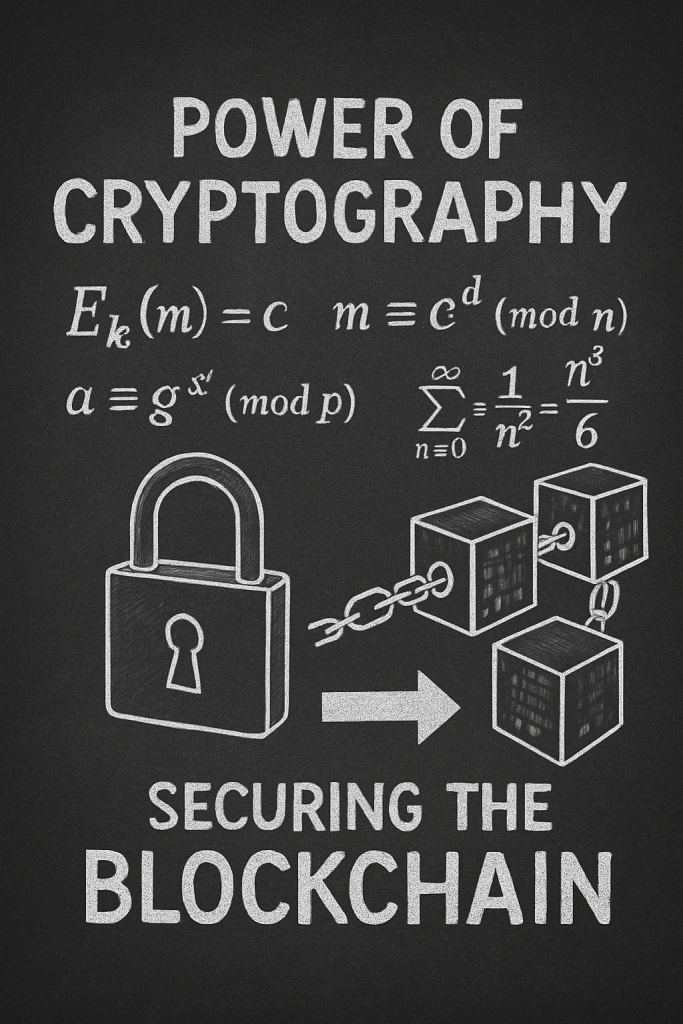
Cryptography is the secret ingredient that makes cryptocurrencies work. Without it, Bitcoin, Ethereum, Cardano, and every other blockchain would simply not be secure or trustworthy. In this article, we will explore how cryptography works in the world of cryptocurrencies, explained in simple terms.
🧩 What is Cryptography?
Cryptography is the science of securing information so that only intended recipients can read it. Think of it like writing a message in code. If you know the code, you can read it. If you don’t, it remains a secret. In the digital world, cryptography relies on mathematical formulas and algorithms that are nearly impossible to break without the right key.
🏦 Why Cryptography Matters for Crypto
You may wonder: Why do we need all this math? Cryptocurrencies are decentralized, meaning no single person or bank controls them. Instead, people all over the world maintain the blockchain—the public ledger that records every transaction. Cryptography ensures that:
✅ Transactions can’t be faked.
✅ Coins can’t be spent twice.
✅ Users can keep their private keys safe.
✅ Everyone agrees on the ledger’s state without trusting anyone else.
🔑 Public and Private Keys
At the heart of crypto lies the concept of public and private keys.
Public Key: Like your email address. You can share it with anyone so they can send you crypto.
Private Key: Like your password. Only you should know it. It lets you spend or move your crypto.
These keys are mathematically related but it is impossible to figure out the private key from the public key. When you want to send crypto, you “sign” the transaction with your private key. Others can verify your signature with your public key to confirm it is valid.
✉️ Digital Signatures
Digital signatures are crucial. A digital signature is created using your private key and the transaction data. Anyone can check it with your public key. This ensures no one can forge your signature or alter your transaction. They prove that:
✅ You authorized the transaction.
✅ The transaction hasn’t been changed.
🛡️ Hash Functions
Another critical tool in cryptography is the hash function (I don’t mean potatoes, lol). A hash function takes any input (like a document or transaction) and turns it into a short or long, fixed-length string of numbers and letters.
✅ The same input always gives the same hash.
✅ Even tiny changes in input produce completely different hashes.
✅ It is impossible to figure out the original input just by looking at the hash.
In blockchains, hashes are used to:
Create unique “fingerprints” of transactions and blocks.
Link blocks together securely in a chain.
Ensure no one can change past records without detection.
⛓️ Blockchain Integrity: Chaining Blocks with Hashes
The term blockchain comes from linking blocks using cryptographic hashes. Here’s how it works:
Each block contains a list of transactions.
The block also includes the hash of the previous block.
This forms an unbreakable chain.
If anyone tries to change a single transaction in an old block, its hash changes. That breaks the chain, making tampering obvious to everyone.
🧪 Zero-Knowledge Proofs
Some modern blockchains also use zero-knowledge proofs. These allow someone to prove they know something (like a secret or password) without revealing it. By the way, zero-knowledge proofs can improve privacy and security.
For example:
✅ You prove you own funds without revealing your private key.
✅ You prove you have enough balance without showing your entire account.
🏛️ Example: Cardano’s Use of Cryptography
Let’s look briefly at Cardano, a popular blockchain project. Cardano is an example of how blockchains go beyond simple signatures and hashes, using cutting-edge cryptography to enhance security and efficiency. Cardano uses advanced cryptography to secure its blockchain:
✅ It uses Ed25519 for digital signatures, known for being secure and fast.
✅ It employs Ouroboros, a proof-of-stake protocol that relies on cryptographic randomness to select who adds new blocks.
✅ It explores zero-knowledge proofs to improve privacy and scalability in the future.
🌍 Why It All Matters
Without cryptography, there would be no cryptocurrencies.nnBanks have vaults and guards to protect money. Cryptocurrencies have cryptography. It lets people all over the world:
✅ Exchange value securely.
✅ Trust a shared ledger without intermediaries.
✅ Protect their digital assets from theft or fraud.
✅ Key Takeaways
Cryptography secures cryptocurrencies without needing banks or middlemen.
Public and private keys enable secure ownership and transactions.
Digital signatures prove authenticity.
Hash functions link blocks in a tamper-evident chain.
Advanced tools like zero-knowledge proofs add privacy and efficiency.
💡 Conclusion
Cryptography is the secret sauce of cryptocurrencies. It ensures that people can use decentralized digital money safely, securely, and confidently. Understanding the basics helps you see why crypto is revolutionary—and why it will continue to evolve with even better cryptographic tools in the future.
Until next time,
Yogi Nelson
Sources:
Antonopoulos, Andreas M. “Mastering Bitcoin.”
Narayanan et al., “Bitcoin and Cryptocurrency Technologies.”
IBM Blockchain Essentials – Cryptography Basics
CoinDesk or Blockgeeks articles on cryptographic techniques in blockchain




 Blockchain & AI Forum