by Yogi Nelson (Nelson Hernandez)
From Single Metals to Structured Exposure
The first wave of tokenized metals has focused on individual assets—gold, silver, and to a lesser extent, platinum and palladium. These instruments mirror traditional bullion ownership, simply wrapped in a digital format. Do investors think in single assets? Rarely. Instead, they think in portfolios. If that’s true, the next natural question is:
What if tokenized metals could be combined into a single, structured instrument—much like an ETF—offering diversified exposure across multiple metals? In other words, a multi-metal token basket, e.g. a digital equivalent of a metals ETF. Let’s explore that concept next.
What Is a Multi-Metal Token Basket?
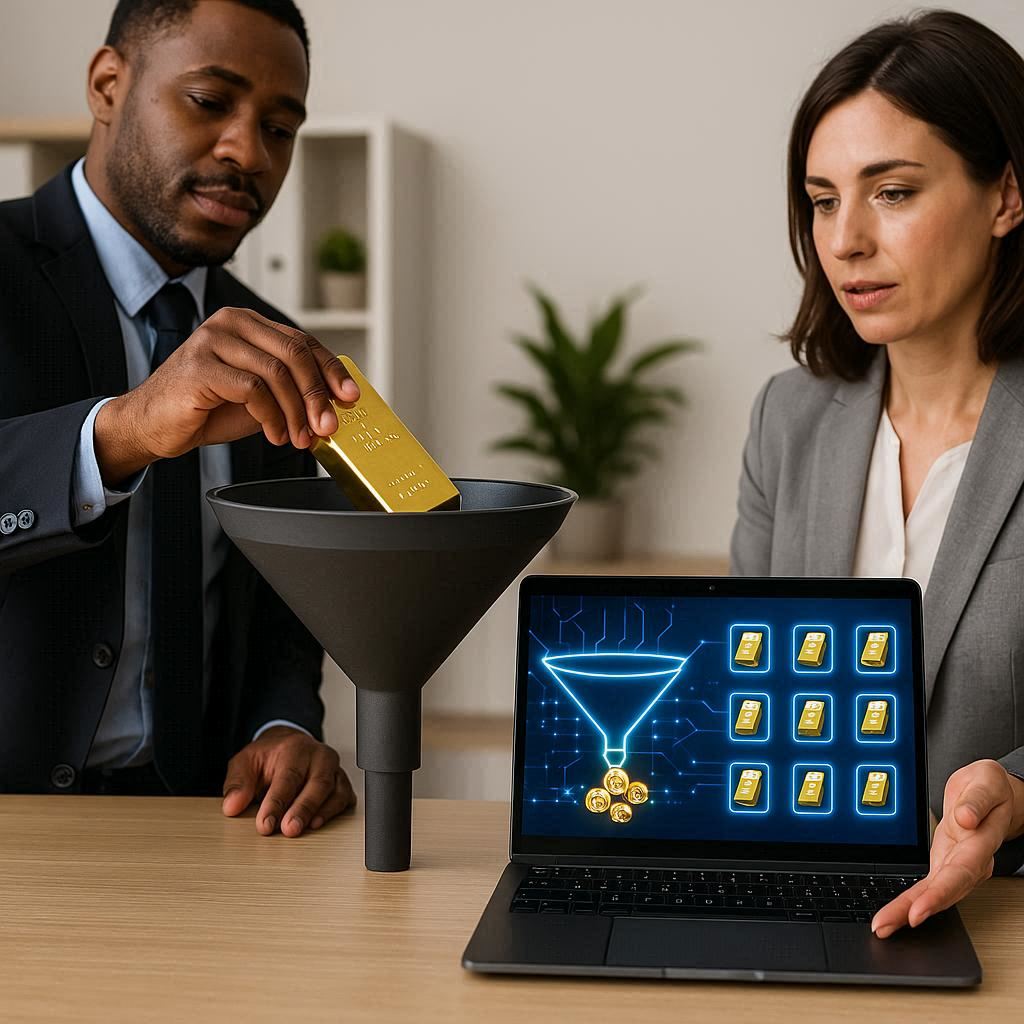
At its core, a multi-metal token basket is a single digital token representing proportional ownership in multiple underlying metals. A combo token. For example, a token could represent:
- 50% gold
- 25% silver
- 15% copper
- 10% platinum
Each component would be backed by physical metal held in custody, with allocations transparently tracked on a blockchain. Rather than holding multiple tokens—or managing separate exposures—investors would hold one instrument with built-in diversification. In effect, it simplifies access while preserving the underlying asset integrity.
What Is a “Digital Metals ETF”?
The term “ETF” is familiar for a reason. Traditional metals ETFs—such as those holding gold or silver—provide investors with exposure without requiring physical custody. They trade on regulated exchanges and offer liquidity, pricing transparency, and ease of access. A digital metals ETF would aim to replicate these benefits—but through tokenization. Same idea; new and better technology.
Instead of shares traded on an exchange like the New York Stock Exchange or NASDAQ, ownership would be represented by blockchain-based tokens. That means settlement could be:
- Near-instant
- Cross-border
- Potentially 24/7
The result is a hybrid ETF with built in diversification of an ETF, that features the flexibility of digital assets.
Why Investors May Find It Attractive
The appeal of a multi-metal token basket is straightforward—but powerful. Consider these five attractions below:
Diversification in a Single Instrument
Instead of allocating separately to gold, silver, and industrial metals, investors gain exposure across the spectrum in one position.
Simplicity
Portfolio construction becomes easier. One token replaces multiple holdings. One instrument replaces multiple transactions.
Accessibility
Tokenized instruments can lower barriers to entry, allowing fractional ownership and global participation. If widely adopted, this would mean more liquidity and more efficient price discovery. Moreover, tokenized assets can be accessed across borders without traditional brokerage constraints.
Transparency
Blockchain-based tracking could provide greater visibility into:
- Metal reserves
- Allocation ratios
- Custody arrangements
Portfolio Flexibility
Depending on structure, baskets could be:
- Static (fixed allocation)
- Dynamic (adjusted periodically based on market conditions)
Innovation
Programmability opens the door to:
- Rebalancing mechanisms
- Yield overlays
- Integrated collateralization
In short, it brings institutional-style portfolio construction into a more flexible, digital format.
Where Would It Trade?
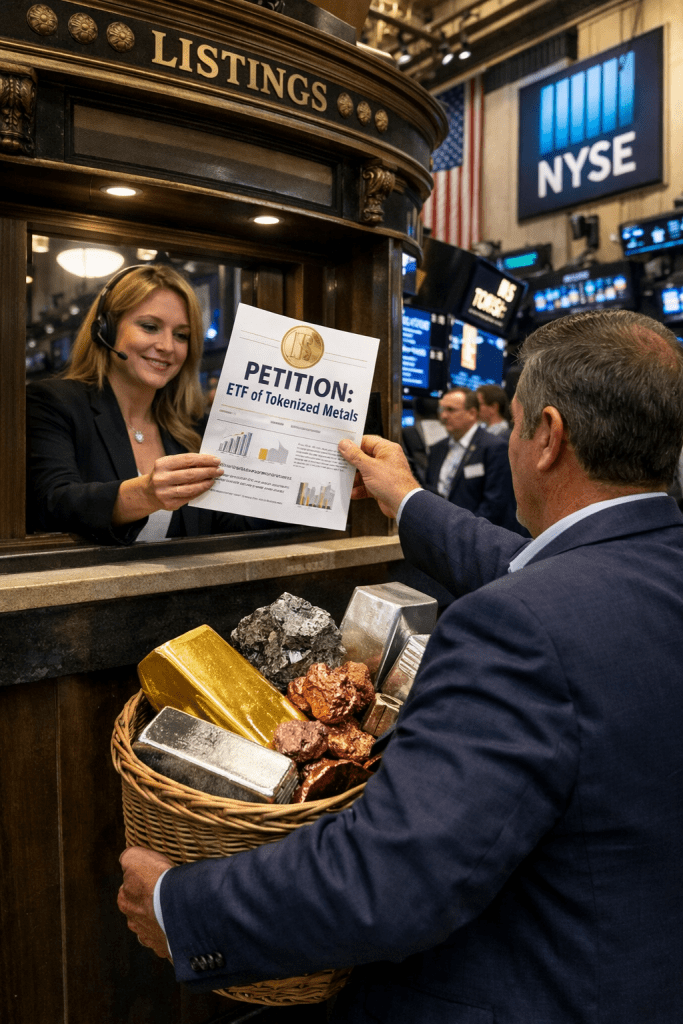
This is where things become more complex. A traditional ETF is listed on regulated exchanges such as the New York Stock Exchange or NASDAQ. Is it possible to create a multi-asset ETF of tokenized metals? Yes. Would it be easy; probably not. If the NYSE is not viable, a digital metals ETF could follow one of several paths:
Crypto Exchanges
Platforms such as Coinbase or Kraken could list tokenized baskets.
- Pros: global access, liquidity, 24/7 trading
- Cons: regulatory uncertainty, investor protections
Hybrid Platforms
Emerging regulated digital asset exchanges could bridge traditional finance and blockchain.
Tokenized Securities Platforms
Some jurisdictions may allow tokenized ETFs to trade as regulated securities.
The likely outcome is a fragmented landscape initially, with convergence over time.
Limitations
Are there real challenge? Yes—and they should not be overlooked.
Complexity Beneath Simplicity
While the front-end appears simple, the back-end becomes more complex:
- Multiple metals
- Multiple custodians
- Multiple jurisdictions
Custody and Verification
Each component must be:
- Verified
- Audited
- Securely stored
The more assets in the basket, the greater the operational burden.
Regulatory Uncertainty or What is it?
- A commodity?
- A security?
- A hybrid instrument?
Different jurisdictions may answer differently.
Redemption Challenges
Redeeming physical metal from a basket could be:
- Complicated
- Costly
- Limited by thresholds
Correlation Risk
Not all metals behave the same way:
- Gold may rise during instability
- Industrial metals may fall
A fixed basket may dilute performance in certain conditions.
When Might This Happen?
The idea is not far-fetched—but timing matters. We are already seeing:
- Tokenized gold and silver gaining traction
- Increased institutional interest in real-world assets (RWAs)
- Regulatory frameworks beginning to evolve
A multi-metal token basket could emerge in stages:
Phase 1: Experimental Products
Niche offerings on crypto platforms
Phase 2: Structured Products
More refined baskets with clearer custody and audit frameworks
Phase 3: Institutional Adoption
Integration into regulated markets and broader portfolios
A realistic timeline:
Early versions within 1–3 years
More mature, widely accepted structures within 5–10 years
Which Blockchain Is Best Suited?
This is not a trivial question. The underlying blockchain must support:
- Security
- Transparency
- Scalability
- Regulatory compliance
Several candidates stand out:
Ethereum
- Strong ecosystem
- Widely adopted
- High security
- Potentially higher transaction costs
Polygon
- Lower costs
- Faster transactions
- Built on Ethereum infrastructure
Cardano
- High speed
- Low cost
- Secure
- Privacy layers
Permissioned Blockchains
Private or consortium chains may appeal to:
- Institutional investors
- Regulators
- Custodians
The likely outcome is a mix of public and permissioned systems, depending on use case.
The Bigger Question: Is This Needed?
Do investors actually need a digital metals ETF? Or is this simply innovation for its own sake—a repackaging of existing structures? The answer likely lies in execution.
If tokenized baskets:
- Improve transparency
- Reduce friction
- Enhance access
Then they add value. If they simply replicate ETFs with added complexity, their adoption may be limited.
Final Thoughts
The evolution from single-metal tokens to multi-metal baskets is logical. It mirrors the broader progression of financial markets:
- From individual assets
- To structured products
- To diversified portfolios
Multi-metal token baskets represent the next step in that journey. They offer:
- Simplicity at the surface
- Complexity beneath
- Opportunity—if executed well
If executed correctly the concept could become a foundational instrument in digital asset markets. On the other hand, get it wrong, and they risk becoming another layer of structure—without meaningful improvement.
The idea is compelling. The execution will determine everything.
Until next time,
Yogi Nelson (Nelson Hernandez)