Austrian economics, Banking, Blockchains, content creation, cryptography, Decentralized, Digital Currency, finance, Silver, tokenization, Yogi Nelson

Is Tokenized Silver About to Steal the Bling from Gold?

by Yogi Nelson

Austrian economics, Banking, Blockchains, cryptography, Decentralized, Digital Currency, finance, Gold, International Finance, Stocks, Switzerland, Tether, tokenization, Uncategorized

When Gold Met Code: The Curious Case of Tokenized Bullion

by Yogi Nelson

Welcome to the BlockchainAIForum


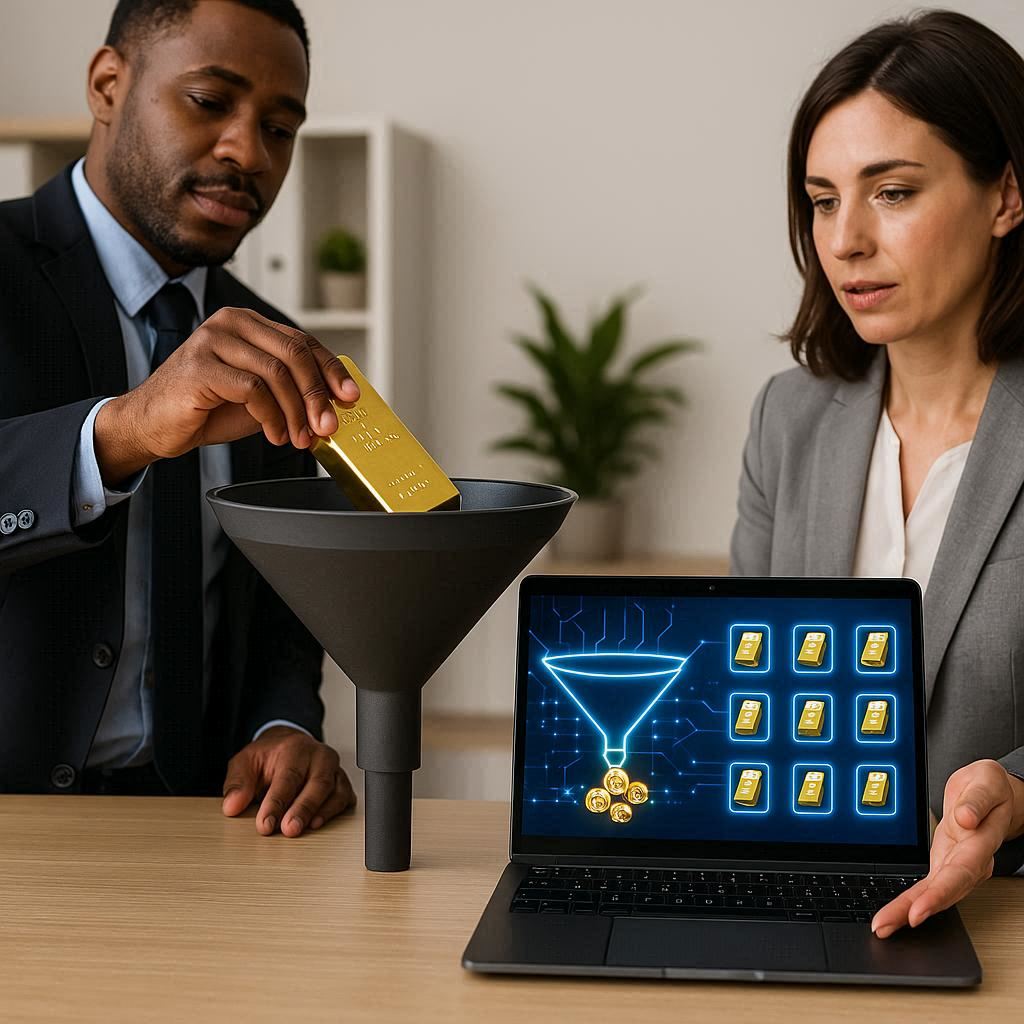
How Does Tokenized Gold Work?

  1. Gold acquisition: The issuer purchases and stores gold bars in accredited vaults.
  2. Token issuance: Smart contracts mint tokens (often, but not exclusively, on the Ethereum network) that represent the stored gold.
  3. Trading and transfer: Tokens can be traded 24/7 on crypto exchanges or used in DeFi platforms as collateral.
  4. Auditing: The issuer publishes proof-of-reserve or third-party audit reports confirming every token is backed by real gold.
  5. Redemption: Token holders may redeem tokens for physical gold or fiat value, depending on the issuer’s rules.

  • Fractional ownership: You can buy tiny portions of gold — even milligrams — democratizing access.
  • High liquidity: Tradeable 24/7 on exchanges, unlike traditional gold markets that close daily.
  • Transparency: Blockchain records all transactions; most issuers provide public audits of gold reserves.
  • No physical storage hassle: Custodians handle vaulting and insurance while you manage digital keys.
  • Global reach: Anyone with internet access can invest, regardless of geography.
  • DeFi integration: Tokenized gold can be lent, borrowed, or used as collateral in smart contracts.

  • Custodial risk: You must trust that the issuer’s vault actually contains the gold it claims. Use a reputable custodian.
  • Smart contract vulnerabilities: Bugs or hacks could impact your tokens.
  • Regulatory uncertainty: Laws governing tokenized commodities differ across countries. The good news is everyday uncertainty diminishes.
  • Redemption limits: Many issuers require high minimums or fees for physical withdrawal. I would love to have this problem–high quantities! lol.
  • Market volatility: Gold’s price can fluctuate, and so will the token’s value. However, market volatility applies equally to physical ownership also.

  1. Research issuers and audits. Confirm the custodian, vault location, and audit frequency.
  2. Choose a token:
  • PAX Gold (PAXG) – 1 token = 1 troy ounce of gold held by Paxos in London vaults.
  • Tether Gold (XAUT) – 1 token = 1 troy ounce of gold stored in Swiss vaults.
  1. Select a platform: Tokens trade on major exchanges like Binance, Kraken, or Bitstamp. Not an endorsement.
  2. Use a compatible wallet: Most tokenized gold runs on Ethereum (ERC-20), so use MetaMask, Ledger, or Trust Wallet. Again, not an endorsement.
  3. Verify proof-of-reserves: Reputable issuers publish audits or on-chain verification data.
  4. Consider redemption: Some issuers allow redemption for physical gold or cash once minimums are met.

📚 Sources

Banking, Blockchains, content creation, cryptography, Decentralized, Digital Currency, finance, International Finance, sec, Stocks, tokenization, Yogi Nelson

From P/E Ratios to Hash Rates: T. Rowe Price Joins the Cool Kids Crypto Community–But is it too Late?

by Yogi Nelson

Welcome to the BlockchainAIForum

  • Investment Objective: To outperform the FTSE Crypto US Listed Index over a long-term horizon (one year plus). That makes it an active product, not a passive tracker. To pull this off, T. Rowe Price would have needed to build internal staff capacity. Did it? Apparently, yes–the firm posted a senior analyst role in its Middle Office Trade Management for Digital Assets Operations, in Baltimore, 2025.
  • Active Strategy: The fund may hold between five and fifteen crypto assets under normal conditions. Managers can adjust exposure based on valuation, momentum, and risk analysis. Essentially, only the top 5 – 15 as defined by market cap.
  • Eligible Assets Only: Holdings must meet strict criteria — commodity tokens traded on compliant markets with adequate surveillance and liquidity. The proposed Clarity Act, making its way through Congress will play an important part regarding eligible assets.
  • No Leverage or Derivatives: The fund will not employ leverage or inverse positions.
  • Structure and Custody: Organized as a trust (not a 1940-Act investment company). Shares trade on NYSE Arca, with an indicative value published every 15 seconds.

Potential Benefits and Opportunities

  • Simplified Access: Investors gain exposure to a diversified basket of crypto assets through a single exchange-listed fund — no self-custody required.
  • Active Management Edge: Skilled managers can tilt allocations toward assets they believe have stronger fundamentals or momentum.
  • Diversification: Exposure to up to 15 tokens reduces single-asset risk and allows tactical rotation.
  • Infrastructure Impact: Large-scale ETFs increase demand for professional custody, reference pricing, blockchain data analytics, and compliance tools.
  • Legitimacy Signal: A major traditional asset manager’s crypto launch helps normalize digital-asset investing for institutional audiences.

Key Risks — Read the Fine Print

  • Volatility: Crypto assets remain highly volatile and can experience dramatic drawdowns.
  • Operational Risk: Eligibility, liquidity, and valuation challenges for newer tokens could affect performance.
  • Regulatory & Tax Uncertainty: Evolving crypto regulation could impact fund operations, tax treatment, or asset legality.
  • No 1940-Act Protection: The trust is not a registered investment company, so it lacks certain mutual-fund safeguards.
  • Index and Benchmark Risk: The FTSE Crypto Index is new; results may differ sharply from passive benchmarks.
  1. SEC Approval: Filing does not equal approval. The SEC will review structure, custody, and disclosure rigorously.
  2. Final Details: Investors await the official ticker symbol, expense ratio, and custody provider.
  3. Portfolio Disclosure: How active management plays out — which tokens are chosen and how often rebalanced — will define the fund’s edge.
  4. Infrastructure Ripple Effects: Increased demand for secure custody and compliant trading across multiple token networks.
  5. Competition: The fund joins an expanding lineup of crypto ETFs; differentiation will depend on performance and costs.

Final Thoughts

The T. Rowe Price Active Crypto ETF represents another bridge between the old world of finance and the emerging digital economy. For nearly a century, T. Rowe Price has managed traditional portfolios; now it is turning its analytical discipline toward digital assets. For investors, this product could provide a balanced, regulated entry into crypto exposure. For the blockchain-AI community, it highlights how institutional design — custody, audits, compliance, token vetting — is evolving alongside decentralized innovation. As we await SEC approval, all eyes will be on how T. Rowe Price implements its active strategy and whether it can truly deliver alpha in the notoriously volatile crypto landscape. Did T.Rowe Price wait too long? Time will tell!

Until next time,

Yogi Nelson

Sources

AI Agents, AI Tools, Artificial Intelligence, Banking, Blockchains, cryptography, Decentralized, tokenization, Yogi Nelson

🔑 The Future of Digital Identification: How Blockchain Can Transform Online Identity


  • Decentralized Identifiers (DIDs): Unique cryptographic keys that link an individual to their identity.
  • Verifiable Credentials: Digitally signed proofs of attributes such as name, age, or employment status.
  • Zero-Knowledge Proofs (ZKPs): Cryptographic methods that allow users to verify identity attributes without revealing underlying information.


  • Microsoft’s ION: A decentralized identity system built on the Bitcoin blockchain.
  • Estonia’s e-Residency Program: Uses blockchain elements to authenticate foreign entrepreneurs.
  • ID2020 Alliance: A global initiative leveraging blockchain to provide digital identities to underserved populations.
  • Dock.io: Provides a platform for creating verifiable credentials used in healthcare, finance, and education.


⚖️ Final Thoughts: Balancing Pros and Cons

Banking, Blockchains, content creation, cryptography, Digital Currency, tokenization, Uncategorized, XRP

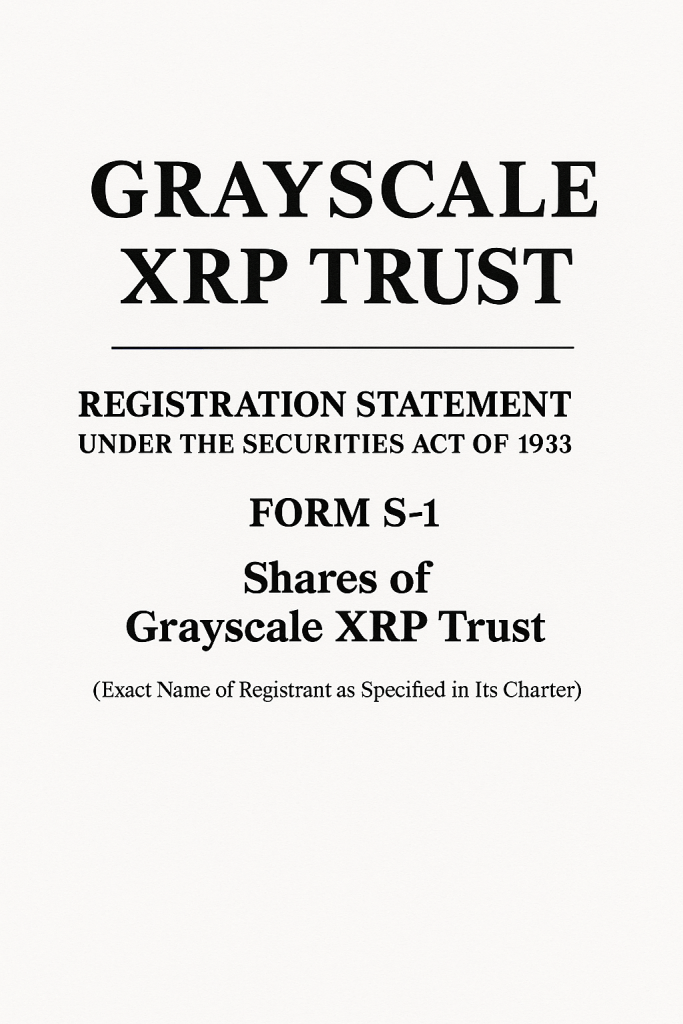
Understanding Grayscale’s XRP Trust ETF Application

by Yogi Nelson

Welcome to the BlockchainAIForum

Management’s Discussion and Analysis (MD&A)

Structure and Purpose of the Trust

Accounting Policies

Financial Performance

  • 2024 Inception Period (Sept–Dec 2024): XRP appreciated from $0.54 to $2.10. Net realized/unrealized gain was $7.27 million, driving net assets to $10.45 million by year-end. Approximately 5.0 million XRP were contributed in connection with Share creations.
  • First Half of 2025: XRP rose from $2.10 (Dec 2024) to $2.32 (June 2025). Three-month net gain: $1.26 million; six-month gain: $919,000. Net assets reached $12.89 million by June 30, 2025, reflecting both price appreciation and new XRP contributions.
  • Expenses: The only recurring cost is the Sponsor’s Fee, typically settled in XRP. About 100,000 XRP were liquidated for fees in the first half of 2025.

Liquidity and Cash Handling

Market Risks and Disclosures

Organizational Updates

Business Section

Trust Overview

Investment Objective and Arbitrage Mechanism

Characteristics of the Shares

  • Accessibility & Cost Efficiency: Investors avoid the complexity of direct XRP custody.
  • Transparency: Listed on a regulated exchange, prices are visible and liquid.
  • Security: XRP holdings are stored in cold storage by Coinbase Custody, using multi-signature, geographically distributed vaults.
  • Minimal Credit Risk: The Trust does not lend or rehypothecate assets.

Custody and Security

Trust Activities

Incidental Rights and Forks

Secondary Market Trading

XRP Industry Context

  • Supply: 100 billion XRP were pre-issued; ~59 billion are circulating. Ripple Labs placed 55 billion XRP in escrow to manage supply release.
  • Use Case: XRP enables near-instant, low-cost cross-border settlements compared to traditional methods.
  • Network Governance: Validation relies on a Trusted Node List, with Ripple Labs running 1 of 35 validators.
  • Transaction Fees: Extremely low—0.00001 XRP per transaction—function as spam protection.

Regulatory Environment

Valuation and Index Methodology

Competitive Differentiation

Conclusion

Until next time,

Yogi Nelson