Austrian economics, Banking, Blockchains, finance, Governance, International Finance, Mining, tokenization, Yogi Nelson

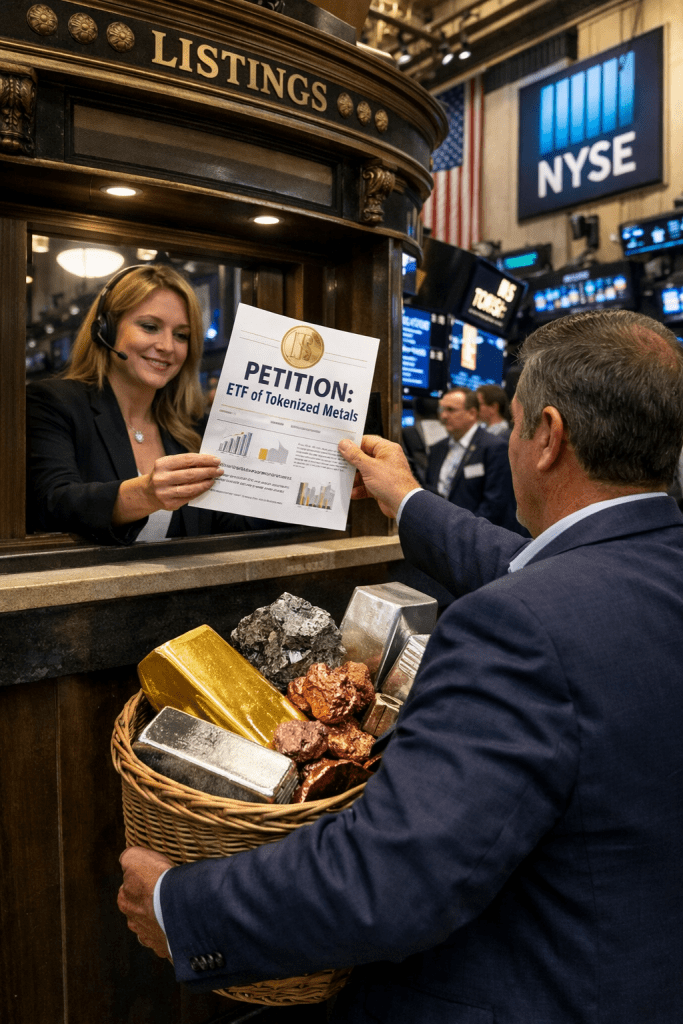
Industrial Metals Begin Their Blockchain Moment

by Yogi Nelson (Nelson Hernandez)

Much of the conversation around tokenization has focused on gold and, to a lesser extent, silver. That makes sense—both are stores of value, widely recognized, and relatively standardized.

But a quieter shift is now underway.

Industrial metals are beginning to enter the blockchain conversation.

Unlike precious metals, industrial metals—such as copper, aluminum, and nickel—are not stores of value. They are inputs to the real economy, essential to infrastructure, energy systems, and manufacturing.

So why tokenization?

The answer lies in three areas:

  • Supply chain complexity
  • Demand for transparency and provenance
  • The ongoing financialization of commodities

Tokenization offers the potential to improve tracking, reduce settlement friction, and enhance visibility across fragmented global supply chains.

But challenges remain.

Industrial metals lack the standardization of gold. They vary by grade, form, and end use. That makes token design—and trust—more difficult.

Not all metals are equally viable.
Copper and aluminum may be strong candidates. Raw ore and specialized alloys, far less so.

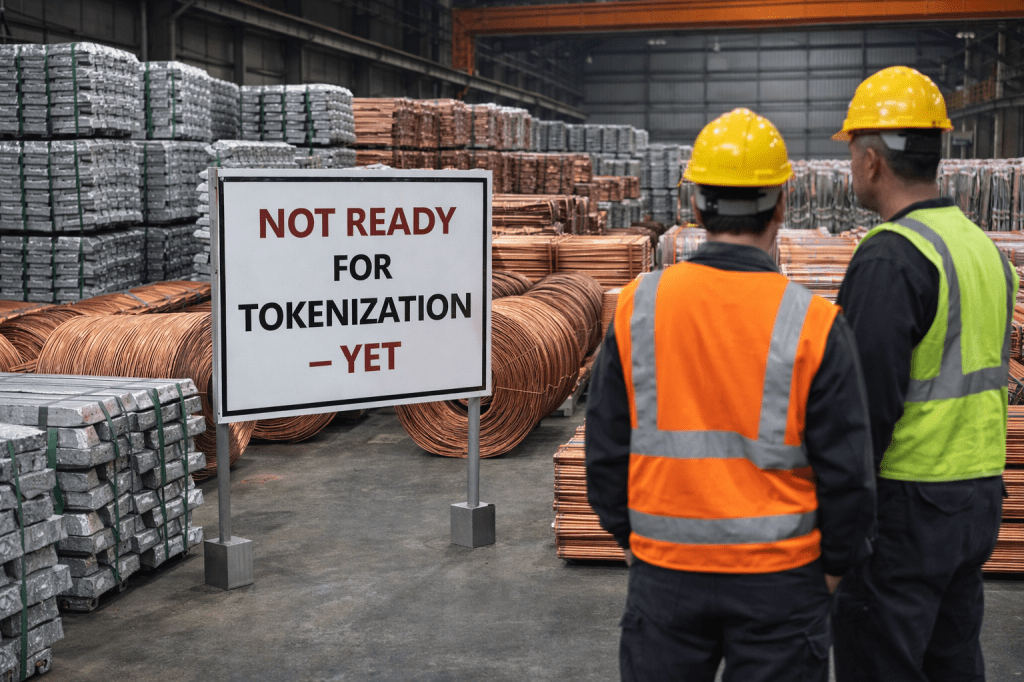
So is this the next frontier—or premature?

Likely both.

Tokenization of industrial metals is not about creating digital money—it is about modernizing the infrastructure of the real economy.

And as always:

Structure—not story—will determine what succeeds.

Austrian economics, Blockchains, cryptography, Digital Currency, finance, Mining, tokenization, Yogi Nelson

Industrial Metals and the Blockchain: Are They A Match?

by Yogi Nelson (Nelson Hernandez)

Are Industrial Metals Ready to Join the Blockchain World

The conversation around tokenization has, to date, been dominated by precious metals—particularly gold and, to a lesser extent, silver. That focus has been logical. Gold is a store of value, widely recognized, and relatively standardized. Silver, too, has been a store of value for thousands of years and remains so in many parts of the world. Hence, both lend themselves naturally to tokenization. But a quieter shift is now beginning to take shape.

Industrial metals—long defined by their role in production rather than wealth preservation—are starting to enter the blockchain conversation. This development raises an important question: can metals defined by utility, variability, and complex supply chains be effectively tokenized? Or does their very nature resist the structure required for digital representation? Read along to find out, but first we start with a definition: what are industrial metals?

What Are “Industrial Metals”?

Industrial metals are those primarily used in manufacturing, construction, and technology rather than as stores of value, a unit of account, or a medium of exchange. In other words, industrial metals are not money nor currency. While industrial metals don’t function as money, they are the backbone of the real economy. No industrial metals equals no modern society. Consider these common examples:

• Copper  Aluminum

• Nickel  Zinc

• Lead  Tin

What do they all have in common? These metals are essential inputs for:

• Infrastructure and construction 

• Energy systems (including renewables) 

• Electronics and manufacturing 

• Transportation and industrial machinery 

Unlike gold or silver, their value is not driven by monetary psychology; it is driven by economic activity and industrial demand.

Why Industrial Metals Are Now Entering the Tokenization Conversation

Three structural shifts are driving interest in tokenizing industrial metals. Let’s examine each one below.

1. Supply Chain Complexity

Industrial metals move through long, fragmented supply chains:

• Extraction 

• Refining 

• Transportation 

• Storage 

• Delivery 

Each stage introduces friction, opacity, and inefficiency. Tokenization offers the potential to:

• Track ownership more precisely 

• Improve transparency 

• Reduce settlement delays 

In theory, a token could represent a specific quantity of metal at a defined point in the supply chain—creating a more efficient system of transfer and verification. Now, point two.

2. Demand for Transparency and Provenance

As global supply chains come under scrutiny—particularly around environmental and geopolitical issues—there is growing demand for:

• Verified sourcing 

• ESG compliance 

• Chain-of-custody tracking 

Blockchain infrastructure is well-suited to this challenge. Tokenized metals are capable of:

• Recording origin 

• Tracking movement 

• Providing immutable audit trails 

This is particularly relevant for metals used in:

• Electric vehicles 

• Renewable energy systems 

• Advanced manufacturing 

3. Financialization of Commodities

Industrial metals are already heavily traded. Traders often use:

• Spot markets 

• Futures contracts 

• Exchange-traded products 

Tokenization represents a potential next step in the technological evolution—bringing:

• Faster settlement 

• Fractional access 

• New liquidity channels 

However, unlike gold, industrial metals are not typically held for investment. That distinction matters.

How Industrial Metals Might Be Tokenized

We now turn to the “how” in the process. The tokenization of industrial metals can take several forms, each with different implications. Let’s walk through the possibilities.

1. Warehouse-Backed Tokens

The most straightforward model mirrors tokenized gold:

• A token represents a specific quantity of metal 

• Stored in a certified warehouse 

• Backed by documented inventory 

This approach works best when:

• The metal is standardized 

• Storage conditions are stable 

• Inventory is clearly defined 

2. Supply Chain Tokens

A more complex model involves tokenizing metals in motion. This model is much more ambitious—not impossible, just more difficult. If successful, it might look like this:

• Representing metal at various stages (ore, refined, shipped) 

• Linking tokens to logistics data 

• Updating ownership as the metal moves 

3. Production-Linked Tokens

In some cases, tokens could represent:

• Future production 

• Offtake agreements 

• Rights to delivery 

This begins to blur the line between commodities and financial contracts. This, of course, introduces additional layers of risk—a field day for securities lawyers.

Which Industrial Metals Are Strong Candidates?

Not all industrial metals are equally suited for tokenization. Below, they are divided into most viable, moderately viable, and less viable categories based on market structure, standardization, and practical considerations.

Most Viable Candidates

Copper 

• Highly standardized 

• Globally traded 

• Critical for electrification and energy systems 

Strong candidate due to liquidity and uniformity

Aluminum 

• Widely used 

• Standardized forms (ingots, billets) 

• Established global markets 

Suitable for warehouse-backed token models

Nickel 

• Increasing demand (EV batteries) 

• Growing interest in supply chain transparency 

Viable, particularly with ESG tracking

Moderately Viable

Zinc and Tin 

• Smaller markets 

• Less investor attention 

• Still standardized 

Possible, but with limited initial demand

Which Metals Are Less Viable—and Why

Lead 

• Declining industrial relevance 

• Environmental concerns 

Limited investor and institutional interest

Highly Specialized Alloys 

• Non-standardized 

• Variable composition 

• Difficult to verify consistently 

Poor candidates for tokenization

Raw Ore 

• Highly variable 

• Quality differences 

• Requires processing 

Not suitable for direct token representation

The Core Challenge: Standardization vs. Reality

The central issue with industrial metals is not technology—it is standardization. Without standardization, it becomes an uphill climb.

Gold works because:

• One ounce is interchangeable with another 

• Quality is universally defined 

Industrial metals, by contrast:

• Vary by grade 

• Differ by form 

• Depend on end-use requirements 

This creates friction in token design. While tokens can be non-fungible (NFTs), that only adds complexity.

For tokenization to work, the system must answer:

• What exactly does the token represent? 

• Where is the metal located? 

• What are its specifications? 

Without clear answers, the token risks becoming:

• Ambiguous 

• Illiquid 

• Distrusted 

Governance Still Matters

As with precious metals, tokenization does not eliminate the need for governance—it amplifies it.

Key considerations include:

• Custody and storage verification 

• Audit frequency and transparency 

• Legal ownership rights 

• Redemption mechanisms 

In industrial metals, these issues are even more complex due to:

• Supply chain variability 

• Multiple stakeholders 

• Jurisdictional differences 

Without strong governance frameworks, tokenized industrial metals risk becoming:

• Conceptually appealing 

• Practically unreliable 

So—Is This a Real Shift or Premature?

Industrial metals are unlikely to follow the same path as gold or silver. They are not primarily:

• Stores of value 

• Monetary hedges 

They are:

• Inputs 

• Tools 

• Economic enablers 

That distinction means tokenization will likely develop differently. Instead of focusing on investment demand, the more appropriate focus may be efficiency, transparency, and logistics applications.

Final Thoughts

Industrial metals are beginning their blockchain moment—but it will not look like gold’s. This is not about creating digital stores of value. It is about modernizing the infrastructure that supports the real economy using blockchain technology.

The opportunity is significant:

• More transparent supply chains 

• Faster and more efficient transactions 

• Improved verification and trust 

But the challenges are equally real:

• Lack of standardization 

• Complex logistics 

• Greater governance requirements 

As with any emerging system, the outcome will depend not on the technology itself, but on how it is implemented. Tokenization can bring structure to complexity—but only if the underlying system is clearly defined and rigorously governed. In the case of industrial metals, that work is just beginning.

Until next time, 

Yogi Nelson (Nelson Hernandez)
Blockchains, Decentralized, finance, International Finance, Mining, tokenization, Uncategorized, Yogi Nelson

Geopolitics & Tokenization: How Digital Metals Could Reshape Trade in a World of Power Politics

by Yogi Nelson (Nelson Hernandez)

Global trade is no longer governed solely by efficiency. It is increasingly shaped by raw power.

In 2026, geopolitical tensions have re-emerged as a dominant force influencing the flow of commodities, capital, and technology. Conflicts, sanctions, and strategic interventions are no longer isolated events—they are systemic features of a fragmented global order.

Recent developments illustrate this shift clearly. The United States’ military actions in Iran have disrupted petroleum, and critical mineral supply chains, contributing to shortages in key inputs such as oil, tungsten and aluminum, both essential for defense and industrial production.

At the same time, the controversial U.S. operation in January 2026 that resulted in the capture of Venezuelan President Nicolás Maduro sent shockwaves through global energy and metals markets, reinforcing the reality that resource-rich nations are now central battlegrounds in great-power competition.

Markets responded immediately to a fundamental and familiar truth: when geopolitical instability happens possession of hard assets is essential. But beneath these events lies a deeper structural question:

What happens when the physical world of metals intersects with the digital world of tokenization—under conditions of geopolitical stress?


The Fragility of Traditional Supply Chains

For decades, globalization optimized supply chains for cost and efficiency. Today, those same supply chains are revealing their vulnerabilities. Consider one critical reality:

  • China dominates large portions of global mineral processing and refining
  • In certain metals, such as tungsten, China controls up to 80% of production and has demonstrated a willingness to restrict exports

This concentration creates a strategic chokepoint. It is not just about mining ore—it is about refining, smelting, and converting raw materials into usable industrial inputs. In a stable world, this model works. Does it work in a fragmented world? Or does it becomes a risk no country wants to assume?

When conflicts arise—whether in the Middle East, Latin America, or elsewhere—supply disruptions ripple across industries:

  • Defense manufacturing competes with civilian industries
  • Renewable energy supply chains face delays
  • Industrial production costs rise globally

The result is not just volatility. It is uncertainty in access.


Tokenization Enters the Equation

Tokenization—particularly of metals—has often been framed as a financial innovation. A more efficient way to trade, settle, or fractionalize ownership. However, perhaps there is more to the story. In a geopolitical context, is tokenization something more that a financial innovation? Could it be a potential tool for redefining how value is stored, transferred, and verified across borders? While the jury may be out, the potential is in.

At its core, tokenization introduces three critical capabilities:

1. Transparency

Blockchain-based systems can provide near real-time verification of metal ownership, custody, and movement.

2. Portability

Digital tokens representing physical metals can move across jurisdictions faster than the underlying assets.

3. Programmability

Smart contracts allow for conditional transfers, compliance enforcement, and automated settlement.

These features are not just technological—they are geopolitical.


A Fragmenting World Needs New Infrastructure

The global economy appears to be shifting from a single integrated system toward a multi-polar structure. We are seeing early signs of this:

  • Regional alliances reshaping trade flows
  • Sanctions influencing commodity routing
  • Countries seeking alternatives to traditional financial systems

Even China’s position illustrates this complexity. While China is a dominant economic actor and a major buyer of energy and metals, it has shown limits in providing geopolitical protection to its partners. In both Iran and Venezuela, Beijing has maintained economic relationships but avoided direct military engagement, highlighting the distinction between economic influence and security guarantees.

This creates a new dynamic:

  • Countries may trade with one power
  • Depend on another for security
  • And seek neutrality through alternative financial systems

This is where tokenization begins to matter.


Tokenized Metals as a Neutral Layer

Imagine a world where:

  • Gold, silver, or industrial metals are tokenized
  • Ownership is recorded on a distributed ledger
  • Settlement occurs without reliance on a single dominant financial system

In such a system, tokenized metals could function as:

1. A Settlement Mechanism

Countries or companies could settle trade imbalances using tokenized commodities rather than fiat currencies subject to sanctions or political influence.

2. A Store of Value

In unstable regions, tokenized metals could provide a digitally accessible form of hard-asset backing.

3. A Bridge Between Systems

Tokenization could act as a neutral layer connecting different financial ecosystems—Western, Chinese, and emerging markets.

This is not theoretical. It aligns with broader trends already underway:

  • Central banks increasing gold reserves
  • Alternative payment systems emerging
  • Growing interest in real-world assets (RWAs) on blockchain platforms

The China Factor: Control vs. Access

However, tokenization does not eliminate geopolitical realities—it interacts with them.China’s dominance in refining and processing raises a critical question: who controls the underlying asset in a tokenized system?

If a token represents gold, but the gold is refined, stored, or processed within a jurisdiction influenced by a single power, then:

  • The token inherits geopolitical risk
  • Access can still be restricted
  • Supply can still be influenced

In other words: tokenization digitizes ownership—but not sovereignty. This distinction is crucial. A tokenized ounce of gold is only as secure as:

  • The custody framework
  • The jurisdiction
  • The enforceability of redemption rights

Conflict as a Catalyst

Geopolitical stress accelerates change. The current environment—marked by military conflict, resource competition, and shifting alliances—is forcing a rethinking of how trade is conducted.

The war involving Iran has already demonstrated how quickly critical materials can become constrained, affecting both military and civilian supply chains. Similarly, the events in Venezuela have underscored the strategic importance of resource-rich nations and the willingness of major powers to intervene directly when those resources are at stake.

These developments are not isolated. They are signals. Signals that:

  • Supply chains are no longer purely economic
  • Commodities are instruments of power
  • Access to resources is increasingly contested

In such an environment, systems that enhance transparency, flexibility, and neutrality gain relevance.


The Limits of Tokenization

It is important to remain grounded. Tokenization is not a solution to geopolitical conflict. It does not:

  • Prevent wars
  • Eliminate sanctions
  • Replace physical supply chains

What it can do is:

  • Improve visibility
  • Reduce friction in transactions
  • Provide alternative pathways for settlement

While it can’t prevent wars, etc. we can hope that its benefits reduce conflict. In the end tokenization operates within the geopolitical system—not above it.


A Glimpse of the Future

Looking ahead, below are three possible scenarios. Could there by others? Of course.

Scenario 1: Fragmented Adoption

Different regions develop their own tokenized metal systems, aligned with their geopolitical blocs.

Scenario 2: Hybrid Systems

Traditional markets coexist with tokenized platforms, with interoperability gradually increasing.

Scenario 3: Strategic Integration

Tokenization becomes integrated into trade agreements, particularly for resource-rich countries seeking greater control over pricing and distribution.

In each case, the underlying driver remains the same: Trust—who has it, who controls it, and how it is verified.


Final Thoughts

Geopolitics is not returning—it has already returned. Perhaps it never left; it was only temporary hidden. The events of 2026 have made that unmistakably clear.

From conflict-driven supply disruptions to direct interventions in resource-rich nations, the global system is evolving toward one defined by competition, control, and strategic positioning. In this environment, tokenized metals represent more than innovation. They represent a response. To what you ask? To these circumstances:

  • Fragmented trust
  • Constrained supply chains
  • The need for new mechanisms of exchange

Get it right, and tokenization could enhance resilience, transparency, and efficiency in global trade. And if we get it wrong, tokenization becomes just another layer—built on top of the same geopolitical fault lines it aims to navigate. Hardly an improvement.

The future of metals is not just digital. It is geopolitical—and increasingly, the two are becoming inseparable.

Until next time,

Yogi Nelson (Nelson Hernandez)
Decentralized, finance, tokenization, Uncategorized, Yogi Nelson

Are Tokenized Precious Metals a Hedge Against Inflation or Hype?

by Yogi Nelson

When geopolitical tensions rise, markets respond quickly—and often predictably. The recent escalation of conflict involving Iran and the resulting spike in oil prices have once again pushed inflation concerns back to the forefront. Energy costs ripple through the global economy, raising transportation, production, and ultimately consumer prices. This is where we find ourselves now. That’s why its no surprise that in moments like these, investors instinctively return to a familiar question:

Where can capital go to preserve value when inflation accelerates?

For centuries, the answer has often been precious metals, particularly gold. But in 2026, a new variation of that question is emerging: do tokenized precious metals offer the same protection—or are they simply a digital wrapper around an old idea?


Inflation, Uncertainty, and the Return of Hard Assets

Inflation is not merely a number—it is a psychological force. I say psychological force based on my recent trip through Argentina; a nation where inflation was running at 200% just a few years ago. The people who I interacted with were definitely impacted psychologically–they don’t believe in fiat.

When prices begin to rise, confidence in fiat currency weakens, and investors look for assets that are:

  • Scarce
  • Tangible
  • Globally recognized

Gold has historically met all three criteria. Silver, to a lesser extent, has followed a similar path. These metals are not tied to any single government or monetary policy, making them attractive during periods of uncertainty. Neither gold or silver is subject to counter-party risk if they are in your possession.

The current environment—marked by geopolitical tension, energy price volatility, and shifting monetary expectations—has once again highlighted the role of hard assets as a defensive allocation. But traditional ownership of precious metals comes with friction:

  • Storage costs
  • Limited liquidity
  • Physical transfer challenges

This is where tokenization enters the conversation.


What Tokenized Precious Metals Actually Represent

At their core, tokenized precious metals are digital tokens issued on a blockchain that represent ownership of physical metal held in custody. When properly executed, each token corresponds to:

  • A specific quantity of metal (e.g., one troy ounce of gold)
  • Stored in a professional vault
  • Backed by audited reserves

This is no longer theoretical. Well-known examples include:

  • Paxos Gold (PAXG)
  • Tether Gold (XAUT)
  • Kinesis (KAU/KAG)

The promise is straightforward: Combine the stability of physical metals with the efficiency of digital assets. Investors can:

  • Buy fractional amounts
  • Transfer instantly
  • Trade globally
  • Potentially redeem for physical metal

On paper, this appears to solve many of the traditional limitations of owning gold or silver. But the key question remains: Does tokenization enhance, dilute, or have no impact on the inflation-hedging properties of metals?


The Case FOR Tokenized Metals as an Inflation Hedge

1. Direct Exposure to Physical Assets

Unlike mining stocks or derivatives, tokenized metals are designed to represent direct ownership of underlying bullion. During inflationary periods, investors are not seeking leverage or speculation—they are seeking preservation of capital and their purchasing power. Tokenized metals, when properly structured, maintain this direct linkage.


2. Improved Liquidity and Accessibility

Traditional gold ownership can be cumbersome. Tokenization lowers barriers by allowing:

  • Fractional ownership
  • 24/7 trading
  • Global access

This expands participation and allows more investors to allocate to hard assets quickly—particularly during fast-moving macro events like energy-driven inflation spikes. The more gold is used as a store of value versus fiat currency, whether physical or tokenized, gold holders are better off.


3. Faster Settlement in Uncertain Markets

In times of crisis, liquidity matters as much as asset quality. This is where tokenized gold “shines”; no pun intended. Tokenized metals can settle transactions in minutes, or even seconds, rather than days, offering:

  • Greater flexibility
  • Faster reallocation of capital

This is especially relevant in volatile environments where timing becomes critical. Just think about trying to leave Dubai, for instance, with physical gold on an airplane during these moments.


4. Integration with Digital Financial Systems

As financial systems evolve, tokenized assets are increasingly positioned to interact with:

  • Digital wallets
  • Decentralized finance platforms
  • Cross-border payment systems

This may enhance their utility compared to traditional bullion, particularly in a world where financial infrastructure is becoming more digitized. Consider this question: is there any good reason why gold holders should function with 2026 BC technology? I say no. I say 2026 AD technology should be the way.


The Case AGAINST: Where the Risks and “Hype” Begin

While the advantages are real, tokenized metals introduce a new layer of risk that investors must understand. Should this be a surprise? Of course not. Nothing is risk free in life. Hence, let’s examine the case against tokenized gold and silver.


1. Counterparty and Custody Risk

Unlike holding physical gold directly, tokenized metals rely on a chain of trust:

  • Issuer
  • Custodian
  • Auditor

If any link in that chain fails, the integrity of the token is compromised. Therefore, investors should ask, at a minimum:

  • Is the metal allocated and segregated?
  • Are bar lists publicly available?
  • How frequently are audits conducted—and by whom?

Without clear answers, the “token” may be more symbolic than secure.


2. Redemption Practicality

Many tokenized metals advertise physical redemption, but the reality can be more complex:

  • Minimum redemption thresholds
  • Fees and logistics
  • Geographic limitations

If redemption is impractical for most holders, the token behaves less like physical ownership and more like a synthetic instrument. Check into these consideration before, much before, spending a dollar on tokenized gold or silver.


3. Regulatory Ambiguity

Tokenized metals exist at the intersection of commodities, securities, and digital assets. Regulatory frameworks are still evolving.

This creates uncertainty around:

  • Investor protections
  • Legal recourse
  • Jurisdictional oversight

In times of market stress, these uncertainties can become more pronounced.


4. Market Perception Risk

An inflation hedge must not only function—it must be trusted. Gold’s value is reinforced by centuries of acceptance. Tokenized metals, by contrast, are still establishing credibility. With time, the younger generation will consider tokenized gold and silver as natural. They may even ask, why all the fuss in 2026. However, during this period of transition perception risk is a factor in the market among the boomer generation. If confidence in a specific issuer weakens, the token’s price may diverge from the underlying metal—undermining its role as a hedge.


Tokenized Metals vs Traditional Alternatives

To understand whether tokenized metals are a true hedge, they must be compared to existing options:

Physical Bullion

  • Highest level of control
  • Lowest counterparty risk
  • Lowest liquidity

Gold ETFs

  • Highly liquid
  • Easy to trade
  • Indirect ownership (no redemption for most investors)

Futures Contracts

  • Leverage available
  • Complex and time-sensitive
  • Not designed for long-term holding

Tokenized Metals

  • Direct (but mediated) ownership
  • High liquidity
  • Dependent on issuer structure and trust

So—Hedge or Hype?

The answer is not binary. Tokenized precious metals are not hype in the sense that they represent a real and meaningful innovation. They address genuine inefficiencies in how physical metals are owned and traded. However, they are also not a perfect substitute for traditional safe-haven assets yet. On the way; not there yet.

Essentially, their effectiveness as an inflation hedge depends on one critical factor: The strength and transparency of the underlying structure. When properly designed—with:

  • Allocated, audited reserves
  • Clear redemption mechanisms
  • Credible custodians

—they can function as a legitimate extension of physical metals into the digital age.

When poorly structured, they risk becoming:

  • Opaque
  • Illiquid in practice
  • Dependent on trust rather than verification

Final Thoughts

The current geopolitical environment serves as a reminder that inflation is not an abstract concept—it is a lived reality driven by events, policy, and market psychology. As oil prices rise and uncertainty spreads, the search for stability intensifies.

Tokenized precious metals sit at an interesting intersection:

  • Old-world value (gold and silver)
  • New-world infrastructure (blockchain)

They are not a replacement for traditional hedges—but they are an evolution. For investors willing to do the work—examining custody, auditing, and redemption—tokenized metals can play a role in a modern portfolio. Discipline matters in every system of governance system and market structure.

Not all tokens are created equal. And in inflationary environments, the difference between structure and assumption can determine whether an asset protects value—or merely promises to.

Until next time,

Yogi Nelson

Artificial Intelligence, Austrian economics, Banking, Blockchains, Decentralized, Digital Currency, finance, International Finance, Mining, precious-metals, Silver, Tether, tokenization, Yogi Nelson

Tokenized Metals vs Reality: Why Liquidity Matters More Than Hype

by Yogi Nelson

Tokenization promises a lot—speed, transparency, global access, and the ability to move physical assets at digital speed. But there’s one uncomfortable question the space doesn’t like to linger on:

Who’s on the other side of the trade?

Liquidity is not about technology. It’s about participation.

An asset can be perfectly tokenized and still be difficult to buy or sell in meaningful size without moving the price. When that happens, confidence erodes quickly—no matter how elegant the blockchain design may be.

This is especially true in tokenized metals.

Gold begins with a structural advantage: deep global markets, standardized bars, central bank participation, and centuries of trust. Silver follows, but with more volatility. Other metals—platinum, palladium, and especially rhodium—face much steeper liquidity challenges that tokenization alone cannot solve.

The hard truth is this: Tokenization digitizes access. Liquidity determines usability.

That’s where market makers, institutional participation, predictable redemption, and market structure come into play. Liquidity isn’t created by opening the doors—it’s earned through trust, depth, and consistent participation.

Technology helps. But economics still has the final say.

If you’re interested in where tokenized metals realistically stand today—and what would need to change for them to reach global volume—I explore the liquidity question in depth in my latest long-form piece.
Yogi Nelson

Part of an ongoing, long-form series examining the tokenization of precious metals—one of the few sustained efforts to explore custody, liquidity, redemption, and market structure throughout 2026.