
by Yogi Nelson
Welcome to the BlockchainAIForum
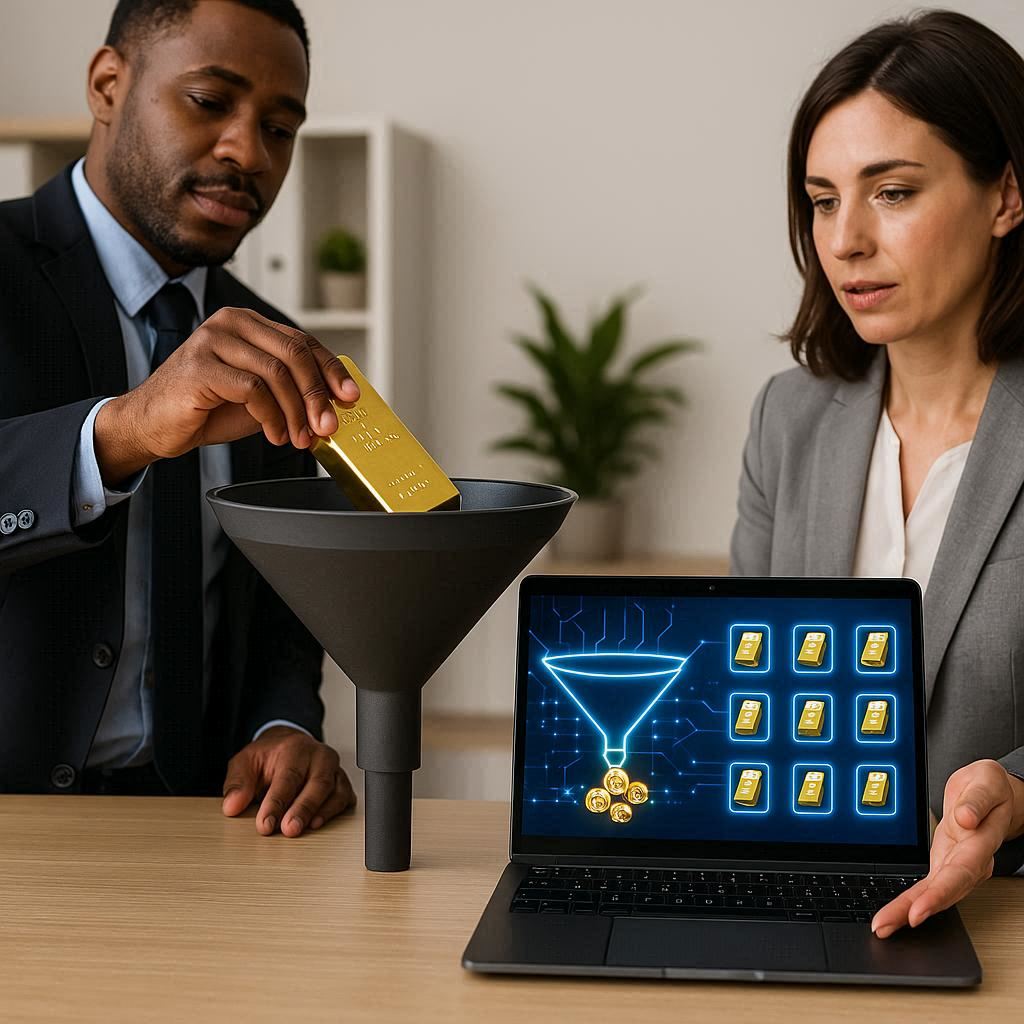
Long before there were governments, banks, or stock brokers, gold was a universal store of value, a hedge against chaos, and a cornerstone of global wealth. When Columbus stepped onto San Salvador, (Bahamas today), indigenous people were using it even though they had no contact with Europeans, Asians, or Africans! Fast forward to 2025 and gold is stepping into the digital revolution through tokenization — a process that turns tangible gold into blockchain-based assets. Hope, you like the image above–I couldn’t resist the shine! lol. Let’s explore what tokenized gold is, how it works, its advantages and risks, and how you can buy it.
What Is Tokenized Gold?
Tokenized gold is a digital representation of physical gold stored in a secure vault. Each blockchain token corresponds to a fixed quantity of real gold — for example, one token per troy ounce or per gram. It’s essentially “physical gold + digital convenience.” Yesterday plus today! Instead of storing bars yourself, (a dangerous proposition) you hold a blockchain token backed by gold that a trusted custodian safeguards. Example: Tokens such as PAX Gold (PAXG) and Tether Gold (XAUT) represent legally redeemable ownership rights in physical gold stored in London or Switzerland. With me so far? Good, then let’s discuss how tokenized gold works.
How Does Tokenized Gold Work?
The five step sequence below is how the ecosystem functions. Essentially, this blend of blockchain transparency and physical backing gives investors a bridge between traditional assets and digital finance. Old gold bugs, sound money supporters, and young millennials can bond!
- Gold acquisition: The issuer purchases and stores gold bars in accredited vaults.
- Token issuance: Smart contracts mint tokens (often, but not exclusively, on the Ethereum network) that represent the stored gold.
- Trading and transfer: Tokens can be traded 24/7 on crypto exchanges or used in DeFi platforms as collateral.
- Auditing: The issuer publishes proof-of-reserve or third-party audit reports confirming every token is backed by real gold.
- Redemption: Token holders may redeem tokens for physical gold or fiat value, depending on the issuer’s rules.
Advantages of Tokenized Gold
Tokenized gold merges the security of gold with the flexibility of crypto thus making it a winner. In essence, tokenized gold gives you instant liquidity, borderless mobility, and verified backing. The six reasons below should convince anyone:
- Fractional ownership: You can buy tiny portions of gold — even milligrams — democratizing access.
- High liquidity: Tradeable 24/7 on exchanges, unlike traditional gold markets that close daily.
- Transparency: Blockchain records all transactions; most issuers provide public audits of gold reserves.
- No physical storage hassle: Custodians handle vaulting and insurance while you manage digital keys.
- Global reach: Anyone with internet access can invest, regardless of geography.
- DeFi integration: Tokenized gold can be lent, borrowed, or used as collateral in smart contracts.
Disadvantages of Tokenized Gold
Despite the strong arguments for tokenized gold, let’s be honest, tokenization isn’t a perfect replacement for physical gold ownership. As always, do your own due diligence — trust, verification, and transparency matter as much as the gold itself. Consider these drawbacks:
- Custodial risk: You must trust that the issuer’s vault actually contains the gold it claims. Use a reputable custodian.
- Smart contract vulnerabilities: Bugs or hacks could impact your tokens.
- Regulatory uncertainty: Laws governing tokenized commodities differ across countries. The good news is everyday uncertainty diminishes.
- Redemption limits: Many issuers require high minimums or fees for physical withdrawal. I would love to have this problem–high quantities! lol.
- Market volatility: Gold’s price can fluctuate, and so will the token’s value. However, market volatility applies equally to physical ownership also.
Where and How to Buy Tokenized Gold
Persuaded? If the answer is yes, consider using these ideas to purchase tokenized gold safely:
- Research issuers and audits. Confirm the custodian, vault location, and audit frequency.
- Choose a token:
- PAX Gold (PAXG) – 1 token = 1 troy ounce of gold held by Paxos in London vaults.
- Tether Gold (XAUT) – 1 token = 1 troy ounce of gold stored in Swiss vaults.
- Select a platform: Tokens trade on major exchanges like Binance, Kraken, or Bitstamp. Not an endorsement.
- Use a compatible wallet: Most tokenized gold runs on Ethereum (ERC-20), so use MetaMask, Ledger, or Trust Wallet. Again, not an endorsement.
- Verify proof-of-reserves: Reputable issuers publish audits or on-chain verification data.
- Consider redemption: Some issuers allow redemption for physical gold or cash once minimums are met.
Conclusion
Tokenized gold transforms the world’s oldest safe-haven asset into a liquid, programmable, and globally accessible form and that’s the reason for loving it! It allows investors to combine the enduring value of gold with the efficiency of blockchain. Yet, it’s not risk-free: smart-contract flaws, custodial opacity, or unclear regulations can all erode confidence. Tokenized gold sits at the intersection of trust and technology, and success depends on maintaining both. As the world continues merging traditional assets with blockchain infrastructure, tokenized gold offers a glimpse of how digital finance can modernize centuries-old stores of wealth.
Until next time,
Yogi Nelson
 Blockchain & AI Forum