
by Yogi Nelson
Why Platinum Matters Now
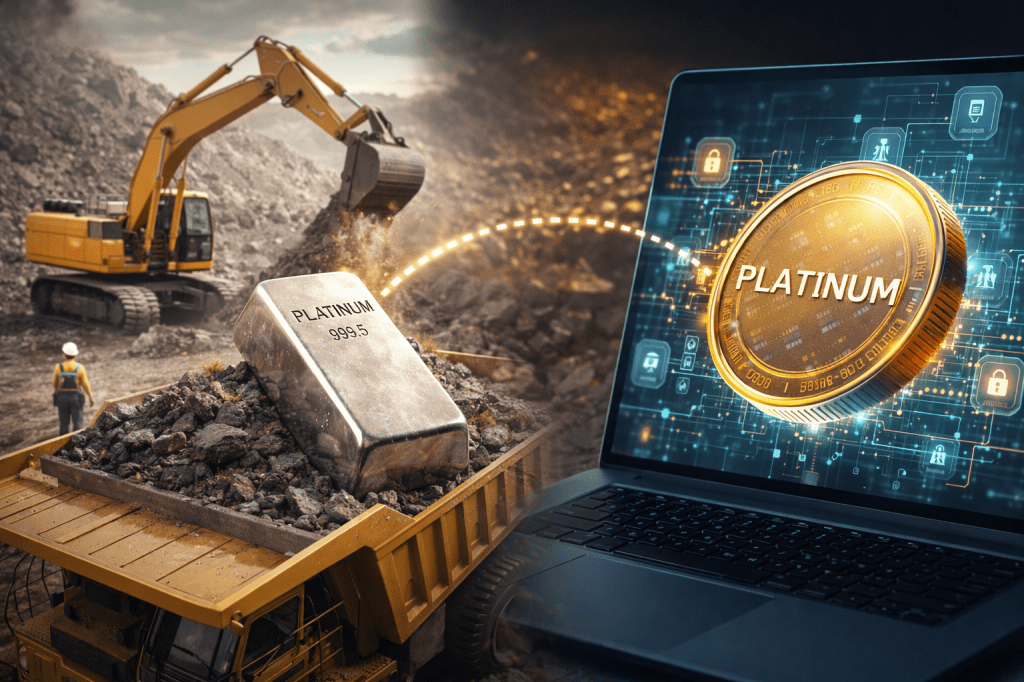
Platinum has been tokenized, albeit in limited and experimental forms, since roughly 2019, but unlike gold and silver, it has yet to see a globally liquid, institutional-grade on-chain breakthrough—making it one of the most compelling “next metals” for tokenization. Of course, we already know tokenized gold first emerged in 2017, when blockchain technology was used for the first time to represent direct ownership of vaulted physical gold on-chain. What about silver? When was it first tokenized? Not surprisingly, after gold, in 2018. One year later came platinum.
Platinum does not rely on tradition, mythology, or monetary nostalgia to justify its relevance. If those factors don’t drive platinum, what does? Platinum matters because modern civilization cannot function without it. Platinum is a quiet essential metal. It is embedded in emissions systems, chemical processing, medical technology, and the emerging hydrogen economy.
Blockchain technology has moved beyond novelty to necessity. What’s more the evolution of blockchain is fantastic news for platinum. That means platinum enters the conversation at precisely the right moment—not as a store of ancient wealth, but as a critical industrial asset whose supply, custody, and pricing demand modernization. Although platinum is clearly different from gold and silver, that doesn’t mean tokenization is not viable, to the contrary. Despite the differences, the bull case for tokenized platinum is strong. Let’s start with a few fundamental differences between the metals.
What Makes Platinum Different
Platinum belongs to the platinum-group metals (PGMs), a family known for exceptional catalytic properties, heat resistance, and chemical stability. Keep those characteristics; they drive the demand for platinum.
Several characteristics distinguish platinum sharply from gold and silver:
- Extreme scarcity: annual global platinum production averages under 200 metric tons. Annual production of gold is 3,000 metric tons, while silver is approximately 26,000 metric tons.
- Geographic concentration: roughly three-quarters of supply comes from South Africa, with most of the remainder from Russia. Two nations rather than the 194 worldwide!
- High production costs: platinum is difficult and expensive to extract and refine
- Limited substitution: in many applications, platinum has no perfect replacement
These constraints make platinum uniquely sensitive to supply disruptions, geopolitical risk, and technological demand shifts. Tokenization does not change these fundamentals—but it makes them visible, auditable, and tradable in ways legacy markets struggle to achieve.
Monetary Metal or Industrial Metal? (The Platinum Distinction)
Gold is money, a store of wealth. Period. It is not currency. Silver is a combo platter. It straddles the line between money and industry. It has been, is, and will likely continue to be, money, a currency and industrial metal. Platinum, as with gold, has one primary use. But unlike gold, with its use as money, platinum is industrial, and industrial only. And what are those industrial applications? I’ll give you five:
- Catalytic converters for emissions control
- Chemical and petroleum refining
- Medical devices and pharmaceuticals
- Electronics and data storage
- Hydrogen fuel cells and clean-energy systems
The upshot is platinum’s price behavior is driven less by investor sentiment and more by regulation, technological adoption, and industrial growth cycles. Tokenization allows markets to better reflect this reality—connecting industrial demand directly with transparent supply and ownership.
Why Platinum Is a Natural Fit for Tokenization
Tokenization solves certain problems and does so exceedingly well, under certain circumstances. Tokenized platinum just so happens to fit the bill. Consider the following:
Scarcity and Verifiability
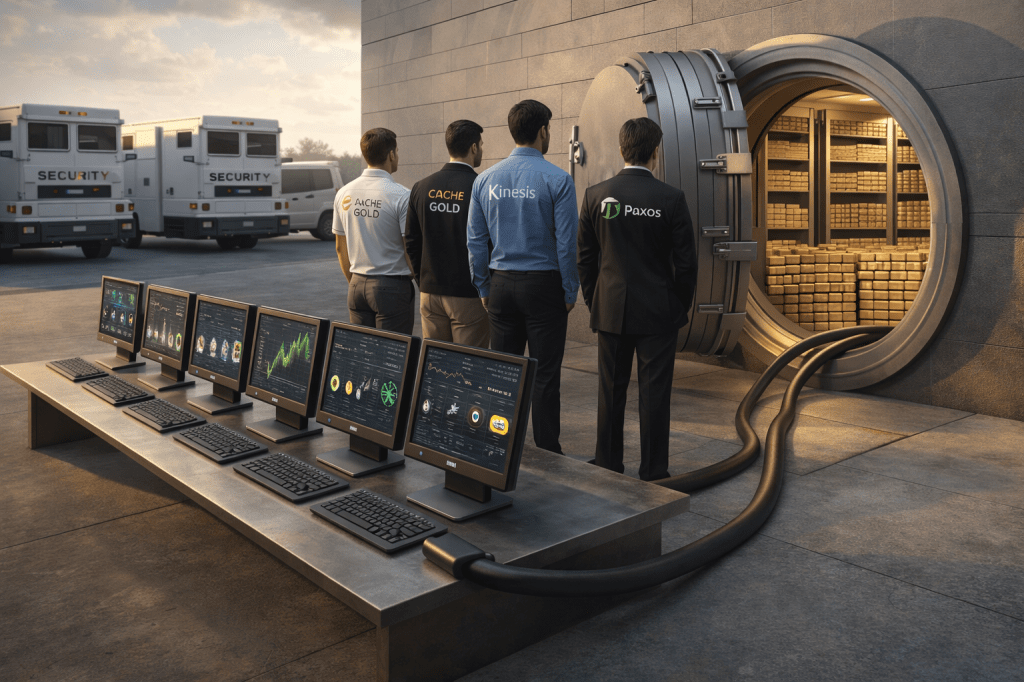
Platinum bars are already standardized, serialized, and assayed. (Assayed means a metal that has been tested for purity, metal content, authenticity, and conformance to standards). This makes platinum bars ideal candidates for 1:1 on-chain representation backed by vaulted physical metal.
Liquidity Constraints
Platinum markets are tiny–much smaller than gold or silver. Tokenization enables fractional ownership, global access, and continuous trading without requiring physical delivery. Analogous to COMEX and LBMA markets, but with verified inventories!
Settlement Inefficiencies
Traditional platinum trades can involve long settlement cycles and counterparty risk. Blockchain settlement dramatically reduces settlement time to minutes or perhaps seconds, and significantly does away with counterparty risk.
Global Accessibility
Tokenized platinum can be accessed without brokerage accounts, national market hours, or legacy intermediaries. On-chain transaction tomorrow means, breaking the chains that limit markets today.
While all that is true, remember tokenization does not reinvent platinum—it modernizes access to it.
Tokenized Platinum vs. Traditional Platinum Products
Platinum exchange traded funds (ETFs) and futures contracts already exist. However, those financial products are abstractions layered atop complex custodial and regulatory structures. In 2026 and beyond, investors want what tokenization offers, specifically:
- Direct ownership rather than synthetic exposure
- On-chain transparency of reserves and transfers
- Programmable compliance and auditability
- Global reach independent of local financial infrastructure
Where ETFs represent claims, tokenized platinum represents digitally native possession backed by physical reality. This distinction mirrors the evolution seen in tokenized gold and silver—and completes the progression.
Real-World Use Cases Beyond Investment
Tokenized platinum’s utility extends well beyond speculation.
Industrial Hedging
Manufacturers can hedge platinum exposure directly on-chain, reducing reliance on opaque derivatives markets. What you see is what you get!
Supply-Chain Traceability
Blockchain tokens can track platinum from mine to refinery to end use, supporting ESG compliance and regulatory reporting. Platinum buyers can be sure of what is happening as it happens.
Corporate Treasury Assets
Energy, transportation, and clean-technology firms may hold tokenized platinum as a strategic reserve asset aligned with operational needs. For instance, a car manufacturer may want to buy platinum, put it in storage, and draw it down as needed and where needed, using the blockchain.
On-Chain Collateral
Platinum tokens can serve as collateral in decentralized finance systems, anchoring digital credit to physical industry. It’s unlikely a bank will offer a high debt to loan value if the collateral is platinum due to the limited number of potential buyers in case of a liquidation. Nevertheless, for a sophisticated lender, who understands the platinum market well the possibility exist.
This is where tokenization becomes infrastructure, not ideology.
Risks, Constraints, and Realism
Is tokenization risk-free. No way. Nothing is risk-free. In the case of platinum, below are some risk factors:
- The market is smaller, increasing volatility
- Custody standards must remain rigorous
- Regulatory frameworks vary by jurisdiction
- Adoption will be gradual rather than explosive
Tokenization does not eliminate these challenges—but it forces transparency, which is often the first step toward stability.
Long-Term Outlook: Platinum’s Quiet Permanence
Gold appeals to philosophy. When gold is strong, that often means geopolitical trouble is brewing. Silver is Mr. Versatility. He can be money. He can be industrial. He can be both. Platinum equals necessity. Platinum isn’t going to dominate headline news in the tokenized metals space—that is not a weakness.
As blockchain infrastructure matures and real-world asset tokenization becomes standard, platinum’s combination of scarcity, industrial indispensability, and constrained supply positions it as a permanent on-chain asset, not a speculative trend. Once tokenized properly, platinum is unlikely to leave the blockchain—because modern industry is unlikely to function without it.
Until next time,
Yogi Nelson
Sources
World Platinum Investment Council (WPIC) – Platinum Quarterly Market Review
U.S. Geological Survey (USGS) – Mineral Commodity Summaries: Platinum Group Metals
Johnson Matthey – Platinum Group Metals Market Report
International Energy Agency (IEA) – Critical Minerals and Clean Energy Transitions
World Bank – Minerals for Climate Action

 Blockchain & AI Forum