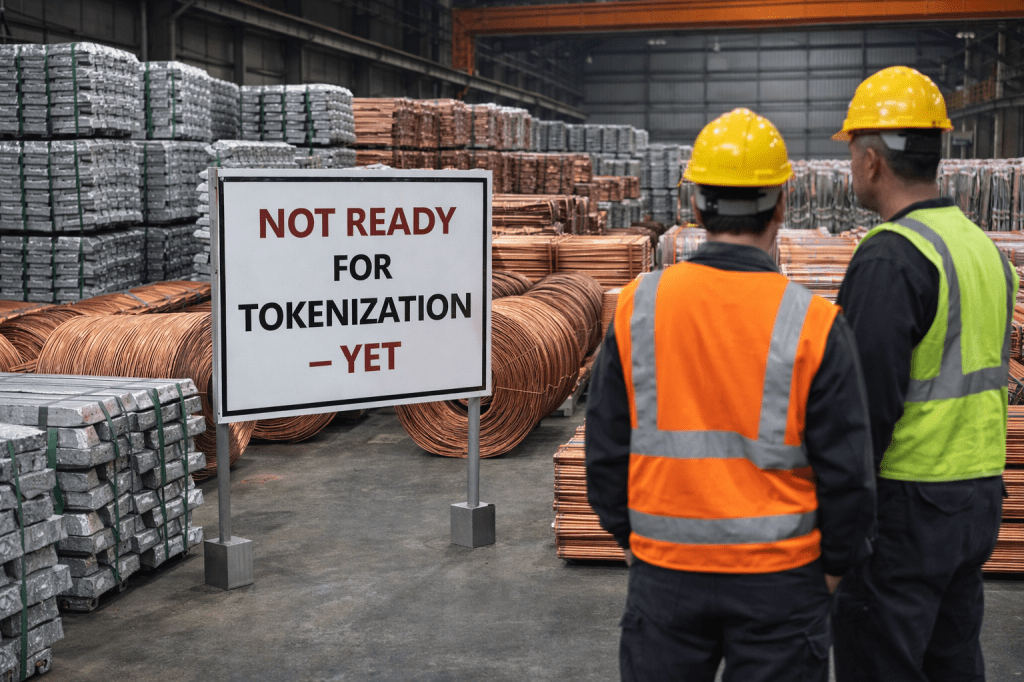
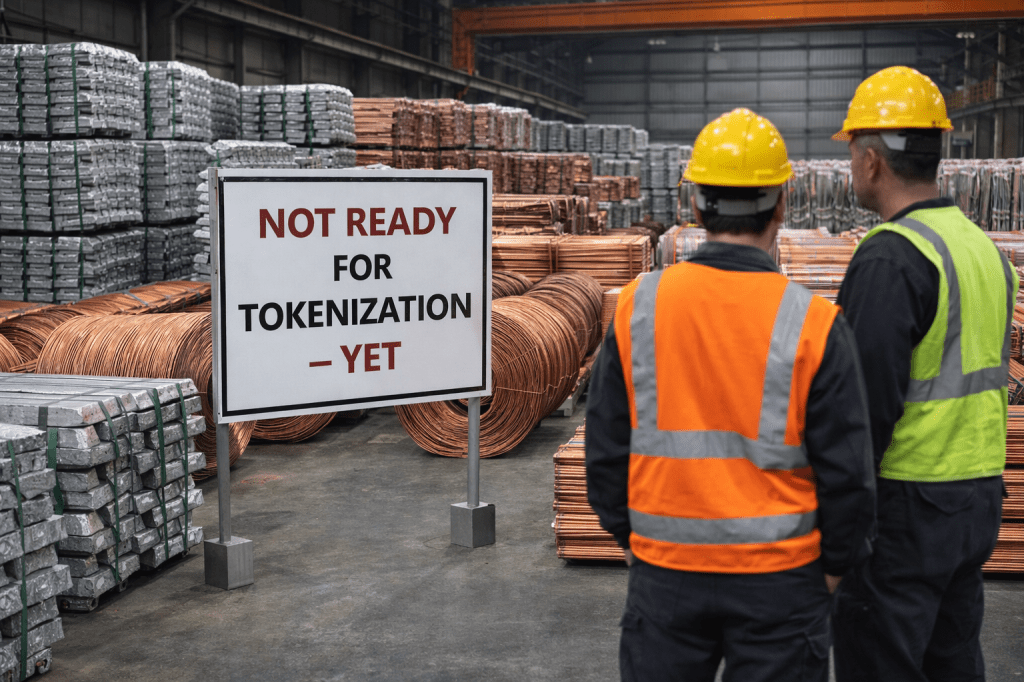
Nickel rarely gets the attention it deserves. It does not carry the mystique of gold or the narrative momentum of lithium. Yet quietly, nickel is becoming one of the most important metals in the global economy.
Why? Because it sits at the intersection of two powerful forces:
Industrial production (stainless steel)
The clean energy transition (EV batteries)
👉 Roughly 65–70% of nickel goes into stainless steel 👉 But the fastest growth is coming from electric vehicles and energy storage
So the question becomes:
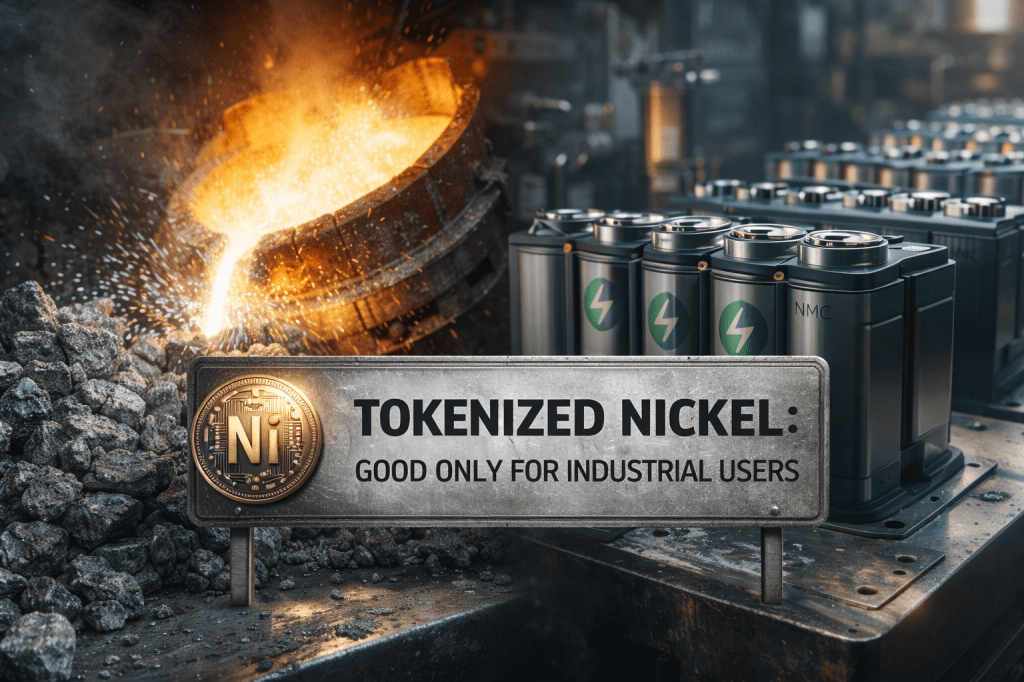
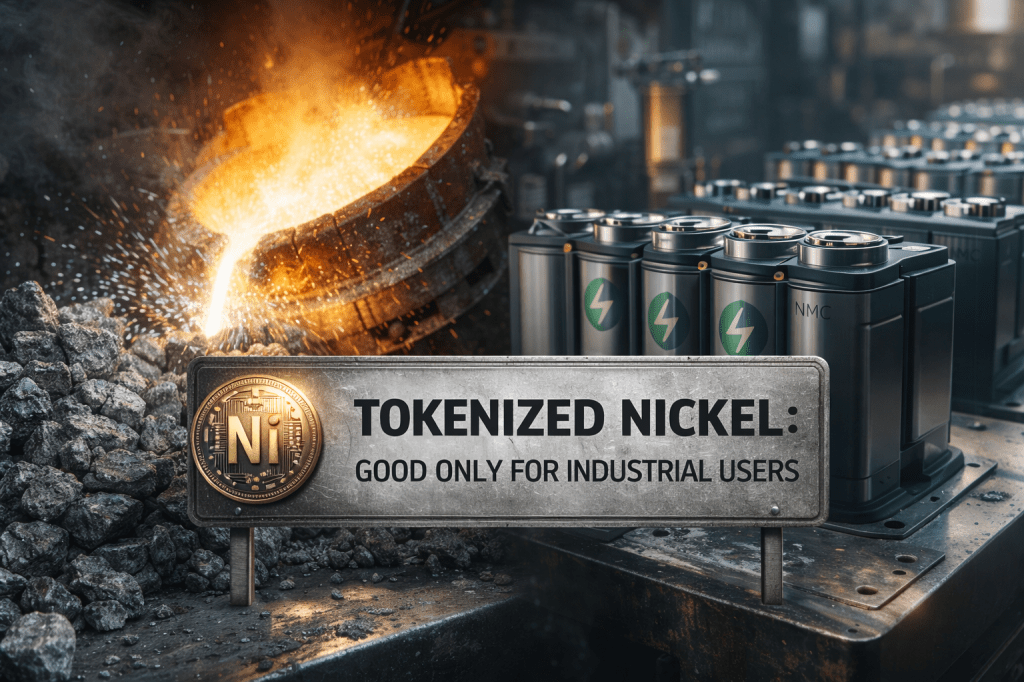
Can nickel be tokenized?
In theory—yes.
Nickel benefits from:
Global liquidity (LME markets)
Established warehouse systems
Broad industrial demand
But in practice, it is more complicated.
Nickel exists in multiple grades and forms, each with different uses and values. It moves through complex global supply chains.
👉 That makes tokenization less about retail investing… …and more about industrial efficiency, tracking, and coordination.
If tokenized nickel works, it won’t be because investors demand it.
Nickel seldom demands the spotlight. It infrequently carries the mystique of gold, the dual identity of silver, or even the growing narrative momentum of copper and lithium. Yet beneath that relative obscurity lies a reality that is becoming increasingly difficult to ignore: nickel is a foundational material in the clean energy transition.
It plays a central role in battery chemistry, industrial production, and the infrastructure of a modern, electrified economy. And as demand accelerates, so too does the complexity of its supply chain. This raises a familiar—but evolving—question:
Can a metal defined by industrial use, chemical variation, and global fragmentation be effectively tokenized on the blockchain?
Or more precisely: Is nickel another candidate for tokenization—or a reminder that not all critical materials are easily digitized? Those questions and others to be answered below, but first what is nickel?
What Is Nickel?
Nickel is a silvery-white metal known for its strength, corrosion resistance, and high-temperature stability. It has been used for over a century in industrial applications, but its importance has grown significantly in recent decades. What are its properties:
Resistance to corrosion and oxidation
High melting point
Strength and durability
Ability to form alloys with other metals
Nickel is rarely used in pure form. Instead, it is typically combined with other metals to enhance performance characteristics.
Where Is Nickel Mined?
Nickel production is geographically concentrated, with a few countries dominating global supply.
Major producers in order of production include:
Indonesia — the world’s largest producer, with rapidly expanding output
Philippines — significant supplier of laterite nickel ore
Russia — major producer, particularly of high-grade nickel
Canada — stable and high-quality production
Australia — significant reserves and mining operations
Nickel is extracted from two primary types of deposits:
Sulfide deposits (higher grade, easier to process)
Laterite deposits (more abundant, but more complex and energy-intensive to refine)
This distinction matters because:
Not all nickel is equal
Processing methods affect cost, quality, and usability
What Is Nickel Used For?
Nickel’s value lies in its versatility. Nickel stands as the fifth most commonly used metal behind: iron, copper, aluminum, and silver.
1. Stainless Steel (Primary Use)
Approximately 65–70% of global nickel demand is tied to stainless steel production. When iron is transformed into steel, nickel joins the production process. Nickel is used to improve corrosion resistance, strengthen toughness, and performance at high and low temperatures. Here is a short list of uses:
Used in construction
Industrial equipment
Consumer goods
This is the traditional foundation of nickel demand.
2. Batteries (Fastest Growing Use)
Nickel is a key component in lithium-ion battery chemistries, particularly:
Nickel-Manganese-Cobalt (NMC)
Nickel-Cobalt-Aluminum (NCA)
Higher nickel content in batteries results in:
Increases energy density
Extends vehicle range
This is why nickel is central to electric vehicles. Tesla, BYD, and all EV manufacturers need nickel. No nickel no EVs.
3. Energy and Industrial Applications
Nickel is also used in:
Aerospace alloys
Turbines and power generation
Chemical processing equipment
Nickel is both an industrial and strategic material. Recognizing the importance of nickel, the US government listed nickel as a critical mineral in 2022.
Why Nickel Demand Is Rising
Nickel demand is being pulled in two directions simultaneously:
1. Traditional Industrial Demand
Infrastructure development
Manufacturing growth
Stainless steel consumption
2. Energy Transition Demand
Electric vehicles
Battery storage systems
Renewable energy infrastructure
Nickel demand for batteries alone is expected to grow significantly over the next decade, driven by EV adoption and energy storage needs. This creates a dual-demand structure:
Stable base demand
Rapidly expanding new demand
Why Nickel Is a Candidate for Tokenization
Nickel presents an interesting—but complex—case for tokenization.
Unlike gold, or even silver to some extent, tokenization is not about preserving value. And as opposed to lithium, nickel is not purely about energy storage. Despite sitting outside of those considerations, there may be reasons for tokenization. Let’s examine those below.
1. Global Liquidity
Nickel is actively traded on major exchanges, including the London Metal Exchange (LME). This provides:
Price discovery
Market depth
Existing financial infrastructure
For tokenization to work effectively liquidity must be present in the market place. The nickel market has liquidity.
2. Industrial Relevance
Nickel is essential across multiple sectors:
Construction
Manufacturing
Energy
This broad utility supports:
Consistent demand
Ongoing market activity
Liquidity and industrial relevance push the possibility of tokenized nickel toward viability. Let’s go to step three.
3. Warehouse and Inventory Systems
Nickel is already stored in:
Exchange-approved warehouses
Industrial storage facilities
This creates a potential foundation for:
Token-backed inventory models
Digitized ownership
Warehouse and inventory systems combined with liquidity and industrial relevance create the environment where tokenization is possible. Yet, there is one more factor–strategic importance. Nickel is valued by major economic and military powers.
4. Strategic Importance
Nickel is a critical mineral, according to the US government, European Union, Canada, Australia, Japan, United Kingdom, India, and China. There may be others, but you get the point. In other words, every major economic power. Russia is missing most likely because they are a major silver producer and therefore are not concerned with securing supply. As a critical mineral that means governments are monitoring supply chains and nations have or will develop supportive policy frameworks.
This increases demand for:
Transparency
Traceability
Verification
How Tokenized Nickel Might Work
Tokenization of nickel would likely follow several possible models.
1. Warehouse-Backed Tokens
Each token represents a specific quantity of nickel
Stored in verified facilities
Audited regularly
Similar to gold—but with more complexity. Sophisticated players only.
2. Supply Chain Tracking
Tokens track nickel through stages:
Mining
Processing
Manufacturing
This could improve:
Transparency
Efficiency
Coordination
3. Contract-Based Tokenization
Tokens tied to:
Future production
Offtake agreements
This introduces:
Financing opportunities
Legal complexity
The Case AGAINST Tokenizing Nickel
❌ Variability in Material
Nickel exists in multiple forms and grades:
Class 1 nickel (high purity, battery-grade)
Class 2 nickel (lower purity, stainless steel use)
This complicates standardization and tokenizations works best under standardized conditions.
❌ Processing Complexity
The value of nickel depends heavily on:
Refining method
End-use application
Tokens must reflect these differences accurately. The solution might include NFTs.
❌ Supply Chain Fragmentation
Nickel moves through multiple jurisdictions and stages. Tracking this reliably is difficult albeit not impossible.
❌ Limited Retail Investment Appeal
Unlike gold, nickel is not held as an investment asset. Thus, tokenization may be driven more by specialized industry users than investors.
Governance Considerations
As with all tokenized metals, governance is central.
Key issues include:
Proof of reserves
Audit transparency
Legal ownership rights
Redemption mechanisms
In nickel, these issues are amplified by:
Multiple grades and classifications
Complex processing chains
Cross-border logistics
Without strong governance, tokenized nickel risks becoming:
Technically feasible
Practically unreliable
Final Thoughts
Nickel occupies a unique position in the evolving tokenization landscape. Nickel is:
Industrial
Strategic
Increasingly essential
But it is also:
Variable
Complex
Difficult to standardize
Tokenizing nickel is not about creating a new digital asset for investors. It is about improving how a critical material moves through the global economy. If tokenization succeeds it won’t be due to retail market enthusiasm. Nope. It will be because the industrial system demands:
Greater efficiency
Better transparency
Stronger coordination
And as always:
Structure—not story—will determine whether tokenized nickel becomes a meaningful innovation—or simply another digital experiment.
Much of the conversation around tokenization has focused on gold and, to a lesser extent, silver. That makes sense—both are stores of value, widely recognized, and relatively standardized.
But a quieter shift is now underway.
Industrial metals are beginning to enter the blockchain conversation.
Unlike precious metals, industrial metals—such as copper, aluminum, and nickel—are not stores of value. They are inputs to the real economy, essential to infrastructure, energy systems, and manufacturing.
So why tokenization?
The answer lies in three areas:
Supply chain complexity
Demand for transparency and provenance
The ongoing financialization of commodities
Tokenization offers the potential to improve tracking, reduce settlement friction, and enhance visibility across fragmented global supply chains.
But challenges remain.
Industrial metals lack the standardization of gold. They vary by grade, form, and end use. That makes token design—and trust—more difficult.
Not all metals are equally viable. Copper and aluminum may be strong candidates. Raw ore and specialized alloys, far less so.
So is this the next frontier—or premature?
Likely both.
Tokenization of industrial metals is not about creating digital money—it is about modernizing the infrastructure of the real economy.
Are Industrial Metals Ready to Join the Blockchain World
The conversation around tokenization has, to date, been dominated by precious metals—particularly gold and, to a lesser extent, silver. That focus has been logical. Gold is a store of value, widely recognized, and relatively standardized. Silver, too, has been a store of value for thousands of years and remains so in many parts of the world. Hence, both lend themselves naturally to tokenization. But a quieter shift is now beginning to take shape.
Industrial metals—long defined by their role in production rather than wealth preservation—are starting to enter the blockchain conversation. This development raises an important question: can metals defined by utility, variability, and complex supply chains be effectively tokenized? Or does their very nature resist the structure required for digital representation? Read along to find out, but first we start with a definition: what are industrial metals?
What Are “Industrial Metals”?
Industrial metals are those primarily used in manufacturing, construction, and technology rather than as stores of value, a unit of account, or a medium of exchange. In other words, industrial metals are not money nor currency. While industrial metals don’t function as money, they are the backbone of the real economy. No industrial metals equals no modern society. Consider these common examples:
• Copper Aluminum
• Nickel Zinc
• Lead Tin
What do they all have in common? These metals are essential inputs for:
• Infrastructure and construction
• Energy systems (including renewables)
• Electronics and manufacturing
• Transportation and industrial machinery
Unlike gold or silver, their value is not driven by monetary psychology; it is driven by economic activity and industrial demand.
Why Industrial Metals Are Now Entering the Tokenization Conversation
Three structural shifts are driving interest in tokenizing industrial metals. Let’s examine each one below.
1. Supply Chain Complexity
Industrial metals move through long, fragmented supply chains:
• Extraction
• Refining
• Transportation
• Storage
• Delivery
Each stage introduces friction, opacity, and inefficiency. Tokenization offers the potential to:
• Track ownership more precisely
• Improve transparency
• Reduce settlement delays
In theory, a token could represent a specific quantity of metal at a defined point in the supply chain—creating a more efficient system of transfer and verification. Now, point two.
2. Demand for Transparency and Provenance
As global supply chains come under scrutiny—particularly around environmental and geopolitical issues—there is growing demand for:
• Verified sourcing
• ESG compliance
• Chain-of-custody tracking
Blockchain infrastructure is well-suited to this challenge. Tokenized metals are capable of:
• Recording origin
• Tracking movement
• Providing immutable audit trails
This is particularly relevant for metals used in:
• Electric vehicles
• Renewable energy systems
• Advanced manufacturing
3. Financialization of Commodities
Industrial metals are already heavily traded. Traders often use:
• Spot markets
• Futures contracts
• Exchange-traded products
Tokenization represents a potential next step in the technological evolution—bringing:
• Faster settlement
• Fractional access
• New liquidity channels
However, unlike gold, industrial metals are not typically held for investment. That distinction matters.
How Industrial Metals Might Be Tokenized
We now turn to the “how” in the process. The tokenization of industrial metals can take several forms, each with different implications. Let’s walk through the possibilities.
1. Warehouse-Backed Tokens
The most straightforward model mirrors tokenized gold:
• A token represents a specific quantity of metal
• Stored in a certified warehouse
• Backed by documented inventory
This approach works best when:
• The metal is standardized
• Storage conditions are stable
• Inventory is clearly defined
2. Supply Chain Tokens
A more complex model involves tokenizing metals in motion. This model is much more ambitious—not impossible, just more difficult. If successful, it might look like this:
• Representing metal at various stages (ore, refined, shipped)
• Linking tokens to logistics data
• Updating ownership as the metal moves
3. Production-Linked Tokens
In some cases, tokens could represent:
• Future production
• Offtake agreements
• Rights to delivery
This begins to blur the line between commodities and financial contracts. This, of course, introduces additional layers of risk—a field day for securities lawyers.
Which Industrial Metals Are Strong Candidates?
Not all industrial metals are equally suited for tokenization. Below, they are divided into most viable, moderately viable, and less viable categories based on market structure, standardization, and practical considerations.
Most Viable Candidates
Copper
• Highly standardized
• Globally traded
• Critical for electrification and energy systems
Strong candidate due to liquidity and uniformity
Aluminum
• Widely used
• Standardized forms (ingots, billets)
• Established global markets
Suitable for warehouse-backed token models
Nickel
• Increasing demand (EV batteries)
• Growing interest in supply chain transparency
Viable, particularly with ESG tracking
Moderately Viable
Zinc and Tin
• Smaller markets
• Less investor attention
• Still standardized
Possible, but with limited initial demand
Which Metals Are Less Viable—and Why
Lead
• Declining industrial relevance
• Environmental concerns
Limited investor and institutional interest
Highly Specialized Alloys
• Non-standardized
• Variable composition
• Difficult to verify consistently
Poor candidates for tokenization
Raw Ore
• Highly variable
• Quality differences
• Requires processing
Not suitable for direct token representation
The Core Challenge: Standardization vs. Reality
The central issue with industrial metals is not technology—it is standardization. Without standardization, it becomes an uphill climb.
Gold works because:
• One ounce is interchangeable with another
• Quality is universally defined
Industrial metals, by contrast:
• Vary by grade
• Differ by form
• Depend on end-use requirements
This creates friction in token design. While tokens can be non-fungible (NFTs), that only adds complexity.
For tokenization to work, the system must answer:
• What exactly does the token represent?
• Where is the metal located?
• What are its specifications?
Without clear answers, the token risks becoming:
• Ambiguous
• Illiquid
• Distrusted
Governance Still Matters
As with precious metals, tokenization does not eliminate the need for governance—it amplifies it.
Key considerations include:
• Custody and storage verification
• Audit frequency and transparency
• Legal ownership rights
• Redemption mechanisms
In industrial metals, these issues are even more complex due to:
• Supply chain variability
• Multiple stakeholders
• Jurisdictional differences
Without strong governance frameworks, tokenized industrial metals risk becoming:
• Conceptually appealing
• Practically unreliable
So—Is This a Real Shift or Premature?
Industrial metals are unlikely to follow the same path as gold or silver. They are not primarily:
• Stores of value
• Monetary hedges
They are:
• Inputs
• Tools
• Economic enablers
That distinction means tokenization will likely develop differently. Instead of focusing on investment demand, the more appropriate focus may be efficiency, transparency, and logistics applications.
Final Thoughts
Industrial metals are beginning their blockchain moment—but it will not look like gold’s. This is not about creating digital stores of value. It is about modernizing the infrastructure that supports the real economy using blockchain technology.
The opportunity is significant:
• More transparent supply chains
• Faster and more efficient transactions
• Improved verification and trust
But the challenges are equally real:
• Lack of standardization
• Complex logistics
• Greater governance requirements
As with any emerging system, the outcome will depend not on the technology itself, but on how it is implemented. Tokenization can bring structure to complexity—but only if the underlying system is clearly defined and rigorously governed. In the case of industrial metals, that work is just beginning.