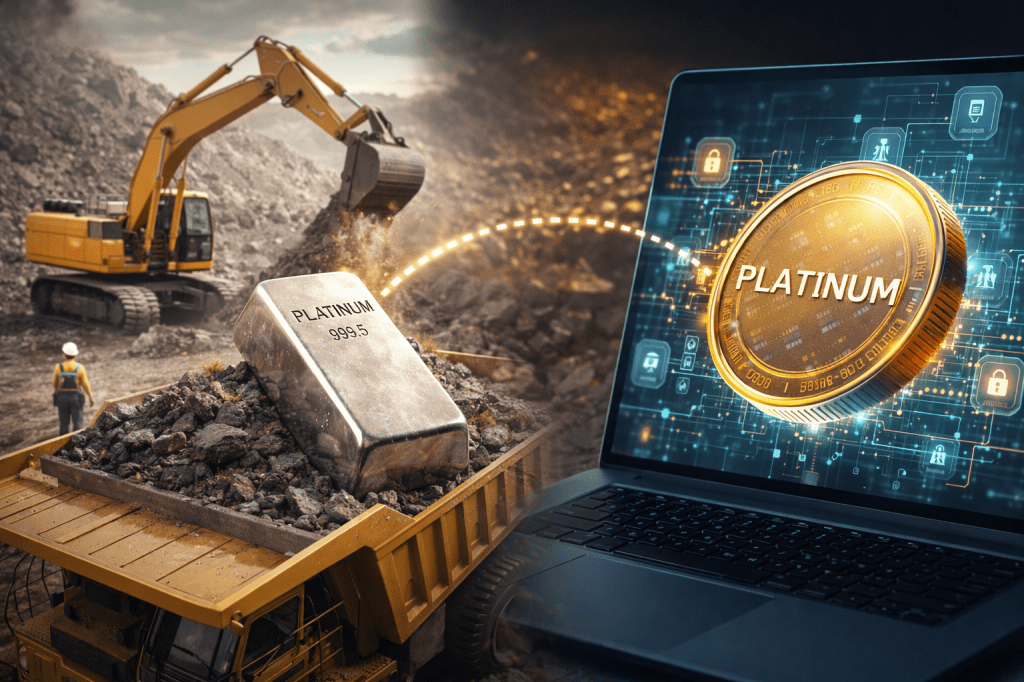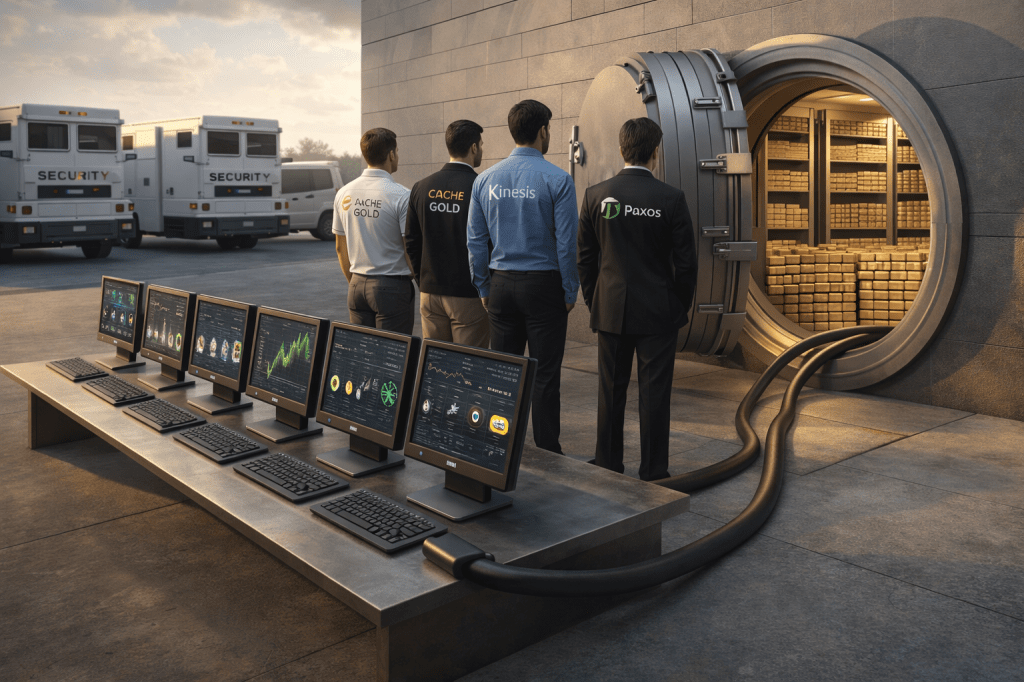
There is a massive battle among nation states, central bankers, industrialists, and institutional investors to secure strategic metals supplies. They have driven up the price of precious metals over the last two years, not retail demand. That is well documented. What is new, and under reported, is the advent of a novel manner to demonstrate precious metals ownership–tokenization! That’s why beginning this January, I’ll be publishing the 2026 Tokenized Metal Series. Let me tell you what to expect.
Be prepared to read a one-year weekly series dedicated to the tokenization transformation—of gold, silver, copper, lithium, nickel, cobalt, and metals powering the global economy. A full year of insights on how commodities, AI, mining, and digital finance are converging. Very cool! These assets are now stepping onto blockchain rails, gaining faster settlement, greater transparency, and global portability. The implications are enormous—for investors, miners, manufacturers, and policymakers. The future isn’t just digital currency—it’s digital metals. Who else is offering this? No one other than Yogi Nelson. The costs? Free. What’s not to like.
Why This Series Matters
If you care about global markets, technology, energy systems, geopolitics, or investing, these changes will affect you. Listen, three major shifts are happening simultaneously:
1. Tokenization is moving into real utility.
Real assets—not meme coins—are being digitized on public ledgers. Forget stupid Pepe and his coins or a dog face token worth nothing; I’m talking about tokenized gold!
2. AI is revolutionizing mining.
Exploration, extraction, mapping, and mineral intelligence are evolving faster than most headlines suggest. A lot less drill and hope; a lot more boring and discover.
3. Institutions and regulators are preparing for digital commodities.
Compliance frameworks, custody solutions, and market infrastructure are aligning for the first time.
What You’ll See Each Week in 2026
Each installment of the series will explore one theme, including:
Tokenized precious metals
Industrial and energy metals on-chain
AI-driven mining and robotics
Digital twins of mines
Satellite-based mineral intelligence
Tokenized metals as collateral
Commodity-backed stablecoins
Regulatory developments
Institutional adoption trends
Some essays will be deep dives; others will be quick, engaging reads. All will be grounded in real-world developments.
Who This Series Is For
This series is for those who enjoy big ideas, clarity, and an occasional bad dad joke:
Investors
Financial advisors
Miners and engineers
Metals analysts
Crypto newcomers
Skeptics
Students of markets
Anyone exploring the intersection of technology and real-world assets
January: The Digital Metals Era Begins
Metals built our civilization. Now they’re about to move onto digital rails. Tokenization isn’t replacing commodities—it’s modernizing them. And 2026 will be the year the world finally notices.
When you ponder commodity markets, do high-tech images flash across your mind’s eye? Probably not—and for good reason. Commodities markets are typically slow and lack innovation. That’s about to change! Gold, silver, platinum, palladium, copper, lithium, nickel, cobalt, and even rare earth metals are now beginning to move onto the blockchain—quietly, steadily, and with enormous long-term implications. Ironically, blockchain is poised to claim its title as one of the most transformative technologies by tokenizing society’s oldest real world assets—commodities. This is the moment blockchain fans have been anticipating—not silly crypto tokens, e.g., Pepe coin, Fart coin, and countless other nonsense. In 2026, this transformation will accelerate.
That’s why beginning January 7, 2026, I’m launching a new weekly series on BlockchainAIForum: 52 articles (perhaps more) dedicated exclusively to the rise of tokenized metals. Here we will explore the hard assets of yesterday, reinvented for the digital rails of tomorrow. Let’s start with why tokenized metals matter now.
Why Tokenized Metals Matter Now
Tokenized or not, metals matter. Essential for electricity, automobiles, computers, and countless other products, our modern society collapses in their absence. In fact, the U.S. Government keeps a list of 60 metals it considers critical to our economic welfare and security. Tokenizing ownership of metals for commerce is simply their next evolution. Consider this:
Gold has already passed $1 billion in tokenized value.
Silver is at nearly $200 million and climbing.
Copper, lithium, and energy metals are lining up next.
In other words: the tokenization of metals is already happening—right now—and the wave is still early. Moreover, AI has begun reshaping exploration and mining, and government regulation is pivoting from unclear to constructive.
With that as context, I say in a simple declarative sentence: the purpose of this series is to help you understand the future of metals and commodities on the blockchain, one week at a time.
Why I’m Writing This Series
I decided to write this series after discovering a gap in the market. The gap? No one is covering the tokenization of metals space comprehensively. The world is becoming digital, and so are commodities. Accordingly, investors today want assets that are:
real
transparent
portable
auditable
globally liquid
usable as collateral
compatible with both TradFi and DeFi
Tokenized metals check every box. Gold-backed tokens already operate on public ledgers. Silver tokens are emerging as a hybrid industrial–monetary asset class. Copper and lithium tokens could one day power EV supply chains. Institutions are quietly preparing for digital commodities. And tokenized assets are forecast to reach $10–15 trillion during the next decade. Most investors have no idea this is happening. This series will change that.
What This Series Will Cover
In 2026 the BlockchainAIForum will be exclusively dedicated to:
What to Expect Each Week — Free High-Quality Content
Every week you will receive content dedicated to tokenized commodities markets. The price? Free! Did I mention it’s free? Yes, free. Pick the media you prefer:
Deep, educational long-form articles on BlockchainAIForum.com
Short, fast LinkedIn versions
Micro-versions for Coinbase and other social media
Who This Series Is For
Are you a lifelong learner? Do you enjoy exploring big ideas? Does the idea of understanding emerging trends appeal to you? If you answered yes to any of those questions, this series is for you!
Investors
Advisors
Students of markets
Crypto newcomers
Metals analysts
Miners and engineers
Skeptics who demand real-world value
Readers curious about where technology is taking us next
2026 Will Be the Year of Digital Commodities
No surprise—gold was the first commodity to tokenize. After all, it is the world’s largest commodity asset. And as usual, silver, gold’s little brother, is right behind. Copper, lithium, nickel, and rare earth elements are lining up. That’s not all. The space has regulatory tailwinds. Mining has policy support for economic and security reasons. AI technology is transforming mining. And blockchain is transforming ownership.
In other words, the world is moving toward a future in which metals, not just money, live on digital rails. Let’s explore that frontier together.
Gold has captured the attention of the Real World Asset (RWA) market, but silver—its undervalued little sister, that is both money and industrial metal, is quietly entering the blockchain era. Listen, tokenized silver is no longer a distant idea. It already exists, with several companies offering blockchain-based silver tokens backed by physical metal. The real question now is “how big will this market become, and how soon?” That’s why I want to share what tokenized silver is, who’s doing it, why it matters, and when it might enter mainstream adoption.
What Is Tokenized Silver?
Tokenized silver is a digital representation of real, vaulted silver on a blockchain. Each token ideally reflects:
– One ounce (or gram) of physical silver – Stored securely in audited vaults – Fully redeemable – Instantly transferable across borders
The total tokenized silver market currently sits around $180–190 million—small, but no longer hypothetical. The overall tokenized precious-metals sector is estimated above $1 billion and growing.
Silver Tokenizers Step Forward and Reveal Yourself!
1. Kinesis Silver (KAG) Each KAG token is backed by one ounce of physical silver. Kinesis stores the metal in audited, insured vaults worldwide. It aims to reintroduce silver-backed currency in modern digital form.
2. SilverToken (SLVT) SLVT represents ownership of physical silver held in multiple privately owned vaults. Tokens are redeemable for real silver or convertible back into USDC. A portion of transaction fees buys additional silver to strengthen backing.
3. Wealth99 Silver Token Each token represents one ounce of silver, with full physical backing and vault guarantees. Wealth99 emphasizes fractional ownership, allowing very small purchase sizes.
4. Ainslie Bullion – AGS Token AGS is backed by one gram of vaulted silver and is part of a larger suite of tokenized metals. It’s popular in Australia as a gateway to fractional precious-metal ownership.
These platforms are all operating, audited, and offering real metal-backed digital assets right now.
Why Tokenize Silver?
There are several compelling reasons:
1. Silver’s Dual Role: Industrial + Monetary Silver is both an industrial workhorse (solar, electronics, medical applications) and a centuries-old monetary metal, dating back to the Romans. Tokenization blends these strengths with the technology of blockchain.
2. Fractional Ownership and Liquidity Tokenized silver allows: – Borderless trading – Fractional ownership (as little as 0.01 oz) – 24/7 liquidity – Integration with DeFi lending and collateral systems
3. Transparency and Auditability Many projects publish vault audits, proof-of-reserves, and on-chain issuance logs. For investors skeptical of “paper silver,” this transparency is an upgrade but no replacement for physical possession.
Challenges and Risks
1. Custody and Counterparty Risk The biggest question: can the token truly be redeemed for silver? Answer–everything hinges on proper vaulting, insurance, and legal clarity.
2. Regulation Tokenized silver sits at the intersection of commodities, securities regulation, and crypto law. Does this slow institutional adoption? Yes. However, now that the SEC and CFTC are pro-innovations, there is room for optimism.
3. Liquidity Full disclosure–current liquidity is modest. Tokenized silver is a fraction of the global silver market. Trading depth must increase before large institutional flows are possible.
So… When Will Tokenized Silver “Arrive”?
Technically, it already has. The infrastructure is live. But mainstream adoption will depend on:
– Regulation – Institutional custodians adopting tokenized metals – On-chain liquidity and exchange support – Integration into DeFi collateral markets
0–3 Year Outlook – More exchanges list silver-backed tokens – Better on-chain audits and redemption pathways – Improved liquidity
3–5 Year Outlook – Institutional-grade silver-backed stablecoins – Multi-metal baskets (gold + silver + copper) – Cross-market tokenized commodities funds
Silver tokenization is moving from experimental to established. The next phase will focus on scale, regulation, and trust.
Time to Go But First a Final Thought
Tokenized silver is not science fiction. It exists, it’s working, and companies like Kinesis (KAG), SilverToken (SLVT), Wealth99, and Ainslie’s AGS are proving the model today. Its future depends on expanding liquidity, strengthening trust, and building regulatory clarity. As the RWA sector matures, silver could become a foundational asset class on the blockchain—providing a bridge between industrial demand, physical scarcity, and digital programmability. For investors who appreciate both hard assets and blockchain efficiency, tokenized silver could become a powerful hybrid store of value.
Discovery and extraction of precious metals—gold, silver, platinum, palladium—has relied heavily on manual geological interpretation, slow survey cycles, and trial-and-error drilling since about 1850. Making the “boring” process boring. lol. Today a new queen sits atop the golden throne of precious metals discovery and extraction! And she offers excitement—her name is artificial intelligence (AI)! Ms. AI is re-engineering the precious metals sector from the ground up—pun intended. lol!
Why has she ascended? For the simple, yet complex, reasons that as ore deposits become deeper, grades decline, and environmental expectations increase, AI offers solutions that improve efficiency, reduce costs, and minimize risk. Let’s “dig” into this phenomenon by “extracting” how AI is being deployed across the precious-metals value chain—from exploration and drilling to processing, sustainability, and blockchain-based supply-chain verification.
AI-Driven Exploration: Faster, Cheaper, and More Accurate
Predictive Geological Modeling
Machine-learning models analyze enormous geological datasets—satellite imagery, geochemical surveys, seismic readings, magnetic anomalies, and historical drilling logs. What’s the point of doing that? Answer—to identify high-probability mineralization zones! AI can detect “hidden patterns” in rock structure that human geologists cannot.
Studies in Canada, Australia, and South Africa show that AI-driven exploration can:
Reduce exploratory drilling by 20–40%
Lower costs by millions of dollars per project
Shorten timelines by months or years
Remote Sensing Enhanced by AI
AI-trained spectral models can identify alteration minerals associated with gold, lithological contacts, structural breaks, and soil anomalies. Drones equipped with hyper-spectral sensors now produce site maps with centimeter-level precision, allowing exploration teams to prioritize the highest-value drill targets. Before AI you couldn’t hit what you couldn’t see!
AI in Drilling and Extraction: Precision and Real-Time Optimization
Smart Drilling Systems
AI-enabled rigs adjust torque, rotation speed, and angle in real time based on rock hardness. This reduces equipment wear and improves penetration accuracy. Sensor arrays feed live data into machine-learning models that classify rock types instantly.
Also consider this: on-site AI analyzers evaluate ore quality without waiting for off-site labs. These systems can identify gold or silver grade, platinum-group concentrations, and the presence of impurities. This allows miners to instantly determine what should go to processing—improving profitability.
Autonomous Mining Equipment
These systems reduce accidents, operate around the clock, and enhance fuel efficiency. Major miners now use:
Self-driving haul trucks
Autonomous blast-hole drill rigs
AI-guided loaders
Smart conveyor systems
AI in Processing: Higher Recovery, Lower Costs, Smaller Footprint
Machine-Learning Process Control
AI continuously fine-tunes flotation chemistry, water usage, mill speed, and smelter temperatures. These optimizations typically increase recovery rates by 2–5%, generating millions in added annual revenue for mid-size precious-metal operations.
But that’s not all. AI can also predict energy demand and reduce consumption by 10–20%. Given that extraction consumes large quantities of energy, this is a meaningful efficiency gain. One more point, AI models also excel at identifying structural risks in tailings dams, detect seepage patterns, and monitor environmental indicators such as water quality and dust emissions.
4. Safety and Environmental Protection
Predictive Maintenance
AI forecasts equipment failures before they happen, preventing downtime and reducing catastrophic failures. Computer-vision systems identify workers near unsafe machinery, detect non-compliance with safety gear, and monitor underground instability.
Let’s not overlook the important improvements in environmental monitoring, including water contamination, air quality, noise levels, and habitat protection.
5. Sustainability: AI as the Engine of “Green Mining”
Perhaps at the top of the chart is precision mining. With AI, removing less rock, using fewer chemicals, reducing diesel combustion, and optimizing water recycling are all achievable. This is becoming a core requirement as governments and investors demand cleaner resource extraction.
Now the blockchain part—and as fans of blockchain, I’m sure you already know that AI plus blockchain equals a tamper-proof digital record of:
Mine origin
Ore transport
Refinery steps
ESG compliance
Responsible-sourcing certification
Smart Refining Contracts
Of course, the blockchain benefits don’t end there. They also include automated payments via smart contracts when AI-verified ore quality reaches contractual thresholds. And AI can scan blockchain records for fraudulent patterns. That’s gold-medal-winner level!
7. Limitations and Challenges
Of course, nothing is perfect. That’s why, when using AI in precious-metal exploration and extraction, users should be aware that large amounts of data are required to train the models, integration of sensors and AI equipment is costly, models need constant monitoring, and staff training needs its own budget line item.
Conclusion
The coronation of the new queen of precious metal discovery and extraction is complete. Wearing her artificial intelligence corona, she is reshaping precious-metal exploration and mining into a faster, safer, and more environmentally responsible industry. From her throne, her message is: as AI continues to merge with blockchain, sensor networks, and robotics, the mining sector is entering a historic transformation where data—not geology alone—will define future success.
Until next time,
Yogi Nelson
Sources & Citations
McKinsey & Company – “The Role of Artificial Intelligence in Mining.”
IBM Research – AI for Geoscience and Remote Sensing
Deloitte – Tracking the Trends: The Top 10 Issues Transforming the Mining Industry
Accenture – AI and Digital Twins in Mining
Rio Tinto – Autonomous Mining Operations Reports
World Gold Council – Responsible Gold Mining Principles
Journal of Mining Science – Machine Learning Applications in Ore-Grade Prediction
U.S. Geological Survey (USGS) – Mineral Resources and Remote-Sensing Studies
MIT CSAIL – AI for Environmental Monitoring & Industrial Optimization
Long before there were governments, banks, or stock brokers, gold was a universal store of value, a hedge against chaos, and a cornerstone of global wealth. When Columbus stepped onto San Salvador, (Bahamas today), indigenous people were using it even though they had no contact with Europeans, Asians, or Africans! Fast forward to 2025 and gold is stepping into the digital revolution through tokenization — a process that turns tangible gold into blockchain-based assets. Hope, you like the image above–I couldn’t resist the shine! lol. Let’s explore what tokenized gold is, how it works, its advantages and risks, and how you can buy it.
What Is Tokenized Gold?
Tokenized gold is a digital representation of physical gold stored in a secure vault. Each blockchain token corresponds to a fixed quantity of real gold — for example, one token per troy ounce or per gram. It’s essentially “physical gold + digital convenience.” Yesterday plus today! Instead of storing bars yourself, (a dangerous proposition) you hold a blockchain token backed by gold that a trusted custodian safeguards. Example: Tokens such as PAX Gold (PAXG) and Tether Gold (XAUT) represent legally redeemable ownership rights in physical gold stored in London or Switzerland. With me so far? Good, then let’s discuss how tokenized gold works.
How Does Tokenized Gold Work?
The five step sequence below is how the ecosystem functions. Essentially, this blend of blockchain transparency and physical backing gives investors a bridge between traditional assets and digital finance. Old gold bugs, sound money supporters, and young millennials can bond!
Gold acquisition: The issuer purchases and stores gold bars in accredited vaults.
Token issuance: Smart contracts mint tokens (often, but not exclusively, on the Ethereum network) that represent the stored gold.
Trading and transfer: Tokens can be traded 24/7 on crypto exchanges or used in DeFi platforms as collateral.
Auditing: The issuer publishes proof-of-reserve or third-party audit reports confirming every token is backed by real gold.
Redemption: Token holders may redeem tokens for physical gold or fiat value, depending on the issuer’s rules.
Advantages of Tokenized Gold
Tokenized gold merges the security of gold with the flexibility of crypto thus making it a winner. In essence, tokenized gold gives you instant liquidity, borderless mobility, and verified backing. The six reasons below should convince anyone:
Fractional ownership: You can buy tiny portions of gold — even milligrams — democratizing access.
High liquidity: Tradeable 24/7 on exchanges, unlike traditional gold markets that close daily.
Transparency: Blockchain records all transactions; most issuers provide public audits of gold reserves.
No physical storage hassle: Custodians handle vaulting and insurance while you manage digital keys.
Global reach: Anyone with internet access can invest, regardless of geography.
DeFi integration: Tokenized gold can be lent, borrowed, or used as collateral in smart contracts.
Disadvantages of Tokenized Gold
Despite the strong arguments for tokenized gold, let’s be honest, tokenization isn’t a perfect replacement for physical gold ownership. As always, do your own due diligence — trust, verification, and transparency matter as much as the gold itself. Consider these drawbacks:
Custodial risk: You must trust that the issuer’s vault actually contains the gold it claims. Use a reputable custodian.
Smart contract vulnerabilities: Bugs or hacks could impact your tokens.
Regulatory uncertainty: Laws governing tokenized commodities differ across countries. The good news is everyday uncertainty diminishes.
Redemption limits: Many issuers require high minimums or fees for physical withdrawal. I would love to have this problem–high quantities! lol.
Market volatility: Gold’s price can fluctuate, and so will the token’s value. However, market volatility applies equally to physical ownership also.
Where and How to Buy Tokenized Gold
Persuaded? If the answer is yes, consider using these ideas to purchase tokenized gold safely:
Research issuers and audits. Confirm the custodian, vault location, and audit frequency.
Choose a token:
PAX Gold (PAXG) – 1 token = 1 troy ounce of gold held by Paxos in London vaults.
Tether Gold (XAUT) – 1 token = 1 troy ounce of gold stored in Swiss vaults.
Select a platform: Tokens trade on major exchanges like Binance, Kraken, or Bitstamp. Not an endorsement.
Use a compatible wallet: Most tokenized gold runs on Ethereum (ERC-20), so use MetaMask, Ledger, or Trust Wallet. Again, not an endorsement.
Verify proof-of-reserves: Reputable issuers publish audits or on-chain verification data.
Consider redemption: Some issuers allow redemption for physical gold or cash once minimums are met.
Conclusion
Tokenized gold transforms the world’s oldest safe-haven asset into a liquid, programmable, and globally accessible form and that’s the reason for loving it! It allows investors to combine the enduring value of gold with the efficiency of blockchain. Yet, it’s not risk-free: smart-contract flaws, custodial opacity, or unclear regulations can all erode confidence. Tokenized gold sits at the intersection of trust and technology, and success depends on maintaining both. As the world continues merging traditional assets with blockchain infrastructure, tokenized gold offers a glimpse of how digital finance can modernize centuries-old stores of wealth.