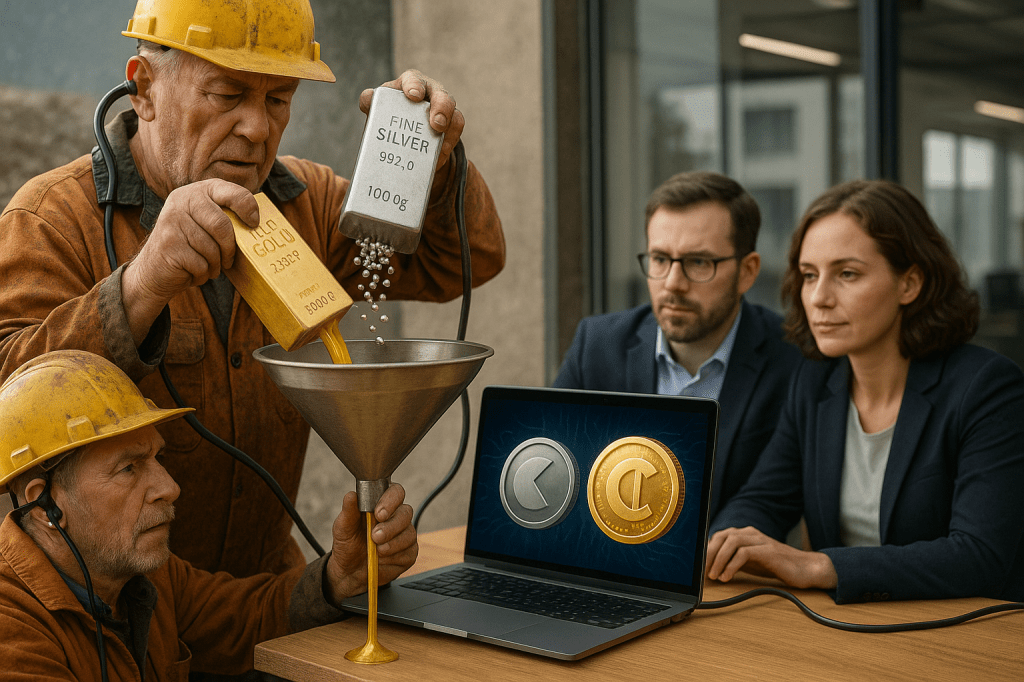
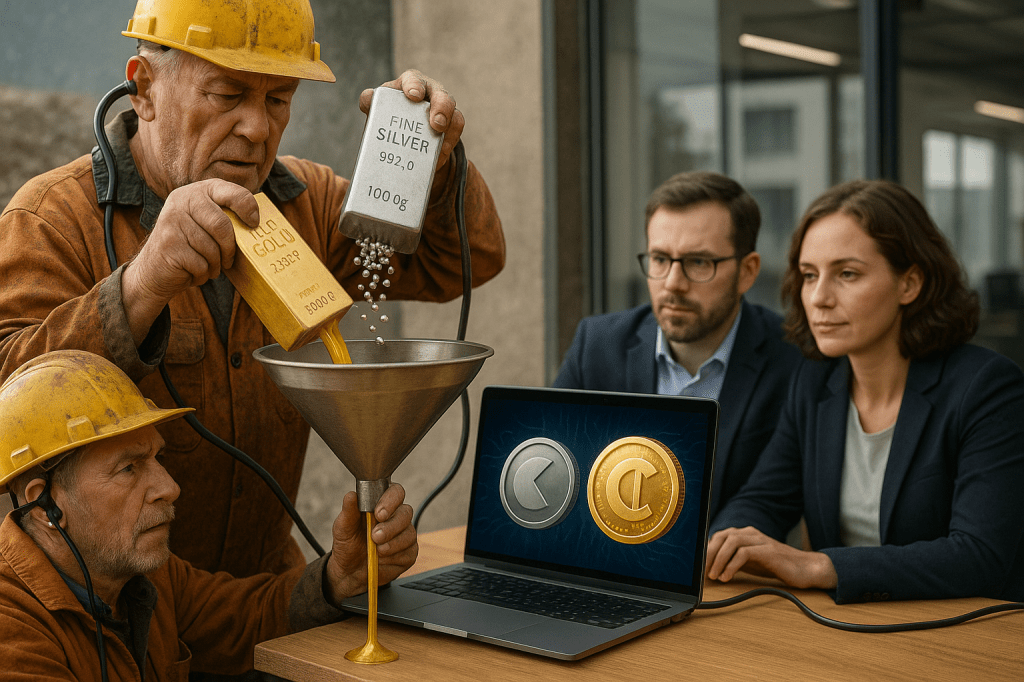
Commodity markets are entering a structural transition. Gold, silver, copper, lithium, nickel, cobalt, and even rare earth elements are beginning to move onto blockchain infrastructure. This is not a marketing slogan; it is a slow but real redesign of how ownership, settlement, and collateral work.
In 2026, I’m launching a 52-week series on BlockchainAIForum focused exclusively on tokenized metals—where hard assets meet digital rails.
Why This Matters Now
Tokenized gold has surpassed $1B in circulation.
Tokenized silver is approaching $200M.
Industrial metals are next in line.
AI is reshaping exploration, mine planning, and supply-chain visibility.
Regulators are moving toward clearer digital-asset frameworks.
For investors, treasurers, and strategists, tokenized metals combine:
Verifiable, physical backing
On-chain transparency and auditability
Faster, global settlement
Interoperability with both TradFi and DeFi systems
What This Series Will Cover
Precious metals on chain (gold, silver, platinum, palladium, rhodium)
Industrial and energy metals (copper, lithium, nickel, cobalt, graphite, rare earths)
AI, digital twins, and ESG traceability in mining
Portfolio design, collateral, and regulatory developments (SEC/CFTC)
If your work touches commodities, risk, treasury, or digital-asset strategy, I confident you’ll find this series useful.
2026 will be an important year for digital commodities. I’d be glad to have you along for the journey.
When you ponder commodity markets, do high-tech images flash across your mind’s eye? Probably not—and for good reason. Commodities markets are typically slow and lack innovation. That’s about to change! Gold, silver, platinum, palladium, copper, lithium, nickel, cobalt, and even rare earth metals are now beginning to move onto the blockchain—quietly, steadily, and with enormous long-term implications. Ironically, blockchain is poised to claim its title as one of the most transformative technologies by tokenizing society’s oldest real world assets—commodities. This is the moment blockchain fans have been anticipating—not silly crypto tokens, e.g., Pepe coin, Fart coin, and countless other nonsense. In 2026, this transformation will accelerate.
That’s why beginning January 7, 2026, I’m launching a new weekly series on BlockchainAIForum: 52 articles (perhaps more) dedicated exclusively to the rise of tokenized metals. Here we will explore the hard assets of yesterday, reinvented for the digital rails of tomorrow. Let’s start with why tokenized metals matter now.
Why Tokenized Metals Matter Now
Tokenized or not, metals matter. Essential for electricity, automobiles, computers, and countless other products, our modern society collapses in their absence. In fact, the U.S. Government keeps a list of 60 metals it considers critical to our economic welfare and security. Tokenizing ownership of metals for commerce is simply their next evolution. Consider this:
Gold has already passed $1 billion in tokenized value.
Silver is at nearly $200 million and climbing.
Copper, lithium, and energy metals are lining up next.
In other words: the tokenization of metals is already happening—right now—and the wave is still early. Moreover, AI has begun reshaping exploration and mining, and government regulation is pivoting from unclear to constructive.
With that as context, I say in a simple declarative sentence: the purpose of this series is to help you understand the future of metals and commodities on the blockchain, one week at a time.
Why I’m Writing This Series
I decided to write this series after discovering a gap in the market. The gap? No one is covering the tokenization of metals space comprehensively. The world is becoming digital, and so are commodities. Accordingly, investors today want assets that are:
real
transparent
portable
auditable
globally liquid
usable as collateral
compatible with both TradFi and DeFi
Tokenized metals check every box. Gold-backed tokens already operate on public ledgers. Silver tokens are emerging as a hybrid industrial–monetary asset class. Copper and lithium tokens could one day power EV supply chains. Institutions are quietly preparing for digital commodities. And tokenized assets are forecast to reach $10–15 trillion during the next decade. Most investors have no idea this is happening. This series will change that.
What This Series Will Cover
In 2026 the BlockchainAIForum will be exclusively dedicated to:
What to Expect Each Week — Free High-Quality Content
Every week you will receive content dedicated to tokenized commodities markets. The price? Free! Did I mention it’s free? Yes, free. Pick the media you prefer:
Deep, educational long-form articles on BlockchainAIForum.com
Short, fast LinkedIn versions
Micro-versions for Coinbase and other social media
Who This Series Is For
Are you a lifelong learner? Do you enjoy exploring big ideas? Does the idea of understanding emerging trends appeal to you? If you answered yes to any of those questions, this series is for you!
Investors
Advisors
Students of markets
Crypto newcomers
Metals analysts
Miners and engineers
Skeptics who demand real-world value
Readers curious about where technology is taking us next
2026 Will Be the Year of Digital Commodities
No surprise—gold was the first commodity to tokenize. After all, it is the world’s largest commodity asset. And as usual, silver, gold’s little brother, is right behind. Copper, lithium, nickel, and rare earth elements are lining up. That’s not all. The space has regulatory tailwinds. Mining has policy support for economic and security reasons. AI technology is transforming mining. And blockchain is transforming ownership.
In other words, the world is moving toward a future in which metals, not just money, live on digital rails. Let’s explore that frontier together.
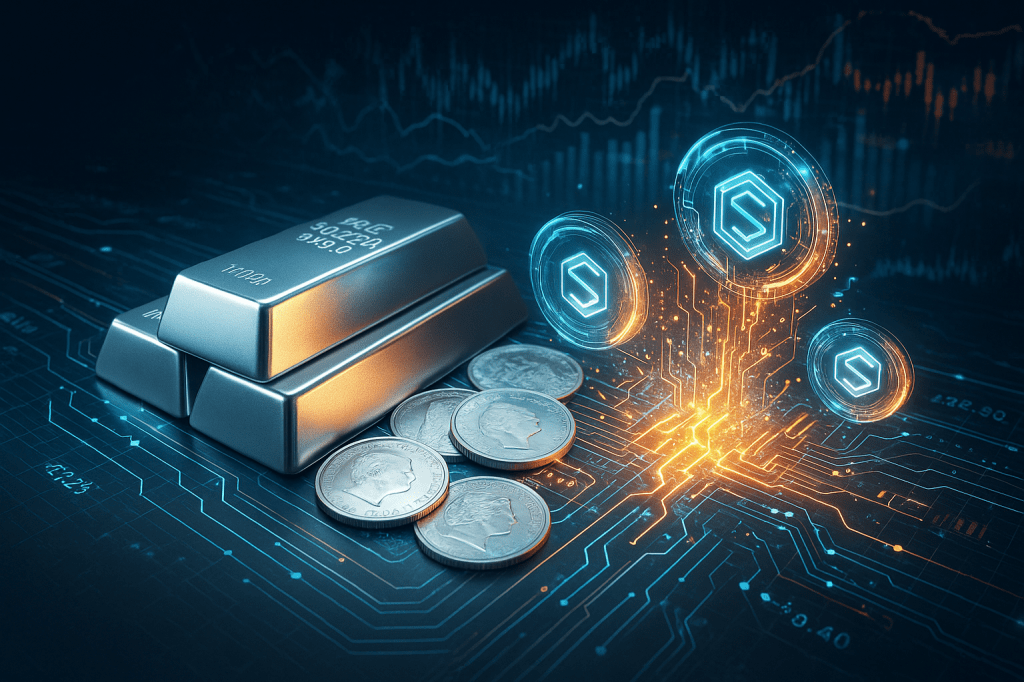
Gold has captured the attention of the Real World Asset (RWA) market, but silver—its undervalued little sister, that is both money and industrial metal, is quietly entering the blockchain era. Listen, tokenized silver is no longer a distant idea. It already exists, with several companies offering blockchain-based silver tokens backed by physical metal. The real question now is “how big will this market become, and how soon?” That’s why I want to share what tokenized silver is, who’s doing it, why it matters, and when it might enter mainstream adoption.
What Is Tokenized Silver?
Tokenized silver is a digital representation of real, vaulted silver on a blockchain. Each token ideally reflects:
– One ounce (or gram) of physical silver – Stored securely in audited vaults – Fully redeemable – Instantly transferable across borders
The total tokenized silver market currently sits around $180–190 million—small, but no longer hypothetical. The overall tokenized precious-metals sector is estimated above $1 billion and growing.
Silver Tokenizers Step Forward and Reveal Yourself!
1. Kinesis Silver (KAG) Each KAG token is backed by one ounce of physical silver. Kinesis stores the metal in audited, insured vaults worldwide. It aims to reintroduce silver-backed currency in modern digital form.
2. SilverToken (SLVT) SLVT represents ownership of physical silver held in multiple privately owned vaults. Tokens are redeemable for real silver or convertible back into USDC. A portion of transaction fees buys additional silver to strengthen backing.
3. Wealth99 Silver Token Each token represents one ounce of silver, with full physical backing and vault guarantees. Wealth99 emphasizes fractional ownership, allowing very small purchase sizes.
4. Ainslie Bullion – AGS Token AGS is backed by one gram of vaulted silver and is part of a larger suite of tokenized metals. It’s popular in Australia as a gateway to fractional precious-metal ownership.
These platforms are all operating, audited, and offering real metal-backed digital assets right now.
Why Tokenize Silver?
There are several compelling reasons:
1. Silver’s Dual Role: Industrial + Monetary Silver is both an industrial workhorse (solar, electronics, medical applications) and a centuries-old monetary metal, dating back to the Romans. Tokenization blends these strengths with the technology of blockchain.
2. Fractional Ownership and Liquidity Tokenized silver allows: – Borderless trading – Fractional ownership (as little as 0.01 oz) – 24/7 liquidity – Integration with DeFi lending and collateral systems
3. Transparency and Auditability Many projects publish vault audits, proof-of-reserves, and on-chain issuance logs. For investors skeptical of “paper silver,” this transparency is an upgrade but no replacement for physical possession.
Challenges and Risks
1. Custody and Counterparty Risk The biggest question: can the token truly be redeemed for silver? Answer–everything hinges on proper vaulting, insurance, and legal clarity.
2. Regulation Tokenized silver sits at the intersection of commodities, securities regulation, and crypto law. Does this slow institutional adoption? Yes. However, now that the SEC and CFTC are pro-innovations, there is room for optimism.
3. Liquidity Full disclosure–current liquidity is modest. Tokenized silver is a fraction of the global silver market. Trading depth must increase before large institutional flows are possible.
So… When Will Tokenized Silver “Arrive”?
Technically, it already has. The infrastructure is live. But mainstream adoption will depend on:
– Regulation – Institutional custodians adopting tokenized metals – On-chain liquidity and exchange support – Integration into DeFi collateral markets
0–3 Year Outlook – More exchanges list silver-backed tokens – Better on-chain audits and redemption pathways – Improved liquidity
3–5 Year Outlook – Institutional-grade silver-backed stablecoins – Multi-metal baskets (gold + silver + copper) – Cross-market tokenized commodities funds
Silver tokenization is moving from experimental to established. The next phase will focus on scale, regulation, and trust.
Time to Go But First a Final Thought
Tokenized silver is not science fiction. It exists, it’s working, and companies like Kinesis (KAG), SilverToken (SLVT), Wealth99, and Ainslie’s AGS are proving the model today. Its future depends on expanding liquidity, strengthening trust, and building regulatory clarity. As the RWA sector matures, silver could become a foundational asset class on the blockchain—providing a bridge between industrial demand, physical scarcity, and digital programmability. For investors who appreciate both hard assets and blockchain efficiency, tokenized silver could become a powerful hybrid store of value.
While attending UCLA, I worked part-time at upscale women’s shoe store on Rodeo Drive in Beverly Hills! There was no AI–just old fashion, “… this should fit your feet properly and it looks good on you”. Lol. Today, AI is revolutionizing the footwear industry, transforming everything from design and prototyping to personalized customer experiences and sustainable manufacturing. As brands seek to innovate and respond to evolving consumer demands, AI is proving to be a key catalyst in reshaping how shoes are conceptualized, created, and sold. Let’s pay homage to Nancy Sinatra and explore how artificial intelligence is designing, fabricating, and literally learning to walk in its own creations
Smart Design: Creativity Meets Computation
AI is “stepping” into a central role in modern shoe design. Designers now use AI algorithms to predict trends, analyze user feedback, and generate prototypes. By integrating customer preference data, AI helps designers create shoes that align with current market desires. According to an article on ResearchGate titled ‘Integrating Artificial Intelligence into the Shoe Design Process,’ machine learning models are increasingly used to optimize design aesthetics and functional parameters, improving performance while reducing trial-and-error cycles.
Personalized Fit and Comfort
One of the most consumer-centric applications of AI in footwear is customization. AI-powered foot scanning and biometric analysis allow brands, particularly luxury ones, to offer personalized sizing and comfort features. This enhances customer satisfaction and reduces returns. The article ’10 Ways AI is Being Used in the Footwear Industry’ by Digital Defynd highlights how brands employ 3D foot mapping and AI analytics to recommend ideal fits for individual users, combining convenience with precision. Would have been nice to have during my days!
Efficient Manufacturing and Sustainability
The use of AI in manufacturing optimizes supply chain logistics, predicts material requirements, and reduces waste. Automation powered by AI ensures greater quality control and timely production. ShoeMag’s feature, ‘The Impact of AI on the Footwear Industry,’ underscores how predictive algorithms and AI-enabled robotics are helping companies streamline production while adhering to sustainable practices—an increasingly important factor for eco-conscious consumers. You might say, there are no wasted steps. lol.
Enhancing Customer Interaction
AI also improves the retail experience. From virtual try-ons using augmented reality to AI chatbots providing real-time assistance, customer interaction is becoming more immersive and intelligent. Retailers can analyze behavior patterns, preferences, and feedback, allowing for highly targeted marketing and product recommendations. Virtual try-ons? Let’s see.
Future Outlook: Walking into Tomorrow
As AI technology matures, its role in the footwear industry will only grow deeper. We can expect a future where shoes are co-designed by customers and AI, manufactured on-demand, and tailored to each individual’s biomechanics. With innovation accelerating, the line between digital insight and physical craftsmanship is becoming increasingly seamless.
Time to end, but first I must give credit to Nancy Sinatra for inspiring the title of this post with the lyrics of her famous song, “… these boots were made for walking, and that’s just what they’ll do … and one of these days, these boots are going to walk all over you!” Lol!
Until next time,
Yogi Nelson
Sources
– ShoeMag.com.tr. “The Impact of AI on the Footwear Industry.” – DigitalDefynd.com. “10 Ways AI is Being Used in the Footwear Industry.” – ResearchGate.net. “Integrating Artificial Intelligence into the Shoe Design Process.”
On October 22, 2025, T. Rowe Price — the venerable U.S. asset manager with roughly US $1.7–1.8 trillion under management — submitted a Form S-1 registration statement with the U.S. Securities and Exchange Commission (SEC) for its new T. Rowe Price Active Crypto ETF. This filing marks a significant step: a legacy investment-firm stepping decisively into the digital-asset arena with an actively managed exchange-traded product dedicated to multiple cryptocurrencies. In other words, T. Rowe Price has moved from Baltimore to the Blockchain!
What’s the Fund All About?
The proposed fund — to be listed on NYSE Arca — is structured as a trust offering shares that trade like stocks, representing fractional interests in a diversified crypto-asset portfolio. Let’s breakdown what that means:
Investment Objective: To outperform the FTSE Crypto US Listed Index over a long-term horizon (one year plus). That makes it an active product, not a passive tracker. To pull this off, T. Rowe Price would have needed to build internal staff capacity. Did it? Apparently, yes–the firm posted a senior analyst role in its Middle Office Trade Management for Digital Assets Operations, in Baltimore, 2025.
Active Strategy: The fund may hold between five and fifteen crypto assets under normal conditions. Managers can adjust exposure based on valuation, momentum, and risk analysis. Essentially, only the top 5 – 15 as defined by market cap.
Eligible Assets Only: Holdings must meet strict criteria — commodity tokens traded on compliant markets with adequate surveillance and liquidity. The proposed Clarity Act, making its way through Congress will play an important part regarding eligible assets.
No Leverage or Derivatives: The fund will not employ leverage or inverse positions.
Structure and Custody: Organized as a trust (not a 1940-Act investment company). Shares trade on NYSE Arca, with an indicative value published every 15 seconds.
Why It Matters — From Traditional Funds to Crypto Entry
For the blockchain and crypto community, this filing is a landmark moment. T. Rowe Price’s entry signals that mainstream institutional managers are taking digital assets seriously. Unlike most crypto ETFs that simply track Bitcoin or Ethereum, this one uses active management — giving the portfolio team discretion to select and weight different tokens dynamically. It’s designed as a regulated bridge between traditional finance and blockchain-based assets.
For blockchain infrastructure developers, this move suggests that custody, trading, and compliance systems are finally maturing to meet large-scale institutional standards. Every step toward a product like this strengthens the backbone of the crypto ecosystem.
Potential Benefits and Opportunities
Simplified Access: Investors gain exposure to a diversified basket of crypto assets through a single exchange-listed fund — no self-custody required.
Active Management Edge: Skilled managers can tilt allocations toward assets they believe have stronger fundamentals or momentum.
Diversification: Exposure to up to 15 tokens reduces single-asset risk and allows tactical rotation.
Infrastructure Impact: Large-scale ETFs increase demand for professional custody, reference pricing, blockchain data analytics, and compliance tools.
Legitimacy Signal: A major traditional asset manager’s crypto launch helps normalize digital-asset investing for institutional audiences.
Key Risks — Read the Fine Print
As the S-1 makes clear, this product also carries real risk:
Volatility: Crypto assets remain highly volatile and can experience dramatic drawdowns.
Operational Risk: Eligibility, liquidity, and valuation challenges for newer tokens could affect performance.
Regulatory & Tax Uncertainty: Evolving crypto regulation could impact fund operations, tax treatment, or asset legality.
No 1940-Act Protection: The trust is not a registered investment company, so it lacks certain mutual-fund safeguards.
Index and Benchmark Risk: The FTSE Crypto Index is new; results may differ sharply from passive benchmarks.
What To Watch Next
SEC Approval: Filing does not equal approval. The SEC will review structure, custody, and disclosure rigorously.
Final Details: Investors await the official ticker symbol, expense ratio, and custody provider.
Portfolio Disclosure: How active management plays out — which tokens are chosen and how often rebalanced — will define the fund’s edge.
Infrastructure Ripple Effects: Increased demand for secure custody and compliant trading across multiple token networks.
Competition: The fund joins an expanding lineup of crypto ETFs; differentiation will depend on performance and costs.
Final Thoughts
The T. Rowe Price Active Crypto ETF represents another bridge between the old world of finance and the emerging digital economy. For nearly a century, T. Rowe Price has managed traditional portfolios; now it is turning its analytical discipline toward digital assets. For investors, this product could provide a balanced, regulated entry into crypto exposure. For the blockchain-AI community, it highlights how institutional design — custody, audits, compliance, token vetting — is evolving alongside decentralized innovation. As we await SEC approval, all eyes will be on how T. Rowe Price implements its active strategy and whether it can truly deliver alpha in the notoriously volatile crypto landscape. Did T.Rowe Price wait too long? Time will tell!



 Blockchain & AI Forum