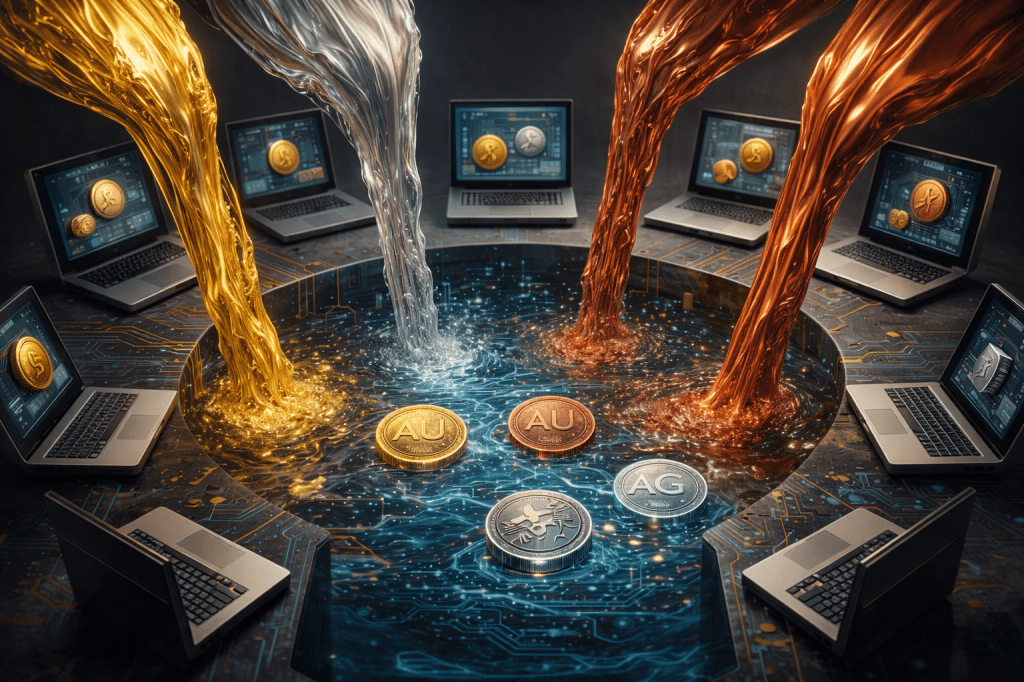
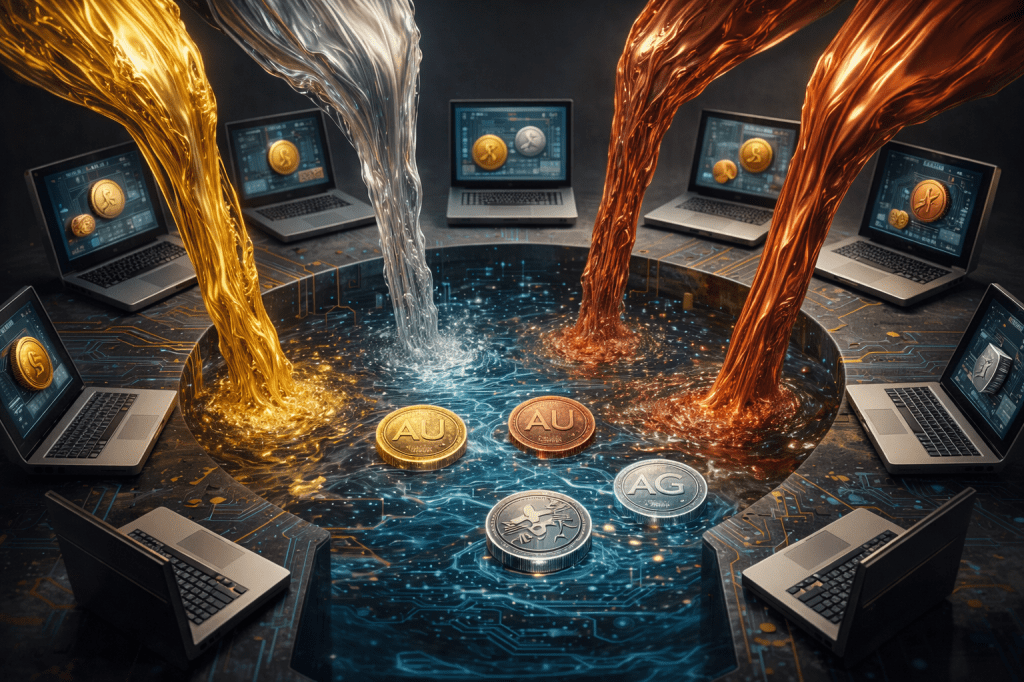
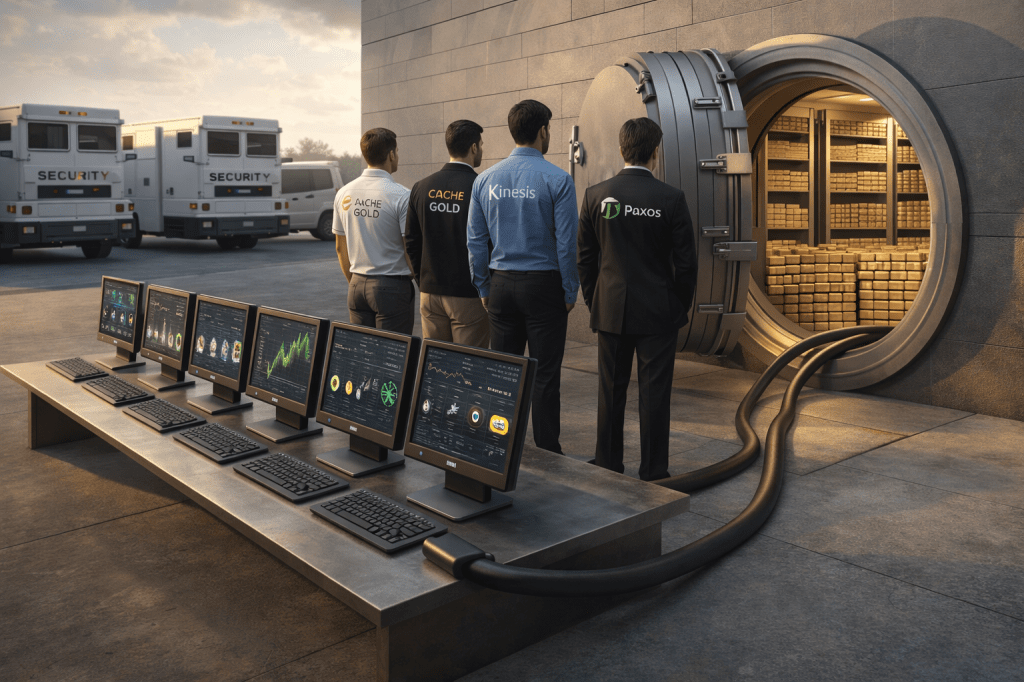
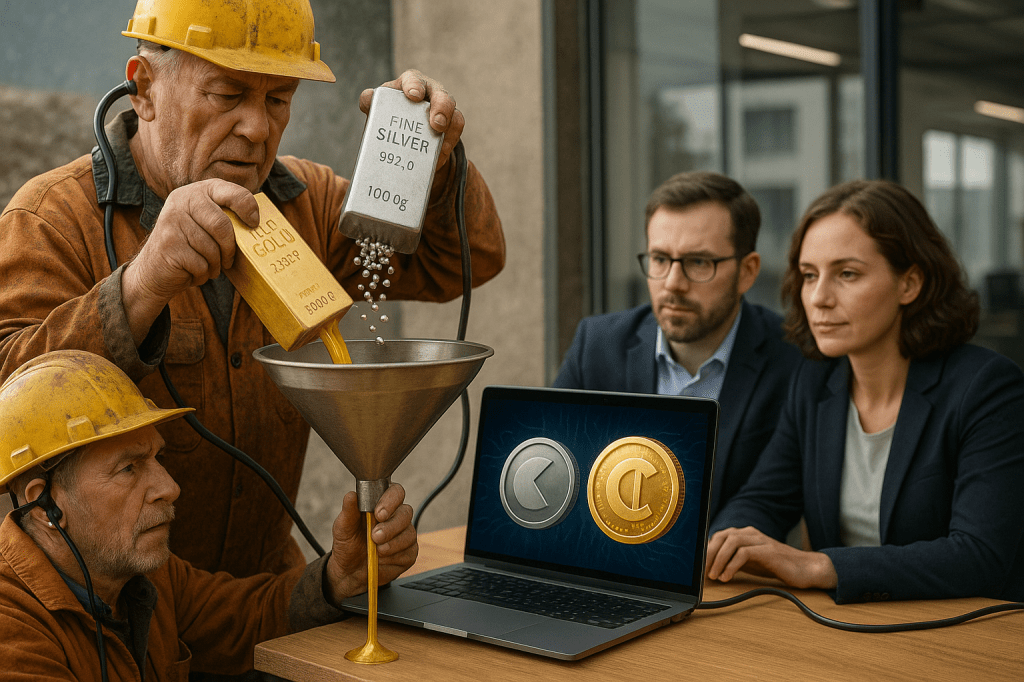
Los mercados de materias primas están entrando en una transición estructural. El oro, la plata, el cobre, el litio, el níquel, el cobalto e incluso los elementos de tierras raras están comenzando a migrar hacia la infraestructura de cadena de bloques. Esto no es un eslogan publicitario; es un rediseño lento pero real de cómo funcionan la propiedad, la liquidación y el uso de activos como colateral.
En 2026, lanzar é una serie de 52 semanas en BlockchainAIForum dedicada exclusivamente a los metales tokenizados—donde los activos duros se encuentran con los rieles digitales.
Por Qué Esto Importa Ahora
El oro tokenizado ha superado los $1,000 millones en circulación.
La plata tokenizada se acerca a los $200 millones.
Los metales industriales están en la fila siguiente.
La IA está transformando la exploración, la planificación minera y la visibilidad de las cadenas de suministro.
Los reguladores avanzan hacia marcos más claros para los activos digitales.
Para inversionistas, tesoreros y estrategas, los metales tokenizados combinan:
Respaldo físico verificable
Transparencia y auditabilidad en cadena
Liquidación global más rápida
Interoperabilidad con sistemas TradFi y DeFi
Lo Que Cubrirá Esta Serie
Metales preciosos en cadena (oro, plata, platino, paladio, rodio)
Existe una batalla enorme entre los estados nación, los banqueros centrales, los industriales y los inversionistas institucionales por asegurar suministros estratégicos de metales. Ellos —no la demanda minorista— han impulsado el alza en los precios de los metales preciosos durante los últimos dos años. Eso está bien documentado. Lo que sí es nuevo, y muy poco reportado, es la llegada de una forma novedosa de demostrar la propiedad de metales preciosos: ¡la tokenización!
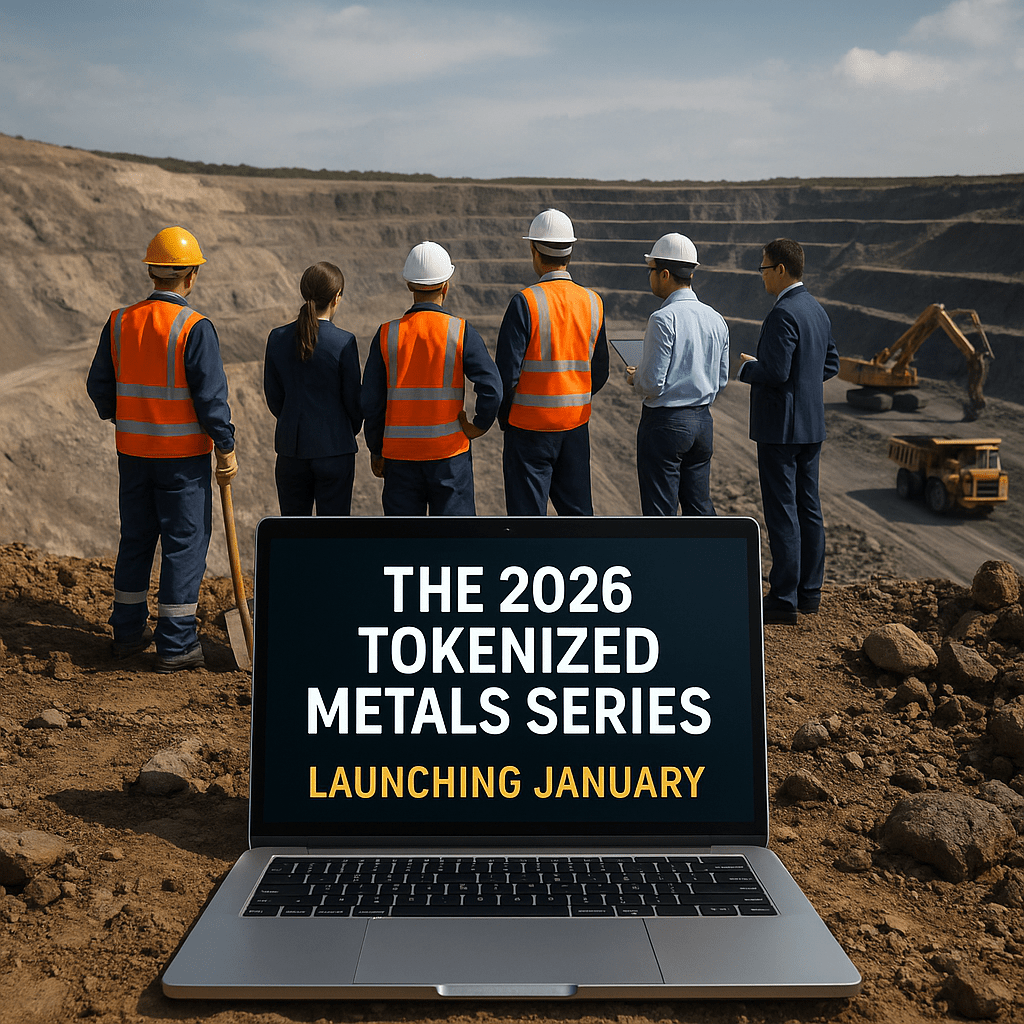
Por eso, comenzando este enero, publicaré la Serie de Metales Tokenizados 2026. Déjame contarte lo que puedes esperar.
Prepárate para una serie semanal de un año entero dedicada a la transformación tokenizada del oro, la plata, el cobre, el litio, el níquel, el cobalto y los metales que impulsan la economía global. Un año completo de ideas sobre cómo convergen las materias primas, la IA, la minería y las finanzas digitales. ¡Muy emocionante!
Estos activos ahora están subiendo a los rieles de la cadena de bloques, obteniendo liquidación más rápida, mayor transparencia y portabilidad global. Las implicaciones son enormes—para inversionistas, mineros, fabricantes y responsables de políticas públicas. El futuro no es solo moneda digital; son los metales digitales. ¿Quién más ofrece esto? Nadie más que Yogi Nelson. ¿El costo? Gratis. ¿Qué más se puede pedir?
Por Qué Esta Serie Importa
Si te interesan los mercados globales, la tecnología, los sistemas energéticos, la geopolítica o la inversión, estos cambios te afectarán directamente. Escucha: tres grandes transformaciones están ocurriendo al mismo tiempo:
1. La tokenización está entrando en la utilidad real.
Los activos reales—no las memecoins—se están digitalizando en libros públicos. Olvídate del estúpido Pepe y de sus monedas o de un token con cara de perro que no vale nada; ¡estoy hablando de oro tokenizado!
2. La IA está revolucionando la minería.
La exploración, la extracción, la cartografía y la inteligencia mineral están evolucionando más rápido de lo que sugieren los titulares. Menos perforar y rezar; más taladrar y descubrir.
3. Las instituciones y los reguladores se están preparando para las materias primas digitales.
Los marcos de cumplimiento, las soluciones de custodia y la infraestructura de mercado están alineándose por primera vez.
Lo Que Verás Cada Semana en 2026
Cada entrega de la serie explorará un tema, incluyendo:
Metales preciosos tokenizados
Metales industriales y energéticos en cadena
Minería impulsada por IA y robótica
Gemelos digitales de minas
Inteligencia mineral vía satélite
Metales tokenizados como colateral
Stablecoins respaldadas por materias primas
Desarrollos regulatorios
Tendencias de adopción institucional
Algunos ensayos serán profundos; otros serán lecturas rápidas y atractivas. Todos estarán anclados en desarrollos reales, no en hype.
Para Quién Es Esta Serie
Esta serie es para quienes disfrutan las grandes ideas, la claridad y un ocasional mal chiste de papá:
Inversionistas
Asesores financieros
Mineros e ingenieros
Analistas de metales
Nuevos en cripto
Escépticos
Estudiantes de mercados
Cualquiera que explore la intersección entre tecnología y activos del mundo real
Enero: Comienza la Era de los Metales Digitales
Los metales construyeron nuestra civilización. Ahora están por entrar en los rieles digitales. La tokenización no reemplaza las materias primas—las moderniza. Y 2026 será el año en que el mundo finalmente prestará atención.
Cuando piensas en los mercados de materias primas, ¿te vienen a la mente imágenes de alta tecnología? Probablemente no—y con razón. Los mercados de materias primas suelen ser lentos y carecen de innovación. Eso está a punto de cambiar—¡y rápido! Oro, plata, platino, paladio, cobre, litio, níquel, cobalto e incluso los metales de tierras raras están comenzando a moverse a la blockchain—de manera silenciosa, constante y con enormes implicaciones a largo plazo. Irónicamente, la blockchain está lista para reclamar su título como una de las tecnologías más transformadoras al tokenizar los activos reales más antiguos de la sociedad. Este es el momento que los fans de la blockchain han estado esperando—no los tokens ridículos como Pepe coin, Fart coin y otras tonterías. En 2026, esta transformación se acelerará.
Por eso estoy lanzando una nueva serie semanal aquí en BlockchainAIForum: 52 artículos (quizas mas) dedicados exclusivamente al auge de los metales tokenizados. Aquí exploraremos los activos duros del pasado, reinventados para los rieles digitales del mañana.
Por Qué los Metales Tokenizados Importan Ahora
Tokenizados o no, los metales importan. Son esenciales para la electricidad, los automóviles, las computadoras y innumerables productos. Nuestra sociedad moderna colapsaría sin ellos. El gobierno de EE.UU. incluso mantiene una lista de 60 metales críticos para la economía y la seguridad nacional. Tokenizarlos es simplemente su siguiente evolución natural.
El oro ya superó los $1,000 millones en valor tokenizado.
La plata está cerca de $200 millones y creciendo.
El cobre, el litio y los metales energéticos ya vienen en camino.
En resumen: la tokenización de metales ya está ocurriendo—y estamos en la fase temprana.
La IA está transformando la minería, y las regulaciones están girando hacia lo constructivo. Con esto como contexto, el propósito de esta serie es claro: explicar el futuro de los metales y las materias primas en la blockchain, una semana a la vez.
Por Qué Estoy Escribiendo Esta Serie
Descubrí un vacío en el mercado: nadie está cubriendo el espacio de metales tokenizados de manera completa. El mundo se está digitalizando—y las materias primas también.
Los inversionistas hoy quieren activos que sean:
reales
transparentes
portátiles
auditables
líquidos globalmente
utilizables como garantía
compatibles con TradFi y DeFi
Los metales tokenizados cumplen con todo eso.
Los tokens respaldados por oro ya funcionan en redes públicas. Los tokens de plata son un activo híbrido (industrial y monetario). Los tokens de cobre y litio podrían alimentar las cadenas de suministro del futuro. Las instituciones ya se están preparando para los commodities digitales. Y los activos tokenizados podrían llegar a $10–15 billones en la próxima década.
La mayoría no tiene ni idea de que esto está ocurriendo. Esta serie lo cambiará.
Lo Que Cubrirá Esta Serie
🔶 Metales Preciosos
Oro, plata, platino, paladio, rodio tokenizados
Emisores, bóvedas y custodia
ETF vs tokenización vs lingotes
Crecimiento, liquidez, cobertura inflacionaria
🔷 Metales Industriales y Energéticos
Cobre tokenizado (muy cerca)
Litio y metales para baterías
Níquel, cobalto, grafito
Tierras raras en blockchain
🔶 Minería, IA y Robótica
IA en exploración y extracción
Gemelos digitales de minas
Mineralogía satelital
Metales libres de conflicto
ESG on-chain
🔷 Inversión y Regulación
Portafolios con metales tokenizados
Metales en cuentas de retiro
Stablecoins respaldadas por commodities
Regulación SEC + CFTC
Adopción institucional
Contenido Semanal—Gratis y de Alta Calidad
Artículos largos profundos
Versiones cortas para LinkedIn
Micro-versiones para Coinbase y redes
¿Para Quién Es Esta Serie?
Inversionistas
Asesores
Estudiantes
Nuevos en cripto
Analistas de metales
Mineros e ingenieros
Escépticos que quieren valor real
Curiosos del futuro tecnológico
2026: El Año de los Commodities Digitales
El oro fue el primero. La plata viene justo detrás. Cobre, litio, níquel y tierras raras están alineados. La regulación está mejorando. La minería tiene apoyo político. La IA transforma la industria. Y la blockchain transforma la propiedad.
Vamos hacia un futuro donde los metales vivirán en rieles digitales. Exploremos esa frontera juntos.
When you ponder commodity markets, do high-tech images flash across your mind’s eye? Probably not—and for good reason. Commodities markets are typically slow and lack innovation. That’s about to change! Gold, silver, platinum, palladium, copper, lithium, nickel, cobalt, and even rare earth metals are now beginning to move onto the blockchain—quietly, steadily, and with enormous long-term implications. Ironically, blockchain is poised to claim its title as one of the most transformative technologies by tokenizing society’s oldest real world assets—commodities. This is the moment blockchain fans have been anticipating—not silly crypto tokens, e.g., Pepe coin, Fart coin, and countless other nonsense. In 2026, this transformation will accelerate.
That’s why beginning January 7, 2026, I’m launching a new weekly series on BlockchainAIForum: 52 articles (perhaps more) dedicated exclusively to the rise of tokenized metals. Here we will explore the hard assets of yesterday, reinvented for the digital rails of tomorrow. Let’s start with why tokenized metals matter now.
Why Tokenized Metals Matter Now
Tokenized or not, metals matter. Essential for electricity, automobiles, computers, and countless other products, our modern society collapses in their absence. In fact, the U.S. Government keeps a list of 60 metals it considers critical to our economic welfare and security. Tokenizing ownership of metals for commerce is simply their next evolution. Consider this:
Gold has already passed $1 billion in tokenized value.
Silver is at nearly $200 million and climbing.
Copper, lithium, and energy metals are lining up next.
In other words: the tokenization of metals is already happening—right now—and the wave is still early. Moreover, AI has begun reshaping exploration and mining, and government regulation is pivoting from unclear to constructive.
With that as context, I say in a simple declarative sentence: the purpose of this series is to help you understand the future of metals and commodities on the blockchain, one week at a time.
Why I’m Writing This Series
I decided to write this series after discovering a gap in the market. The gap? No one is covering the tokenization of metals space comprehensively. The world is becoming digital, and so are commodities. Accordingly, investors today want assets that are:
real
transparent
portable
auditable
globally liquid
usable as collateral
compatible with both TradFi and DeFi
Tokenized metals check every box. Gold-backed tokens already operate on public ledgers. Silver tokens are emerging as a hybrid industrial–monetary asset class. Copper and lithium tokens could one day power EV supply chains. Institutions are quietly preparing for digital commodities. And tokenized assets are forecast to reach $10–15 trillion during the next decade. Most investors have no idea this is happening. This series will change that.
What This Series Will Cover
In 2026 the BlockchainAIForum will be exclusively dedicated to:
What to Expect Each Week — Free High-Quality Content
Every week you will receive content dedicated to tokenized commodities markets. The price? Free! Did I mention it’s free? Yes, free. Pick the media you prefer:
Deep, educational long-form articles on BlockchainAIForum.com
Short, fast LinkedIn versions
Micro-versions for Coinbase and other social media
Who This Series Is For
Are you a lifelong learner? Do you enjoy exploring big ideas? Does the idea of understanding emerging trends appeal to you? If you answered yes to any of those questions, this series is for you!
Investors
Advisors
Students of markets
Crypto newcomers
Metals analysts
Miners and engineers
Skeptics who demand real-world value
Readers curious about where technology is taking us next
2026 Will Be the Year of Digital Commodities
No surprise—gold was the first commodity to tokenize. After all, it is the world’s largest commodity asset. And as usual, silver, gold’s little brother, is right behind. Copper, lithium, nickel, and rare earth elements are lining up. That’s not all. The space has regulatory tailwinds. Mining has policy support for economic and security reasons. AI technology is transforming mining. And blockchain is transforming ownership.
In other words, the world is moving toward a future in which metals, not just money, live on digital rails. Let’s explore that frontier together.
Discovery and extraction of precious metals—gold, silver, platinum, palladium—has relied heavily on manual geological interpretation, slow survey cycles, and trial-and-error drilling since about 1850. Making the “boring” process boring. lol. Today a new queen sits atop the golden throne of precious metals discovery and extraction! And she offers excitement—her name is artificial intelligence (AI)! Ms. AI is re-engineering the precious metals sector from the ground up—pun intended. lol!
Why has she ascended? For the simple, yet complex, reasons that as ore deposits become deeper, grades decline, and environmental expectations increase, AI offers solutions that improve efficiency, reduce costs, and minimize risk. Let’s “dig” into this phenomenon by “extracting” how AI is being deployed across the precious-metals value chain—from exploration and drilling to processing, sustainability, and blockchain-based supply-chain verification.
AI-Driven Exploration: Faster, Cheaper, and More Accurate
Predictive Geological Modeling
Machine-learning models analyze enormous geological datasets—satellite imagery, geochemical surveys, seismic readings, magnetic anomalies, and historical drilling logs. What’s the point of doing that? Answer—to identify high-probability mineralization zones! AI can detect “hidden patterns” in rock structure that human geologists cannot.
Studies in Canada, Australia, and South Africa show that AI-driven exploration can:
Reduce exploratory drilling by 20–40%
Lower costs by millions of dollars per project
Shorten timelines by months or years
Remote Sensing Enhanced by AI
AI-trained spectral models can identify alteration minerals associated with gold, lithological contacts, structural breaks, and soil anomalies. Drones equipped with hyper-spectral sensors now produce site maps with centimeter-level precision, allowing exploration teams to prioritize the highest-value drill targets. Before AI you couldn’t hit what you couldn’t see!
AI in Drilling and Extraction: Precision and Real-Time Optimization
Smart Drilling Systems
AI-enabled rigs adjust torque, rotation speed, and angle in real time based on rock hardness. This reduces equipment wear and improves penetration accuracy. Sensor arrays feed live data into machine-learning models that classify rock types instantly.
Also consider this: on-site AI analyzers evaluate ore quality without waiting for off-site labs. These systems can identify gold or silver grade, platinum-group concentrations, and the presence of impurities. This allows miners to instantly determine what should go to processing—improving profitability.
Autonomous Mining Equipment
These systems reduce accidents, operate around the clock, and enhance fuel efficiency. Major miners now use:
Self-driving haul trucks
Autonomous blast-hole drill rigs
AI-guided loaders
Smart conveyor systems
AI in Processing: Higher Recovery, Lower Costs, Smaller Footprint
Machine-Learning Process Control
AI continuously fine-tunes flotation chemistry, water usage, mill speed, and smelter temperatures. These optimizations typically increase recovery rates by 2–5%, generating millions in added annual revenue for mid-size precious-metal operations.
But that’s not all. AI can also predict energy demand and reduce consumption by 10–20%. Given that extraction consumes large quantities of energy, this is a meaningful efficiency gain. One more point, AI models also excel at identifying structural risks in tailings dams, detect seepage patterns, and monitor environmental indicators such as water quality and dust emissions.
4. Safety and Environmental Protection
Predictive Maintenance
AI forecasts equipment failures before they happen, preventing downtime and reducing catastrophic failures. Computer-vision systems identify workers near unsafe machinery, detect non-compliance with safety gear, and monitor underground instability.
Let’s not overlook the important improvements in environmental monitoring, including water contamination, air quality, noise levels, and habitat protection.
5. Sustainability: AI as the Engine of “Green Mining”
Perhaps at the top of the chart is precision mining. With AI, removing less rock, using fewer chemicals, reducing diesel combustion, and optimizing water recycling are all achievable. This is becoming a core requirement as governments and investors demand cleaner resource extraction.
Now the blockchain part—and as fans of blockchain, I’m sure you already know that AI plus blockchain equals a tamper-proof digital record of:
Mine origin
Ore transport
Refinery steps
ESG compliance
Responsible-sourcing certification
Smart Refining Contracts
Of course, the blockchain benefits don’t end there. They also include automated payments via smart contracts when AI-verified ore quality reaches contractual thresholds. And AI can scan blockchain records for fraudulent patterns. That’s gold-medal-winner level!
7. Limitations and Challenges
Of course, nothing is perfect. That’s why, when using AI in precious-metal exploration and extraction, users should be aware that large amounts of data are required to train the models, integration of sensors and AI equipment is costly, models need constant monitoring, and staff training needs its own budget line item.
Conclusion
The coronation of the new queen of precious metal discovery and extraction is complete. Wearing her artificial intelligence corona, she is reshaping precious-metal exploration and mining into a faster, safer, and more environmentally responsible industry. From her throne, her message is: as AI continues to merge with blockchain, sensor networks, and robotics, the mining sector is entering a historic transformation where data—not geology alone—will define future success.
Until next time,
Yogi Nelson
Sources & Citations
McKinsey & Company – “The Role of Artificial Intelligence in Mining.”
IBM Research – AI for Geoscience and Remote Sensing
Deloitte – Tracking the Trends: The Top 10 Issues Transforming the Mining Industry
Accenture – AI and Digital Twins in Mining
Rio Tinto – Autonomous Mining Operations Reports
World Gold Council – Responsible Gold Mining Principles
Journal of Mining Science – Machine Learning Applications in Ore-Grade Prediction
U.S. Geological Survey (USGS) – Mineral Resources and Remote-Sensing Studies
MIT CSAIL – AI for Environmental Monitoring & Industrial Optimization