

Namaste Yogis. Welcome to the Blockchain & AI Forum, where your technology questions are answered! Here no question is too mundane. As a bonus, a proverb is also included. Today’s question was submitted by Fatima and she wants to know if Europe will adopt a digital currency?
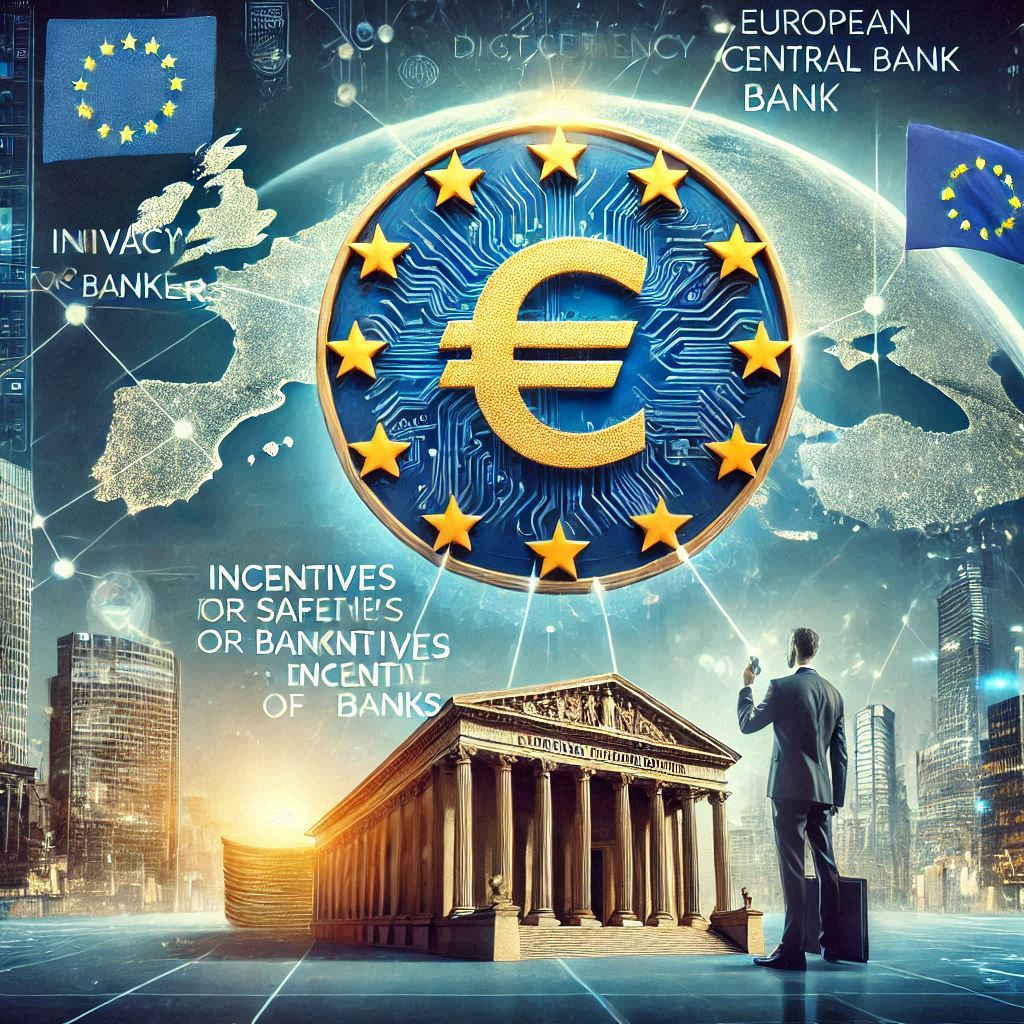
Fatima, you submitted a timely question indeed. Central Bank Digital Currencies (CBDG) are a hot topic across the globe. Over 100 nations are exploring the idea, with some countries further along than others but no nation has yet to fully implement the project. Today, I’ll share the findings of the European Central Bank (ECB) relative to a possible ECB Digital Currency. In other words, a digital Euro. Before we jump into the findings, let’s start with what is the European Central Bank?
Unlike some organization, the European Central Bank name aptly describes the institution. Fatima, the ECB is the central bank of Europe! There are 20 member nations in the eurozone. Essentially, the ECB sets monetary policy in the eurozone, meaning its job is to ensure price stability, manage the money supply (the Euro), support economic development, manage foreign exchange operations, supervise banks for safety and soundness, and maintain the overall health of Europe’s financial system. A big job indeed! Time now to highlight the major points of the ECB digital currency (Euro) report.
https://www.ecb.europa.eu/euro/digital_euro/progress/html/ecb.deprp202406.en.html
INTRODUCTION. According to the ECB, the digital euro project aims is to ensure central bank money evolves alongside current payment preferences and trends, as well as to facilitate electronic payments everywhere in the euro area and strengthen Europe’s strategic autonomy. Back in 2021, the ECB announced it would conduct a two-year research initiative for the potential issuance of a digital euro. After two years of research, ECB decided to proceed and recently issued a progress report, which is summarized below.
GUARANTEEING DIGITAL EURO USER PRIVACY. Privacy and data protection are front and central, according to ECB. The design of the digital euro will include an offline functionality that purportedly offers users a cash-like level of privacy, both for person-to-person payments and payments in physical shops. For online digital euro payments, the digital euro would not be able to directly link transactions to specific individuals, claims the ECB. I’m not convinced, are you?
AN OFF-LINE EURO DIGITAL CURRENCY. ECB says it a digital euro would be available for both online and offline use and could be used for person-to-person payments as well as in physical shops. The offline functionality would enable payments to be made without an internet connection, for example at close range, in locations with limited network coverage, and in the event of power cuts. Sounds promising.
A DIGITAL EURO RULEBOOK. A digital euro needs rules, says the ECB. Therefore, a single set of rules, standards and procedures to standardize digital euro payments across the euro area will be developed. A common rulebook is necessary to ensure that digital euro payments are accepted throughout the euro area, just like cash payments, and work in a harmonized way. It will allow intermediaries to use its open standards to have immediate access to all markets beyond their domestic borders.
SELECTING PROVIDERS FOR DIGITAL EURO COMPONENTS. ECB signals it needs help! Thus, in January, the ECB notified vendors it would accept offers to develop the technology needed to implement a digital currency. Fintech contracting opportunities galore!
ENVIRONMENTAL ASPECT. Fatima, as a pro-environment person, you might be pleased to learn that the ECB has directed the bidders to incorporate measures that are environmentally friendly.
COMPENSATION MODEL, AKA, SHOW ME THE MONEY! According to the ECB, the euro digital currency would be based on acompensation model with fair economic incentives for all involved (e.g. consumers, merchants, banks). Would you expect the ECB to say anything else? Lol. In any case, the ECB says it will be guided by the following principles:
- A digital euro would be free of charge for basic use and equally accessible in all euro area countries.
- PSPs would charge merchant fees for providing digital euro-related services to offset the operational costs of distributing a digital euro, as is the case today for other digital means of payment.
- The fees that merchants pay to PSPs for digital euro services would be subject to a cap to provide adequate safeguards against excessive charges.
- The ECB would bear the issuance costs, as it does in the production of banknotes.
Fatima, it’s clear the ECB intends to issue a euro digital currency. The only question is when?
I end with this proverb from Croatia: “what a sober man thinks, a drunk man says.”
Until next time,
Yogi Nelson
 Blockchain & AI Forum