
Gold tells the story of money.
Silver tells the story of versatility.
Palladium tells the story of technology, regulation, and fragility.
Long before catalytic converters made palladium famous, it was already a high-tech metal—used in electronics, chemical catalysis, and dentistry. What changed everything was environmental regulation. As emissions standards tightened, palladium became indispensable to gasoline-powered vehicles, eventually accounting for roughly 80% of global demand.
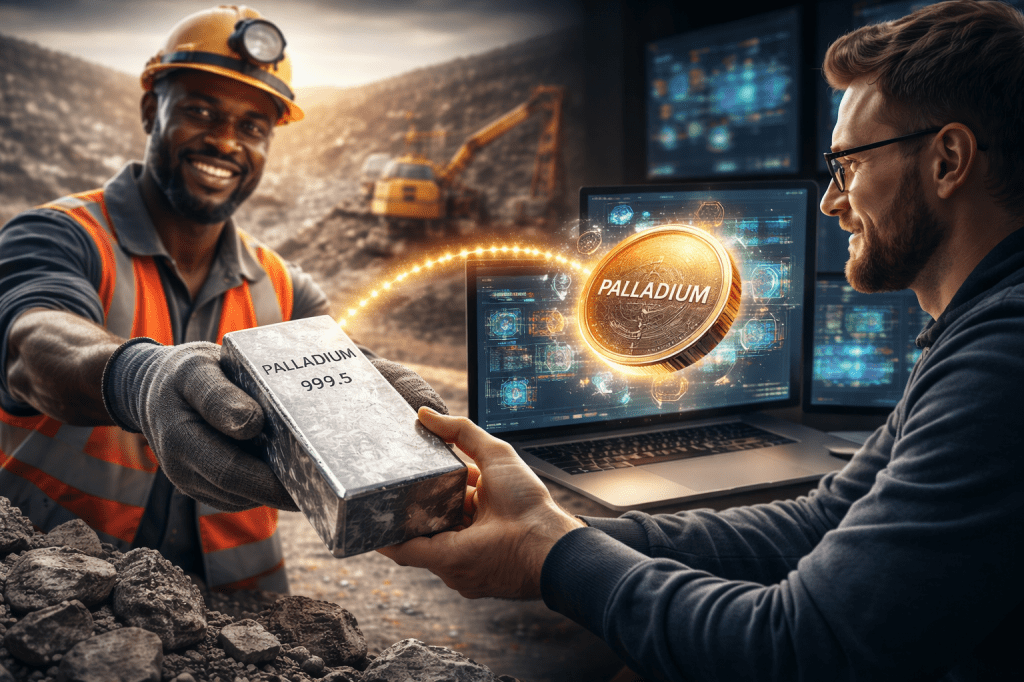
At the same time, supply remained extremely constrained. Palladium is mined primarily as a byproduct, with production concentrated in just two nations. That combination—industrial necessity and limited supply—has made palladium one of the most volatile precious metals of the past two decades.
This is precisely why palladium is a compelling candidate for tokenization.
Tokenized palladium can provide:
• Transparent, on-chain ownership
• Faster settlement in volatile markets
• Fractional access to a scarce industrial asset
• Improved supply-chain visibility
Unlike traditional futures or ETFs, tokenization is not synthetic exposure layered on top of complexity. It is direct, verifiable access to a real-world metal that modern technology depends on.
Palladium is not a monetary metal. It does not rely on mythology or tradition. Its value comes from physics, chemistry, and regulation—and in a high-tech age, that makes it a natural fit for blockchain-based infrastructure.
Tokenized palladium is not about hype.
It is about alignment—between physical reality and digital systems.
This article is available in long form at: https://yogapuertorico.wordpress.com/wp-admin/post.php?post=2636&action=edit
—
Yogi Nelson

 Blockchain & AI Forum