AI Agents, AI Tools, Artificial Intelligence, Blockchains, computer vision, Decentralized, Healtlh, Productivity, Science, Sports AI, Uncategorized, Yogi Nelson

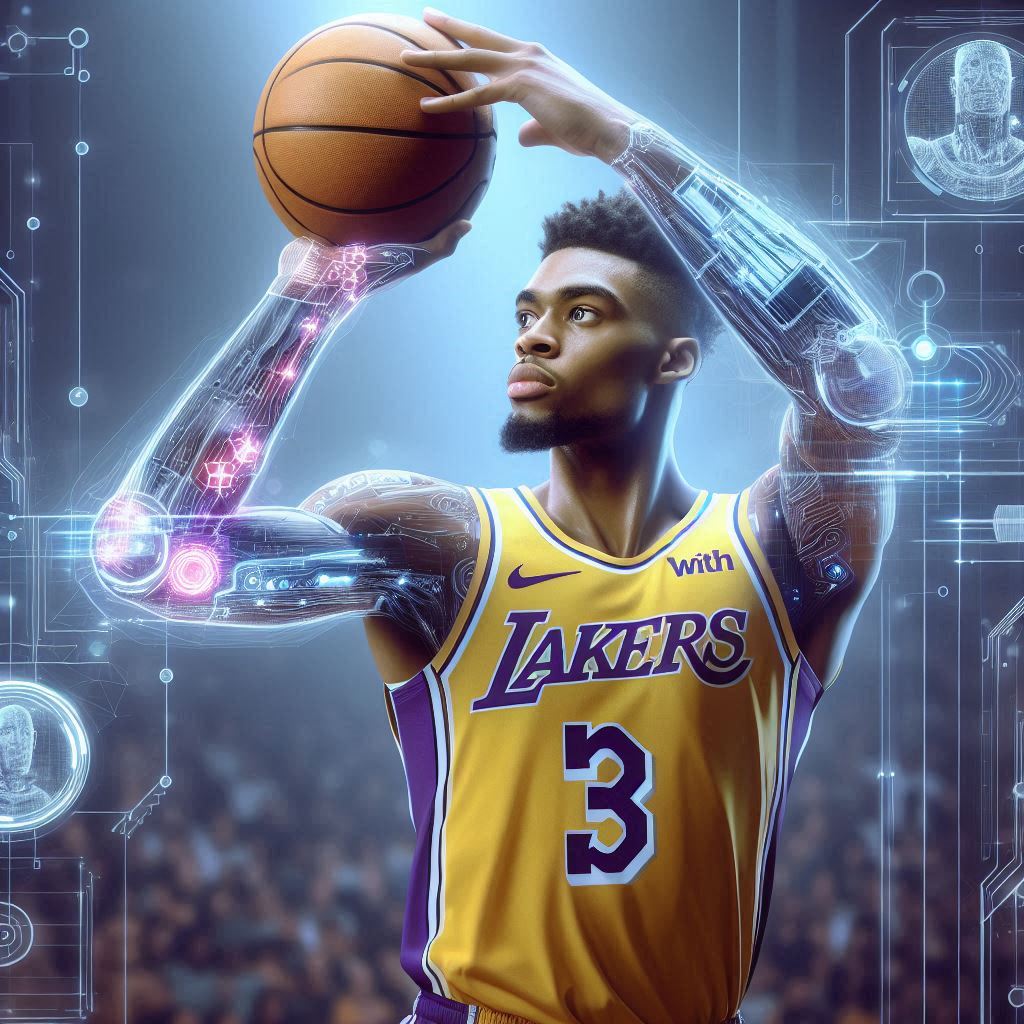
🏀 Blockchain and AI: The Winning Combo for Basketball Performance and Game Planning

by Yogi Nelson

Welcome to the BlockchainAIForum

  • Shot accuracy by zone
  • Defensive movement patterns
  • Reaction times
  • Player fatigue indicators
  • Injury risk prediction
  • Play recognition: AI systems can watch game footage and label each possession by type (e.g., pick-and-roll, isolation, zone defense).
  • Tactical suggestions: AI compares past matchups and simulates different lineup combinations to predict which defensive sets will neutralize an opponent’s offense.
  • Opponent weaknesses: AI can flag patterns like a team’s tendency to overcommit to screens or struggle in transition defense.
  • Performance-based bonuses: A contract could be tied to verified performance metrics (e.g., scoring 20+ points in 10 consecutive games).
  • Training commitments: Athletes can log their workouts via blockchain-based platforms that timestamp and verify effort, giving coaches confidence in off-season commitments.
TaskAI RoleBlockchain Role
Injury predictionAnalyze biometric trendsSecure the source data
Game prepAnalyze video and statsCertify footage origin
Player developmentTailor skill improvement plansStore verified progress logs
ScoutingCompare player data across teamsEnable trusted cross-org data sharing
  • A player wears a smart shirt and AR glasses during a practice session.
  • AI tracks shooting mechanics, dribble speed, and lateral movement.
  • After the session, AI generates a personalized performance report.
  • That report is encrypted and stored on a blockchain.
  • The player shares access with their personal trainer and team coach.
  • Smart contracts automatically update team dashboards and player health status if pre-set performance benchmarks are hit.
  1. Infrastructure Investment: Teams must adopt smart wearables, AI platforms, and secure blockchain networks.
  2. Education: Players and coaches need training to understand and trust these technologies.
  3. Cross-platform Standards: Interoperability between AI and blockchain systems across leagues is key.
  4. Data Privacy Regulations: Systems must comply with health and privacy laws (e.g., HIPAA, GDPR).

Banking, Blockchains, Decentralized, Digital Currency, International Finance, Science, tokenization, Uncategorized

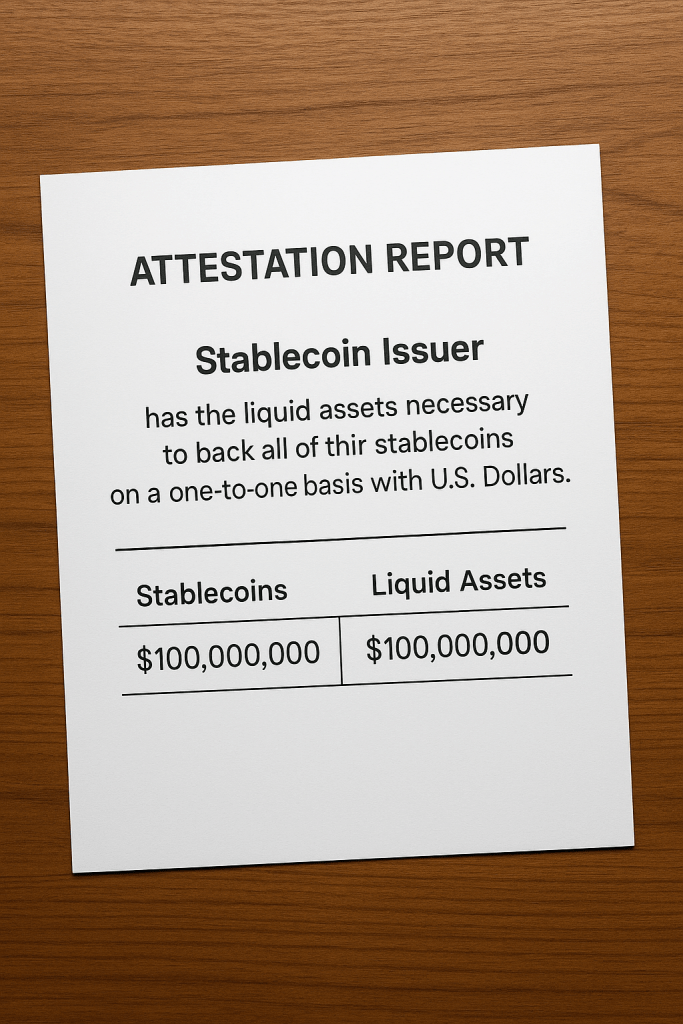
🏦 Proof of Reserves in the Age of the Genius Act–How On-Chain Transparency is About to Get Smarter, Safer, and Federally Regulated

Welcome to the BlockchainAIForum

by Yogi Nelson

  1. Snapshot of Liabilities
    The platform takes a cryptographic snapshot of its liabilities—i.e., user account balances—using a Merkle Tree to protect user privacy.
  2. Auditor Verification
    A third-party auditor verifies that wallet balances match the claimed reserves, both on-chain and off-chain (e.g., fiat).
  3. Merkle Proof for Users
    Users can verify their individual balances were included, without seeing anyone else’s data.
  4. Public Publication
    The proof and auditor certification are published online, for full transparency.
  • ✅ Mandatory monthly PoR audits for stablecoin issuers
  • ✅ Auditors must register with the Fed or OCC
  • ✅ Support for smart contract-based reporting
  • ✅ Consumer-facing transparency dashboards
  • ✅ Criminal penalties for reserve misreporting
  • 🔐 Greater Trust: Real-time proof builds credibility.
  • 📈 Mass Adoption: Retail and institutional users feel safer.
  • 💻 Better UX: Wallets and apps can display verified reserve info.
  • 🏛️ Regulatory Clarity: Clear rules mean better innovation pathways.
  • 🔄 Continuous, on-chain reserve reporting
  • 📊 Unified federal dashboards
  • 🔍 Fewer excuses for hidden risks

Banking, Blockchains, cryptography, Digital Currency, Productivity, Science, tokenization, Uncategorized, Yogi Nelson

🔐 What Is Crypto Staking? A Beginner’s Guide

Welcome to the BlockchainAIForum


  1. You hold a PoS-supported cryptocurrency (e.g., Ethereum, Cardano, Solana).
  2. You lock up your tokens in a wallet or with a staking provider.
  3. The network selects stakers (or validators) to confirm transactions.
  4. You earn staking rewards, typically paid out regularly.
  • Solo staking: You run your own validator node. This requires technical expertise and minimum token requirements (e.g., 32 ETH for Ethereum).
  • Pooled staking: You join a group of stakers to combine assets and share rewards. Good for beginners.
  • Exchange staking: Centralized platforms (like Coinbase or Binance) offer staking-as-a-service.
  • Research the blockchain you want to stake on (e.g., its inflation rate, validator performance, and reward schedule).
  • Use a reputable wallet or exchange with transparent fees and security.
  • Start small to learn how the process works before committing large amounts.
  • Stay updated with network upgrades and policy changes.
CoinNetworkEst. Annual Reward
EthereumEthereum 2.0~3–5%
CardanoADA~3–6%
SolanaSOL~5–8%
Artificial Intelligence, Blockchains, cryptography, Decentralized, Digital Currency, Uncategorized, Yogi Nelson

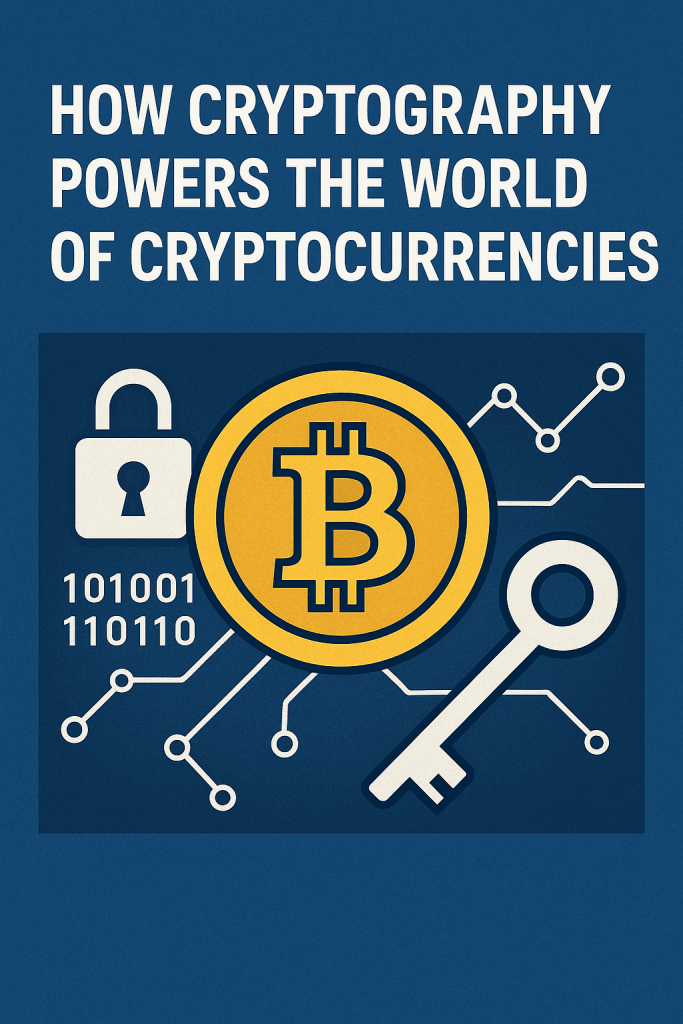
🔐 How Cryptography Powers the World of Cryptocurrencies

Welcome to the BlockchainAIForum where your technology questions are answered.

Cryptography is the secret ingredient that makes cryptocurrencies work. Without it, Bitcoin, Ethereum, Cardano, and every other blockchain would simply not be secure or trustworthy. In this article, we will explore how cryptography works in the world of cryptocurrencies, explained in simple terms.


🧩 What is Cryptography?

Cryptography is the science of securing information so that only intended recipients can read it. Think of it like writing a message in code. If you know the code, you can read it. If you don’t, it remains a secret. In the digital world, cryptography relies on mathematical formulas and algorithms that are nearly impossible to break without the right key.


🏦 Why Cryptography Matters for Crypto

You may wonder: Why do we need all this math? Cryptocurrencies are decentralized, meaning no single person or bank controls them. Instead, people all over the world maintain the blockchain—the public ledger that records every transaction. Cryptography ensures that:

  • ✅ Transactions can’t be faked.
  • ✅ Coins can’t be spent twice.
  • ✅ Users can keep their private keys safe.
  • ✅ Everyone agrees on the ledger’s state without trusting anyone else.

🔑 Public and Private Keys

At the heart of crypto lies the concept of public and private keys.

  • Public Key: Like your email address. You can share it with anyone so they can send you crypto.
  • Private Key: Like your password. Only you should know it. It lets you spend or move your crypto.

These keys are mathematically related but it is impossible to figure out the private key from the public key. When you want to send crypto, you “sign” the transaction with your private key. Others can verify your signature with your public key to confirm it is valid.


✉️ Digital Signatures

Digital signatures are crucial. They prove that:

  • ✅ You authorized the transaction.
  • ✅ The transaction hasn’t been changed.

A digital signature is created using your private key and the transaction data. Anyone can check it with your public key. This ensures no one can forge your signature or alter your transaction.


🛡️ Hash Functions

Another critical tool in cryptography is the hash function. A hash function takes any input (like a document or transaction) and turns it into a short, fixed-length string of numbers and letters.

  • ✅ The same input always gives the same hash.
  • ✅ Even tiny changes in input produce completely different hashes.
  • ✅ It is impossible to figure out the original input just by looking at the hash.

In blockchains, hashes are used to:

  • Create unique “fingerprints” of transactions and blocks.
  • Link blocks together securely in a chain.
  • Ensure no one can change past records without detection.

⛓️ Blockchain Integrity: Chaining Blocks with Hashes

The term blockchain comes from linking blocks using cryptographic hashes. Here’s how it works:

  1. Each block contains a list of transactions.
  2. The block also includes the hash of the previous block.
  3. This forms an unbreakable chain.

If anyone tries to change a single transaction in an old block, its hash changes. That breaks the chain, making tampering obvious to everyone.


🧪 Zero-Knowledge Proofs (Advanced)

Some modern blockchains also use zero-knowledge proofs. These allow someone to prove they know something (like a secret or password) without revealing it. For example:

  • ✅ You prove you own funds without revealing your private key.
  • ✅ You prove you have enough balance without showing your entire account.

Zero-knowledge proofs can improve privacy and security.


🏛️ Example: Cardano’s Use of Cryptography

Let’s look briefly at Cardano, a popular blockchain project. Cardano uses advanced cryptography to secure its blockchain:

  • ✅ It uses Ed25519 for digital signatures, known for being secure and fast.
  • ✅ It employs Ouroboros, a proof-of-stake protocol that relies on cryptographic randomness to select who adds new blocks.
  • ✅ It explores zero-knowledge proofs to improve privacy and scalability in the future.

Cardano is an example of how blockchains go beyond simple signatures and hashes, using cutting-edge cryptography to enhance security and efficiency.


🌍 Why It All Matters

Without cryptography, there would be no cryptocurrencies. Banks have vaults and guards to protect money. Cryptocurrencies have cryptography. It lets people all over the world:

  • ✅ Exchange value securely.
  • ✅ Trust a shared ledger without intermediaries.
  • ✅ Protect their digital assets from theft or fraud.

✅ Key Takeaways

  • Cryptography secures cryptocurrencies without needing banks or middlemen.
  • Public and private keys enable secure ownership and transactions.
  • Digital signatures prove authenticity.
  • Hash functions link blocks in a tamper-evident chain.
  • Advanced tools like zero-knowledge proofs add privacy and efficiency.

💡 Conclusion

Cryptography is the bedrock of cryptocurrencies. It ensures that people can use decentralized digital money safely, securely, and confidently. Understanding the basics helps you see why crypto is revolutionary—and why it will continue to evolve with even better cryptographic tools in the future.

Until next time,

Yogi Nelson

AI Agents, AI Tools, Artificial Intelligence, Science, Uncategorized, Yogi Nelson

🖥️ Why Nvidia’s Computer Chips Are the Best in the World

Welcome to the BlockchainAIForum

Nvidia is widely seen as the leader in making the world’s most powerful computer chips, especially for graphics, artificial intelligence (AI), and advanced computing. But what exactly makes Nvidia’s technology so special? In this article, we will explain, in simple language, why Nvidia’s chips are considered the best, looking at their technology, production, and unique capabilities.


⚙️ What Are Nvidia Chips?

Nvidia designs GPUs (Graphics Processing Units). Originally built to make video games look amazing, GPUs have evolved into essential tools for AI, scientific computing, and cryptocurrency mining. Unlike regular CPUs (Central Processing Units), GPUs can do thousands of calculations at once, making them perfect for:

  • ✅ Gaming
  • ✅ Artificial intelligence
  • ✅ Scientific simulations
  • ✅ Data centers
  • ✅ Blockchain processing

🚀 Parallel Processing Power

One major advantage of Nvidia’s chips is parallel processing.

  • CPUs have a few powerful cores that do tasks one at a time.
  • GPUs have thousands of smaller cores that work in parallel.

This design lets Nvidia GPUs handle massive amounts of data quickly. For AI models or crypto mining, this means:

  • ✅ Faster training of machine learning models
  • ✅ More efficient processing of transactions
  • ✅ Better performance for simulations

In simple terms: Nvidia’s GPUs can do many things at once better than anyone else.


💻 Cutting-Edge Architecture

Nvidia is famous for constantly improving its chip architecture. Each generation brings:

  • ✅ More cores
  • ✅ Faster memory
  • ✅ Lower power use

For example, recent architectures like Ampere and Hopper are designed specifically for AI workloads, with:

  • Tensor Cores: Special circuits for matrix math used in AI
  • Ray-Tracing Cores: Advanced lighting for realistic graphics
  • Better energy efficiency

These innovations keep Nvidia ahead of the competition in both gaming and AI.


🧠 AI-Optimized Hardware

What really sets Nvidia apart is how well its chips are built for artificial intelligence.

  • Tensor Cores can handle AI operations much faster than standard GPU cores.
  • Nvidia has designed these cores specifically for deep learning.

This makes Nvidia GPUs the top choice for:

  • ✅ Training massive AI models
  • ✅ Running AI in data centers
  • ✅ Powering self-driving cars

If you use ChatGPT or image generators, chances are they ran on Nvidia hardware.


🔗 Industry-Leading Software

Nvidia doesn’t just sell hardware. It also builds world-class software.

CUDA: A programming platform that lets developers use Nvidia GPUs for everything from science to crypto.

cuDNN: A library for deep learning tasks, used by major AI companies.

Nvidia AI Enterprise: Tools for deploying AI in the real world.

This tight integration of software and hardware makes Nvidia chips easier and more powerful to use.


🏭 Advanced Production Process

Nvidia doesn’t manufacture its own chips but works with the best in the business.

✅ Nvidia designs the chips.
✅ Companies like TSMC (Taiwan Semiconductor Manufacturing Company) build them using cutting-edge fabrication processes.

These factories can make chips with features measured in nanometers (billionths of a meter), allowing:

  • More transistors on a single chip
  • Lower power usage
  • Faster performance

This advanced production gives Nvidia an edge in both speed and efficiency.


🌎 Wide Range of Uses

Nvidia’s technology isn’t just for gamers or AI researchers. Their GPUs power:

  • ✅ Scientific research (e.g., weather prediction)
  • ✅ Cryptocurrency mining
  • ✅ Data centers and cloud computing
  • ✅ Automotive (self-driving car systems)
  • ✅ Medical imaging and diagnostics

This versatility ensures huge demand for their chips.


🏆 Market Leadership and Ecosystem

Another reason Nvidia is #1 is its ecosystem.

  • Developers, researchers, and companies rely on Nvidia’s software and training tools.
  • Nvidia invests in research partnerships and industry standards.
  • They support academic research and startups building on Nvidia technology.

This creates a virtuous cycle:

✅ More developers use Nvidia → More software is optimized → More demand for Nvidia GPUs.


✅ Key Reasons Nvidia Leads

To sum it up, Nvidia’s computer chips are the best because of:

  • ⚡ Advanced parallel processing power
  • 🧠 AI-focused architecture like Tensor Cores
  • 💻 Industry-leading software (CUDA, cuDNN)
  • 🏭 Cutting-edge manufacturing via partners like TSMC
  • 🌎 Versatile use across gaming, AI, crypto, science, and more
  • 🏆 A strong ecosystem that supports developers and companies

💡 Conclusion

Nvidia’s GPUs have evolved far beyond their gaming roots. They now power everything from blockbuster video games to advanced AI research and cryptocurrency networks.

What makes Nvidia special is not just raw performance, but the complete package: hardware designed for the future, software that empowers developers, and an ecosystem that keeps them ahead of the competition.

As technology keeps advancing, Nvidia continues to lead the way, building the world’s most powerful and versatile computer chips.

Until next time,

Yogi Nelson