Tokenization promises a lot—speed, transparency, global access, and the ability to move physical assets at digital speed. But there’s one uncomfortable question the space doesn’t like to linger on:
Who’s on the other side of the trade?
Liquidity is not about technology. It’s about participation.
An asset can be perfectly tokenized and still be difficult to buy or sell in meaningful size without moving the price. When that happens, confidence erodes quickly—no matter how elegant the blockchain design may be.
This is especially true in tokenized metals.
Gold begins with a structural advantage: deep global markets, standardized bars, central bank participation, and centuries of trust. Silver follows, but with more volatility. Other metals—platinum, palladium, and especially rhodium—face much steeper liquidity challenges that tokenization alone cannot solve.
The hard truth is this: Tokenization digitizes access. Liquidity determines usability.
That’s where market makers, institutional participation, predictable redemption, and market structure come into play. Liquidity isn’t created by opening the doors—it’s earned through trust, depth, and consistent participation.
Technology helps. But economics still has the final say.
If you’re interested in where tokenized metals realistically stand today—and what would need to change for them to reach global volume—I explore the liquidity question in depth in my latest long-form piece. Yogi Nelson
Part of an ongoing, long-form series examining the tokenization of precious metals—one of the few sustained efforts to explore custody, liquidity, redemption, and market structure throughout 2026.
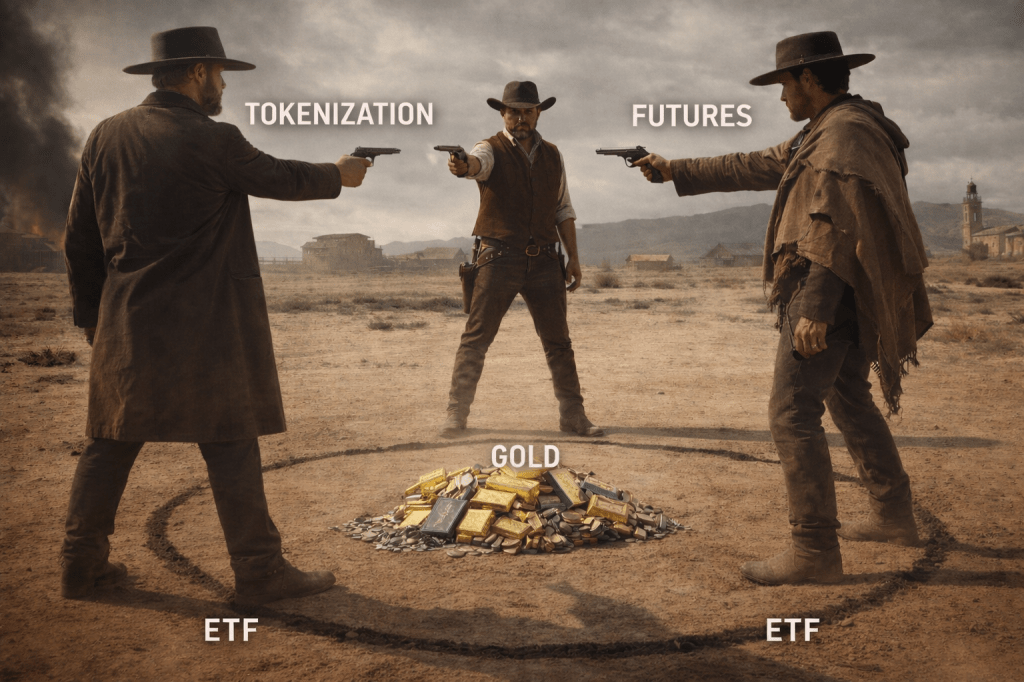
There are three primary ways investors gain exposure to gold today: physical ownership, ETFs, and futures. Each exists for a reason. Each solves a different problem. And each comes with its own tradeoffs.
Tokenized metals add a fourth dimension—not by replacing these structures, but by forcing a more precise question:
Are you buying ownership, or are you buying exposure?
ETFs deliver efficient price exposure, but usually through pooled structures with limited redemption rights. Futures provide price discovery and hedging power, but they are contracts—not assets. Physical gold offers direct ownership, but comes with real-world friction: storage, insurance, and logistics.
Tokenization sits between these models. When structured properly, it can combine digital transferability with claims on physically vaulted metal. When structured poorly, it becomes just another derivative with a new label.
That distinction matters—especially for institutions. What they care about is not speculation, but market plumbing: settlement, custody, collateral mobility, auditability, and counterparty risk. Tokenization becomes interesting only when it improves those foundations.
The future of metals is not a shootout between ETFs, futures, and tokenization. It is a question of which structures best serve ownership, transparency, and settlement in a digital economy.
— Yogi Nelson
This post is part of an ongoing weekly series on the tokenization of precious metals, published on BlockchainAIForum and LinkedIn, examining custody, regulation, issuer structure, and settlement infrastructure.
The Tokenization Revolution No One Saw Coming (Except Us)
by Yogi Nelson
For centuries—better said, thousands of years—metals have functioned as the backbone of global trade, monetary systems, industrial expansion, and national security. You want a strong industrial base — you need metals. You want a strong national defense — you need metals. You want to be a world leader in tech — you need metals. You get the picture.
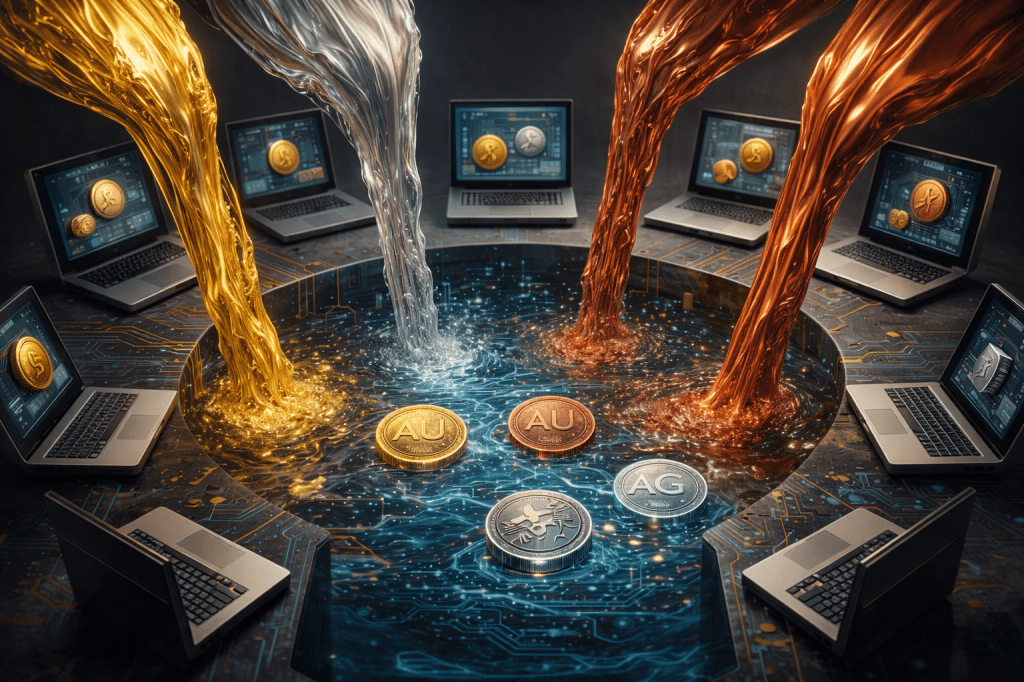
As we commence 2026, the green sprouts of a revolution are emerging. What revolution? Merely the tokenization on the blockchain of the oldest asset class on the planet — that’s all! Gold, silver, platinum, copper, lithium, nickel, cobalt, and even rare earth elements are now entering a transitional phase where ownership, settlement, collateralization, and verification can occur digitally—without compromising the physical integrity or custody of the underlying metal. Finally, a real financial use case for blockchain that doesn’t involve a silly meme coin void of value. But listen, this movement is not a marketing trend. It’s a structural realignment.
It’s true, tokenized metals are still early. However, they are no longer theoretical. Why the claim? Volumes are rising. Institutional interest is accelerating. Regulatory clarity is forming. And underlying technologies—AI, digital twins, satellite monitoring, cryptographic attestations—are modernizing the mining and metals supply chain across its entirety.
Hooked? I am. That’s why I’m proud to publish this first edition of a year-long series designed to help you understand where tokenized metals stand today, how fast they are evolving, and what comes next.
THE TOKENIZED METALS LANDSCAPE 2026
Gold: The First Mover and the Market Leader
Gold was the first major commodity to tokenize and remains by far the largest digital metals market. Gold has become the flagship case study for real-world assets on blockchain. As of early 2026:
– Tokenized gold supply exceeds $1.1–1.3 billion.
– Major issuers maintain audited, on-chain proof-of-reserves.
– Settlement speeds have dropped from days to minutes.
– Gold tokens are increasingly used as collateral in both TradFi and DeFi.
– Sovereign wealth funds and private banks are experimenting with cross-border settlement using tokenized gold.
Silver: The Hybrid Monetary–Industrial Asset
Silver’s tokenized footprint—approaching $200 million—is smaller but growing rapidly. Could silver become the first industrial metal where tokenization gains true operational relevance? If it does, it will be because of:
– Its dual identity as both a monetary metal and an industrial input.
– Volatility that makes it attractive for digital trading.
– Demand for transparent supply chains in solar, electronics, and medical technologies.
Industrial & Energy Metals: The Next Frontier
Lagging behind—but certainly on their way into the tokenization party—are the industrial metals: copper, lithium, nickel, cobalt, graphite, and rare earth elements. Could 2026 be the year industrial metals tokenization shifts from prototypes to production? It’s possible if you consider:
– Blockchain-based EV supply-chain tracking.
– Digital twins of ore bodies.
– On-chain provenance audits.
– Early institutional pilots for tokenized copper and lithium.
WHY TOKENIZED METALS MATTER
Verifiable Physical Backing
Tokenized metals solve longstanding structural problems. A few examples:
– Duplicate or falsified warehouse receipts.
– Fraudulent bars.
– Opaque inventory reporting.
– Slow reconciliation cycles.
Each token represents a precise quantity of metal, which means audits become continuous. Your compliance department will love that. Ownership becomes immutable and transparent. This is not just innovation — it’s risk reduction.
Faster, Global Settlement
Conventional metals markets reflect yesterday’s speed. Today, businesses don’t want 24–72 hours to settle. They want what tokenized metals offer: settlement in minutes, reduced friction, lower operational risk, and far less counterparty exposure.
Interoperability with TradFi and DeFi
Tokenization is what finally lets TradFi and DeFi shake hands and work together. Tokenized metals can function as:
– Collateral.
– Liquidity instruments.
– Components of stable-value portfolios.
– Cross-border settlement tools.
– Programmable assets inside smart contracts.
THE ROLE OF AI AND DIGITAL INFRASTRUCTURE
AI-Driven Discovery and Planning
Until now the focus of this article has been on tokenization. But as the old commercials used to say, “Wait — there’s more.” Combine tokenization with AI and you get advanced:
– Ore detection.
– Geological modeling.
– Predictive maintenance.
– Yield forecasting.
– ESG compliance.
– Mine-safety planning.
Mining is shifting from “drill and hope” to “discover with data.”
Satellite and Sensor-Based Verification
AI closes the trust gap in an industry known for suspicious minds. With remote sensing and IoT devices, metals provenance becomes significantly easier. Why? Because the tech makes metals:
– Traceable.
– Auditable.
– Real-time.
– Fraud-resistant.
REGULATORY MOMENTUM
Functioning markets need clear rules and enforcement. Period. The good news is regulators worldwide are moving toward clearer digital-asset frameworks. Clarity is accelerating adoption — tailwinds now rather than obstacles. Consider:
– The SEC and CFTC refining tokenization guidelines.
– The EU and UK advancing unified RWA standards.
– Asian sovereign funds piloting tokenized metals for FX settlement.
Will the market react favorably to tokenized metals? If tokenization follows the pattern of other assets—and every indicator suggests it will—then yes. Big-time yes. Who is drawn to this emerging market?
– Hedge funds.
– Systematic traders.
– Asset managers.
– Digital-asset allocators.
– Wealth advisors.
Corporations & Treasury
Corporations and treasury teams are also participating in this bullish trend. They are using tokenized metals for:
– Balance-sheet diversification.
– Collateral management.
– Supplier financing.
– Inter-company settlements.
Mining Firms
Mining is an industry begging for modernization. Tokenization delivers part of that modernization. Miners benefit through:
– Lower-cost financing.
– Transparent ESG tracking.
– Real-time inventory visibility.
– Improved supply-chain trust.
– All AI-driven improvements listed earlier.
A STRUCTURAL SHIFT, NOT A TREND
In China, 2026 will be the Year of the Horse. For tokenized metals, 2026 will be the year of tech and AI infrastructure. Horses run fast — tech and AI will enable tokenized metals to run fast for years to come. Expect:
– Gold tokenization becomes mainstream.
– Silver emerges as a hybrid digital–industrial asset.
– Industrial metals advance from pilot to production adoption.
– AI reshapes exploration and operations.
– Regulators provide real structure.
– Institutions embrace digital commodities.
THE JOURNEY AHEAD
Over the next 51 more weeks, this series will explore:
– The mechanics.
– The opportunities.
– The risks.
– The players.
– The economics.
– The geopolitics.
– The technology.
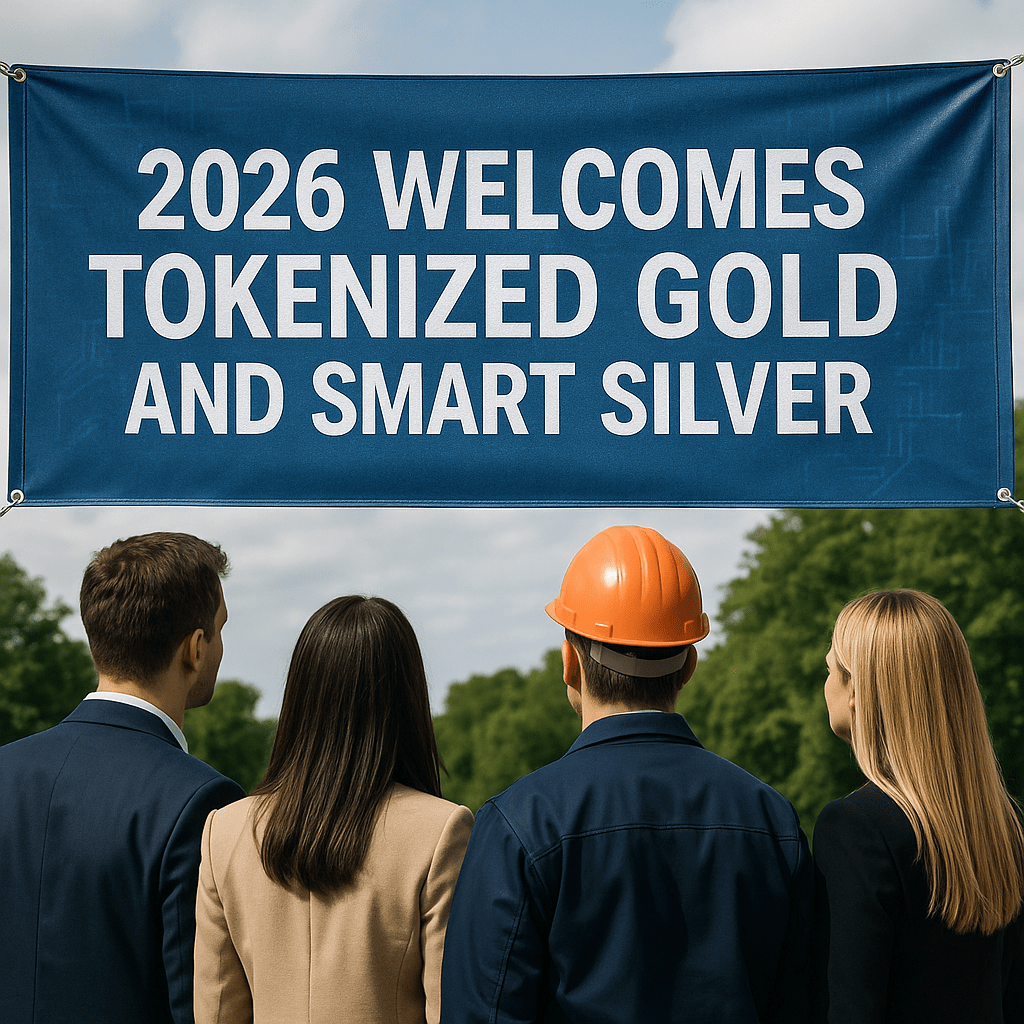
Tokenized metals are entering the global stage. 2026 is the year they become impossible to ignore. I’m glad to have you here for the journey.
Existe una batalla enorme entre los estados nación, los banqueros centrales, los industriales y los inversionistas institucionales por asegurar suministros estratégicos de metales. Ellos —no la demanda minorista— han impulsado el alza en los precios de los metales preciosos durante los últimos dos años. Eso está bien documentado. Lo que sí es nuevo, y muy poco reportado, es la llegada de una forma novedosa de demostrar la propiedad de metales preciosos: ¡la tokenización!
Por eso, comenzando este enero, publicaré la Serie de Metales Tokenizados 2026. Déjame contarte lo que puedes esperar.
Prepárate para una serie semanal de un año entero dedicada a la transformación tokenizada del oro, la plata, el cobre, el litio, el níquel, el cobalto y los metales que impulsan la economía global. Un año completo de ideas sobre cómo convergen las materias primas, la IA, la minería y las finanzas digitales. ¡Muy emocionante!
Estos activos ahora están subiendo a los rieles de la cadena de bloques, obteniendo liquidación más rápida, mayor transparencia y portabilidad global. Las implicaciones son enormes—para inversionistas, mineros, fabricantes y responsables de políticas públicas. El futuro no es solo moneda digital; son los metales digitales. ¿Quién más ofrece esto? Nadie más que Yogi Nelson. ¿El costo? Gratis. ¿Qué más se puede pedir?
Por Qué Esta Serie Importa
Si te interesan los mercados globales, la tecnología, los sistemas energéticos, la geopolítica o la inversión, estos cambios te afectarán directamente. Escucha: tres grandes transformaciones están ocurriendo al mismo tiempo:
1. La tokenización está entrando en la utilidad real.
Los activos reales—no las memecoins—se están digitalizando en libros públicos. Olvídate del estúpido Pepe y de sus monedas o de un token con cara de perro que no vale nada; ¡estoy hablando de oro tokenizado!
2. La IA está revolucionando la minería.
La exploración, la extracción, la cartografía y la inteligencia mineral están evolucionando más rápido de lo que sugieren los titulares. Menos perforar y rezar; más taladrar y descubrir.
3. Las instituciones y los reguladores se están preparando para las materias primas digitales.
Los marcos de cumplimiento, las soluciones de custodia y la infraestructura de mercado están alineándose por primera vez.
Lo Que Verás Cada Semana en 2026
Cada entrega de la serie explorará un tema, incluyendo:
Metales preciosos tokenizados
Metales industriales y energéticos en cadena
Minería impulsada por IA y robótica
Gemelos digitales de minas
Inteligencia mineral vía satélite
Metales tokenizados como colateral
Stablecoins respaldadas por materias primas
Desarrollos regulatorios
Tendencias de adopción institucional
Algunos ensayos serán profundos; otros serán lecturas rápidas y atractivas. Todos estarán anclados en desarrollos reales, no en hype.
Para Quién Es Esta Serie
Esta serie es para quienes disfrutan las grandes ideas, la claridad y un ocasional mal chiste de papá:
Inversionistas
Asesores financieros
Mineros e ingenieros
Analistas de metales
Nuevos en cripto
Escépticos
Estudiantes de mercados
Cualquiera que explore la intersección entre tecnología y activos del mundo real
Enero: Comienza la Era de los Metales Digitales
Los metales construyeron nuestra civilización. Ahora están por entrar en los rieles digitales. La tokenización no reemplaza las materias primas—las moderniza. Y 2026 será el año en que el mundo finalmente prestará atención.
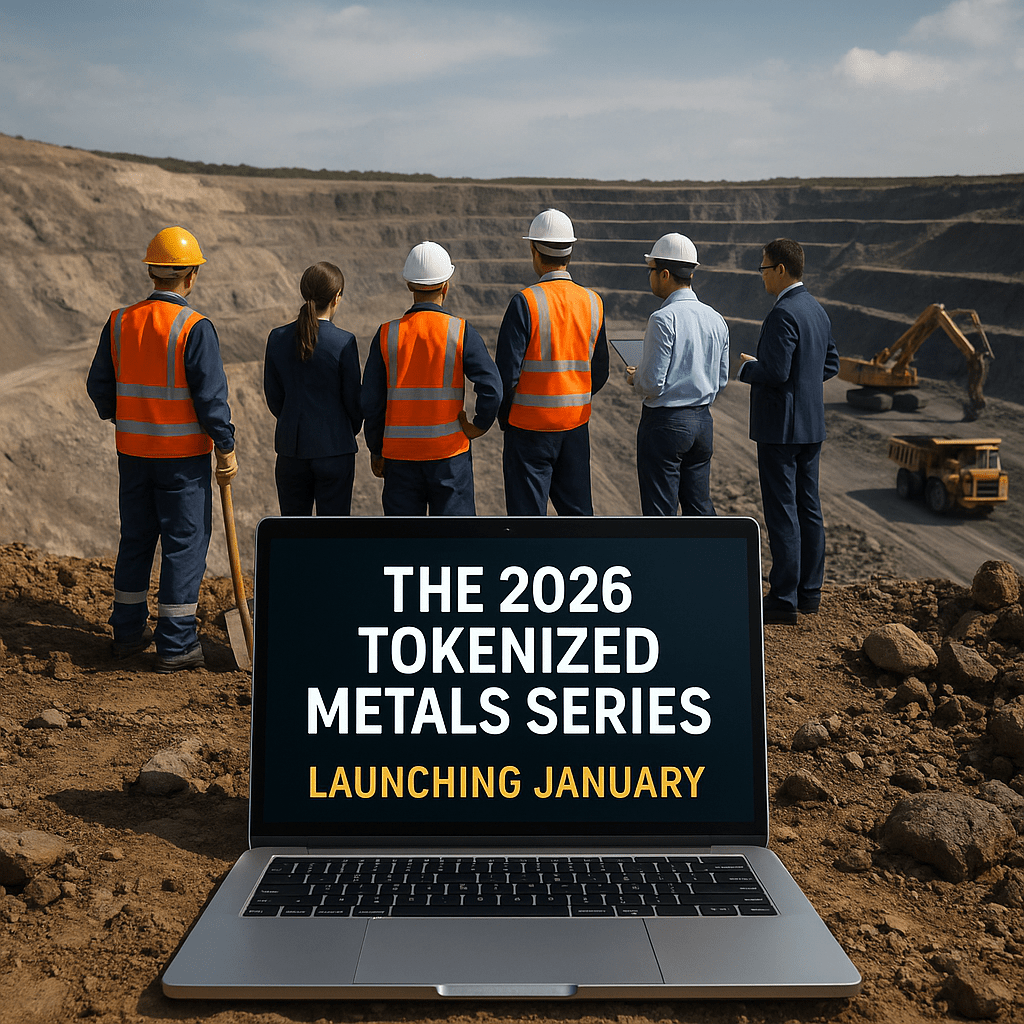
There is a massive battle among nation states, central bankers, industrialists, and institutional investors to secure strategic metals supplies. They have driven up the price of precious metals over the last two years, not retail demand. That is well documented. What is new, and under reported, is the advent of a novel manner to demonstrate precious metals ownership–tokenization! That’s why beginning this January, I’ll be publishing the 2026 Tokenized Metal Series. Let me tell you what to expect.
Be prepared to read a one-year weekly series dedicated to the tokenization transformation—of gold, silver, copper, lithium, nickel, cobalt, and metals powering the global economy. A full year of insights on how commodities, AI, mining, and digital finance are converging. Very cool! These assets are now stepping onto blockchain rails, gaining faster settlement, greater transparency, and global portability. The implications are enormous—for investors, miners, manufacturers, and policymakers. The future isn’t just digital currency—it’s digital metals. Who else is offering this? No one other than Yogi Nelson. The costs? Free. What’s not to like.
Why This Series Matters
If you care about global markets, technology, energy systems, geopolitics, or investing, these changes will affect you. Listen, three major shifts are happening simultaneously:
1. Tokenization is moving into real utility.
Real assets—not meme coins—are being digitized on public ledgers. Forget stupid Pepe and his coins or a dog face token worth nothing; I’m talking about tokenized gold!
2. AI is revolutionizing mining.
Exploration, extraction, mapping, and mineral intelligence are evolving faster than most headlines suggest. A lot less drill and hope; a lot more boring and discover.
3. Institutions and regulators are preparing for digital commodities.
Compliance frameworks, custody solutions, and market infrastructure are aligning for the first time.
What You’ll See Each Week in 2026
Each installment of the series will explore one theme, including:
Tokenized precious metals
Industrial and energy metals on-chain
AI-driven mining and robotics
Digital twins of mines
Satellite-based mineral intelligence
Tokenized metals as collateral
Commodity-backed stablecoins
Regulatory developments
Institutional adoption trends
Some essays will be deep dives; others will be quick, engaging reads. All will be grounded in real-world developments.
Who This Series Is For
This series is for those who enjoy big ideas, clarity, and an occasional bad dad joke:
Investors
Financial advisors
Miners and engineers
Metals analysts
Crypto newcomers
Skeptics
Students of markets
Anyone exploring the intersection of technology and real-world assets
January: The Digital Metals Era Begins
Metals built our civilization. Now they’re about to move onto digital rails. Tokenization isn’t replacing commodities—it’s modernizing them. And 2026 will be the year the world finally notices.


 Blockchain & AI Forum