Artificial Intelligence, Blockchains, cryptography, Decentralized, Digital Currency, Uncategorized, Yogi Nelson

🔐 How Cryptography Powers the World of Cryptocurrencies

Welcome to the BlockchainAIForum where your technology questions are answered.

Cryptography is the secret ingredient that makes cryptocurrencies work. Without it, Bitcoin, Ethereum, Cardano, and every other blockchain would simply not be secure or trustworthy. In this article, we will explore how cryptography works in the world of cryptocurrencies, explained in simple terms.


🧩 What is Cryptography?

Cryptography is the science of securing information so that only intended recipients can read it. Think of it like writing a message in code. If you know the code, you can read it. If you don’t, it remains a secret. In the digital world, cryptography relies on mathematical formulas and algorithms that are nearly impossible to break without the right key.


🏦 Why Cryptography Matters for Crypto

You may wonder: Why do we need all this math? Cryptocurrencies are decentralized, meaning no single person or bank controls them. Instead, people all over the world maintain the blockchain—the public ledger that records every transaction. Cryptography ensures that:

  • ✅ Transactions can’t be faked.
  • ✅ Coins can’t be spent twice.
  • ✅ Users can keep their private keys safe.
  • ✅ Everyone agrees on the ledger’s state without trusting anyone else.

🔑 Public and Private Keys

At the heart of crypto lies the concept of public and private keys.

  • Public Key: Like your email address. You can share it with anyone so they can send you crypto.
  • Private Key: Like your password. Only you should know it. It lets you spend or move your crypto.

These keys are mathematically related but it is impossible to figure out the private key from the public key. When you want to send crypto, you “sign” the transaction with your private key. Others can verify your signature with your public key to confirm it is valid.


✉️ Digital Signatures

Digital signatures are crucial. They prove that:

  • ✅ You authorized the transaction.
  • ✅ The transaction hasn’t been changed.

A digital signature is created using your private key and the transaction data. Anyone can check it with your public key. This ensures no one can forge your signature or alter your transaction.


🛡️ Hash Functions

Another critical tool in cryptography is the hash function. A hash function takes any input (like a document or transaction) and turns it into a short, fixed-length string of numbers and letters.

  • ✅ The same input always gives the same hash.
  • ✅ Even tiny changes in input produce completely different hashes.
  • ✅ It is impossible to figure out the original input just by looking at the hash.

In blockchains, hashes are used to:

  • Create unique “fingerprints” of transactions and blocks.
  • Link blocks together securely in a chain.
  • Ensure no one can change past records without detection.

⛓️ Blockchain Integrity: Chaining Blocks with Hashes

The term blockchain comes from linking blocks using cryptographic hashes. Here’s how it works:

  1. Each block contains a list of transactions.
  2. The block also includes the hash of the previous block.
  3. This forms an unbreakable chain.

If anyone tries to change a single transaction in an old block, its hash changes. That breaks the chain, making tampering obvious to everyone.


🧪 Zero-Knowledge Proofs (Advanced)

Some modern blockchains also use zero-knowledge proofs. These allow someone to prove they know something (like a secret or password) without revealing it. For example:

  • ✅ You prove you own funds without revealing your private key.
  • ✅ You prove you have enough balance without showing your entire account.

Zero-knowledge proofs can improve privacy and security.


🏛️ Example: Cardano’s Use of Cryptography

Let’s look briefly at Cardano, a popular blockchain project. Cardano uses advanced cryptography to secure its blockchain:

  • ✅ It uses Ed25519 for digital signatures, known for being secure and fast.
  • ✅ It employs Ouroboros, a proof-of-stake protocol that relies on cryptographic randomness to select who adds new blocks.
  • ✅ It explores zero-knowledge proofs to improve privacy and scalability in the future.

Cardano is an example of how blockchains go beyond simple signatures and hashes, using cutting-edge cryptography to enhance security and efficiency.


🌍 Why It All Matters

Without cryptography, there would be no cryptocurrencies. Banks have vaults and guards to protect money. Cryptocurrencies have cryptography. It lets people all over the world:

  • ✅ Exchange value securely.
  • ✅ Trust a shared ledger without intermediaries.
  • ✅ Protect their digital assets from theft or fraud.

✅ Key Takeaways

  • Cryptography secures cryptocurrencies without needing banks or middlemen.
  • Public and private keys enable secure ownership and transactions.
  • Digital signatures prove authenticity.
  • Hash functions link blocks in a tamper-evident chain.
  • Advanced tools like zero-knowledge proofs add privacy and efficiency.

💡 Conclusion

Cryptography is the bedrock of cryptocurrencies. It ensures that people can use decentralized digital money safely, securely, and confidently. Understanding the basics helps you see why crypto is revolutionary—and why it will continue to evolve with even better cryptographic tools in the future.

Until next time,

Yogi Nelson

AI Agents, AI Tools, Artificial Intelligence, Science, Uncategorized, Yogi Nelson

🖥️ Why Nvidia’s Computer Chips Are the Best in the World

Welcome to the BlockchainAIForum

Nvidia is widely seen as the leader in making the world’s most powerful computer chips, especially for graphics, artificial intelligence (AI), and advanced computing. But what exactly makes Nvidia’s technology so special? In this article, we will explain, in simple language, why Nvidia’s chips are considered the best, looking at their technology, production, and unique capabilities.


⚙️ What Are Nvidia Chips?

Nvidia designs GPUs (Graphics Processing Units). Originally built to make video games look amazing, GPUs have evolved into essential tools for AI, scientific computing, and cryptocurrency mining. Unlike regular CPUs (Central Processing Units), GPUs can do thousands of calculations at once, making them perfect for:

  • ✅ Gaming
  • ✅ Artificial intelligence
  • ✅ Scientific simulations
  • ✅ Data centers
  • ✅ Blockchain processing

🚀 Parallel Processing Power

One major advantage of Nvidia’s chips is parallel processing.

  • CPUs have a few powerful cores that do tasks one at a time.
  • GPUs have thousands of smaller cores that work in parallel.

This design lets Nvidia GPUs handle massive amounts of data quickly. For AI models or crypto mining, this means:

  • ✅ Faster training of machine learning models
  • ✅ More efficient processing of transactions
  • ✅ Better performance for simulations

In simple terms: Nvidia’s GPUs can do many things at once better than anyone else.


💻 Cutting-Edge Architecture

Nvidia is famous for constantly improving its chip architecture. Each generation brings:

  • ✅ More cores
  • ✅ Faster memory
  • ✅ Lower power use

For example, recent architectures like Ampere and Hopper are designed specifically for AI workloads, with:

  • Tensor Cores: Special circuits for matrix math used in AI
  • Ray-Tracing Cores: Advanced lighting for realistic graphics
  • Better energy efficiency

These innovations keep Nvidia ahead of the competition in both gaming and AI.


🧠 AI-Optimized Hardware

What really sets Nvidia apart is how well its chips are built for artificial intelligence.

  • Tensor Cores can handle AI operations much faster than standard GPU cores.
  • Nvidia has designed these cores specifically for deep learning.

This makes Nvidia GPUs the top choice for:

  • ✅ Training massive AI models
  • ✅ Running AI in data centers
  • ✅ Powering self-driving cars

If you use ChatGPT or image generators, chances are they ran on Nvidia hardware.


🔗 Industry-Leading Software

Nvidia doesn’t just sell hardware. It also builds world-class software.

CUDA: A programming platform that lets developers use Nvidia GPUs for everything from science to crypto.

cuDNN: A library for deep learning tasks, used by major AI companies.

Nvidia AI Enterprise: Tools for deploying AI in the real world.

This tight integration of software and hardware makes Nvidia chips easier and more powerful to use.


🏭 Advanced Production Process

Nvidia doesn’t manufacture its own chips but works with the best in the business.

✅ Nvidia designs the chips.
✅ Companies like TSMC (Taiwan Semiconductor Manufacturing Company) build them using cutting-edge fabrication processes.

These factories can make chips with features measured in nanometers (billionths of a meter), allowing:

  • More transistors on a single chip
  • Lower power usage
  • Faster performance

This advanced production gives Nvidia an edge in both speed and efficiency.


🌎 Wide Range of Uses

Nvidia’s technology isn’t just for gamers or AI researchers. Their GPUs power:

  • ✅ Scientific research (e.g., weather prediction)
  • ✅ Cryptocurrency mining
  • ✅ Data centers and cloud computing
  • ✅ Automotive (self-driving car systems)
  • ✅ Medical imaging and diagnostics

This versatility ensures huge demand for their chips.


🏆 Market Leadership and Ecosystem

Another reason Nvidia is #1 is its ecosystem.

  • Developers, researchers, and companies rely on Nvidia’s software and training tools.
  • Nvidia invests in research partnerships and industry standards.
  • They support academic research and startups building on Nvidia technology.

This creates a virtuous cycle:

✅ More developers use Nvidia → More software is optimized → More demand for Nvidia GPUs.


✅ Key Reasons Nvidia Leads

To sum it up, Nvidia’s computer chips are the best because of:

  • ⚡ Advanced parallel processing power
  • 🧠 AI-focused architecture like Tensor Cores
  • 💻 Industry-leading software (CUDA, cuDNN)
  • 🏭 Cutting-edge manufacturing via partners like TSMC
  • 🌎 Versatile use across gaming, AI, crypto, science, and more
  • 🏆 A strong ecosystem that supports developers and companies

💡 Conclusion

Nvidia’s GPUs have evolved far beyond their gaming roots. They now power everything from blockbuster video games to advanced AI research and cryptocurrency networks.

What makes Nvidia special is not just raw performance, but the complete package: hardware designed for the future, software that empowers developers, and an ecosystem that keeps them ahead of the competition.

As technology keeps advancing, Nvidia continues to lead the way, building the world’s most powerful and versatile computer chips.

Until next time,

Yogi Nelson

AI Agents, Artificial Intelligence, Banking, Blockchains, cryptography, Digital Currency, International Finance, Stocks, tokenization, Uncategorized, Yogi Nelson

📈 The Rise of Tokenized Stocks: A Beginners Guide

Welcome to the BlockchainAIForum


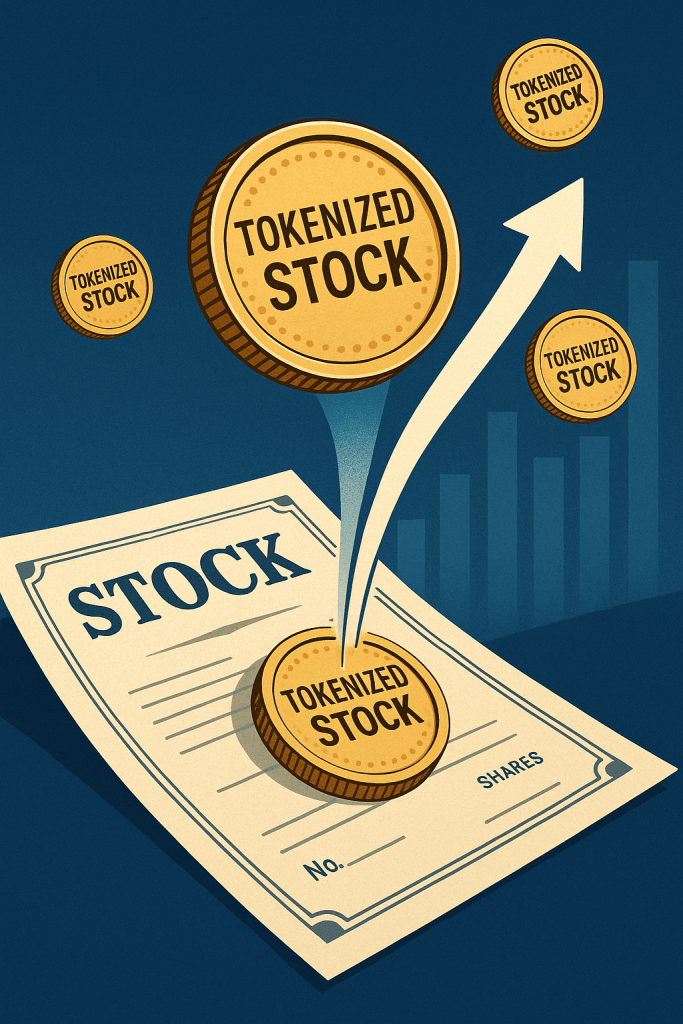
🪙 What Are Tokenized Stocks?


  • 24/7 Trading
    Unlike traditional stock markets that close overnight and on weekends, tokenized stocks can trade at any time.
  • Global Access
    Anyone with an internet connection and a crypto wallet can invest, opening markets to investors in regions without traditional brokerages.
  • Fractional Shares
    Tokenization lowers the barrier to entry. Instead of buying a whole $1000 share, you can invest $10.
  • Faster Settlement
    Blockchain-based settlement can be near-instant, reducing counterparty risk and eliminating some middlemen.
  • Improved Transparency
    All transactions are recorded on-chain, enhancing traceability and auditability.

  • Regulatory Uncertainty
    Regulators are still figuring out how to treat these assets. This uncertainty can lead to sudden changes in availability.
  • Counterparty Risk
    Tokens are only as good as the custodian holding the real shares. If that custodian is dishonest or goes bankrupt, the backing can vanish.
  • Limited Platforms
    Not all exchanges support tokenized stocks. Liquidity can be limited compared to traditional markets.
  • Jurisdictional Restrictions
    Many tokenized stocks cannot legally be sold in certain countries (for example, the U.S.) due to securities laws.

  • In the United States, the SEC generally considers these tokens securities. Selling them without proper licenses can be illegal.
  • Some platforms have previously offered tokenized stocks without full regulatory approval, drawing heightened scrutiny.
  • The European Union is taking a more controlled approach. The EU’s MiCA (Markets in Crypto-Assets) framework sets rules for digital assets, but tokenized stocks may fall under existing securities laws.
  • Countries like Switzerland and Singapore have clearer guidelines encouraging innovation while protecting investors.


  • Stronger custodial frameworks
  • Clearer, harmonized regulations
  • Greater public awareness and education

AI Tools, Artificial Intelligence, Banking, Blockchains, Digital Currency, real estate, tokenization, Uncategorized, Yogi Nelson

🏢 A Step-by-Step Guide to Tokenized Commercial Real Estate

Welcome to the BlockchainAIForum where your technology questions are answered. Commercial real estate has always been seen as a solid investment, but it often feels out of reach for the average person. High costs, complex deals, and limited access keep many investors on the sidelines. Tokenization is changing that. By turning ownership stakes into digital tokens on a blockchain, it is opening commercial real estate to a wider group of investors. But what does that actually mean? Let’s break it down step by step.


💡 What Is Tokenized Commercial Real Estate?

In simple terms, tokenized commercial real estate is when ownership in a property—like an office building, shopping center, or apartment complex—is divided into digital “tokens” recorded on a blockchain. Each token represents a share of ownership. This allows people to buy, sell, and trade fractional pieces of expensive real estate much more easily than before.

Imagine splitting a $10 million building into 10,000 tokens. Instead of needing millions to invest, you could buy a single token for $1,000. It’s like owning a slice of the property.


🌍 Why Do People Care About It?

Tokenization is seen as an important innovation for several reasons:

  • Accessibility: More people can invest in high-value commercial properties.
  • Liquidity: Tokens can potentially be traded on secondary markets, making it easier to sell.
  • Transparency: Blockchain records transactions securely and publicly.
  • Efficiency: Smart contracts can automate processes, reducing paperwork and costs.

In short, tokenization promises to make commercial real estate investment more democratic and streamlined.


🛠️ How Does Tokenized Commercial Real Estate Work? Step by Step

Let’s walk through a typical process for tokenizing a commercial property.

1️⃣ Identify and Value the Property

First, a property owner or real estate company decides which property they want to tokenize. They conduct a professional valuation to determine its market worth. For example, suppose they pick a shopping center valued at $10 million.

2️⃣ Structure the Ownership

Next, they set up the legal structure. This is crucial. Usually, the property is placed in a legal entity, such as a limited liability company (LLC) or a trust. Investors don’t directly own the building but own shares in the entity that owns it. This makes it possible to divide ownership cleanly into tokens.

3️⃣ Create the Tokens

Once the legal groundwork is in place, the ownership is split into digital tokens on a blockchain. If the shopping center is split into 10,000 tokens, each token represents 0.01% of the total ownership.

This step requires working with a blockchain platform that supports token creation. The tokens are coded with rules about how they can be traded and who can hold them, ensuring compliance with regulations.

4️⃣ Offer the Tokens to Investors

The next step is to sell the tokens. This might happen through a direct sale on the issuer’s website or through a digital platform specializing in real estate tokens. Investors buy tokens using traditional currency or sometimes cryptocurrency.

In many jurisdictions, these offerings must comply with securities laws, so they may be limited to accredited investors or follow specific regulations.

5️⃣ Manage the Property and Distribute Income

After the sale, the property is managed like any other commercial investment. Rent is collected, expenses are paid, and profits are distributed. Income—such as rental profits—can be divided among token holders proportionally.

Thanks to blockchain technology, these payments can even be automated via smart contracts, which execute payments once certain conditions are met.

6️⃣ Trade or Sell the Tokens

One of the most appealing aspects of tokenization is the potential for liquidity. Instead of holding a property for 5–10 years before selling, investors might trade tokens on approved secondary markets. This gives them flexibility to exit earlier if needed.


🚀 Why Is This Considered Important?

Tokenized commercial real estate isn’t just a new technology gimmick. It could transform the industry by:

  • Lowering barriers to entry for smaller investors.
  • Enabling global participation in local real estate markets.
  • Making real estate investments more flexible and tradable.
  • Reducing reliance on expensive intermediaries.

While it is still early days, and there are regulatory and technical challenges to solve, many see tokenization as a way to modernize a traditionally slow, opaque, and exclusive industry.


✅ Final Thoughts

Tokenized commercial real estate aims to make property investment more accessible, transparent, and efficient. By turning buildings into tradable digital tokens, it offers a new way for people to invest in—and benefit from—the commercial real estate market. As technology and regulations evolve, it could reshape how we think about owning and investing in property for years to come. It is a fantastic innovation!

Until next time,

Yogi Nelson

Uncategorized

🪙 How a Stablecoin is Minted: A Step-by-Step Guide

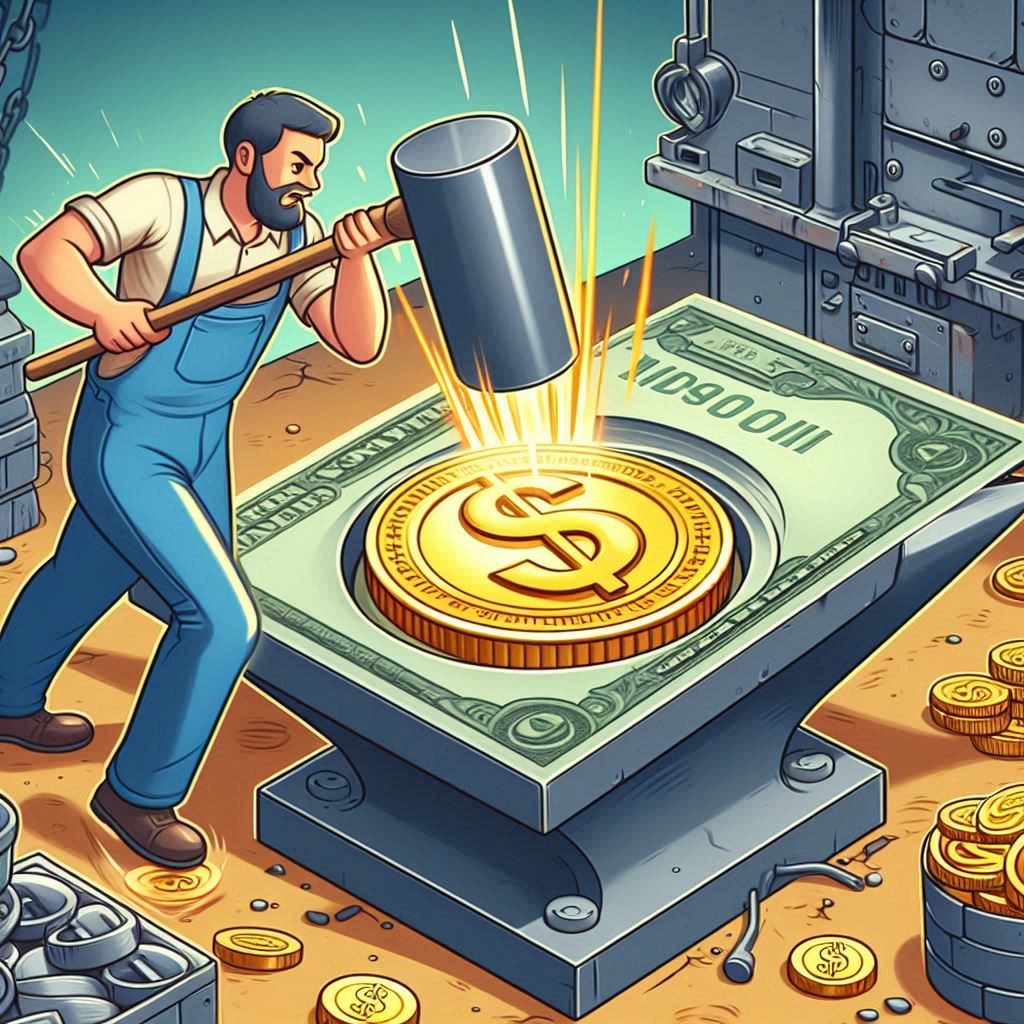
Welcome to the BlockchainAIForum where your technology questions are answered. Today we take explore the step-by-step process used to “mint” stablecoins. Minting is more than just pressing a button on a website—it involves a structured process combining real-world financial steps and blockchain technology. Stablecoins are blockchain-based tokens designed to maintain a steady value, typically pegged to a fiat currency like the US dollar. But what actually happens when someone “mints” a stablecoin? This article explains, in clear terms, how a fiat-backed stablecoin (like USDC or USDT) is minted, step by step.


📌 1️⃣ User Onboarding and Compliance

Step summary: The user proves their identity and gets authorized to use the stablecoin system.

  • What happens?
    A customer (say, Alice) wants to buy stablecoins. She registers with the issuing company (like Circle for USDC).
    She completes KYC (Know Your Customer) checks: uploading identification, proof of address, and sometimes even undergoing a video verification.
    Compliance teams review her information to prevent fraud, money laundering, or sanctions violations.
  • Tools used: Web forms and apps, compliance software, human compliance officers
  • Physical work: Reviewing documents, customer support for failed KYC

💰 2️⃣ Fiat Deposit

Step summary: The user sends actual money to the issuer.

  • What happens?
    Alice wires $10,000 from her bank account to the stablecoin issuer’s designated bank account. The issuer’s bank confirms receipt.
  • Tools used: SWIFT, ACH, SEPA, payment processors
  • Physical work: Bank staff may review or clear large transactions; finance teams reconcile wires

🔎 3️⃣ Treasury Verification and Approval

Step summary: The issuer confirms the deposit and authorizes minting.

  • What happens?
    The stablecoin company’s treasury team verifies the wire against Alice’s account. They check that the money actually settled (not just pending) and approve the minting amount.
  • Tools used: Banking portals, internal ledgers, compliance software
  • Physical work: Treasury analysts approve transactions; auditors may review records

🛠️ 4️⃣ Blockchain Transaction: Minting

Step summary: The issuer creates new tokens on-chain.

  • What happens?
    An authorized operator accesses the issuer’s blockchain wallet and uses a smart contract function called mint to create 10,000 new tokens. This transaction is submitted to the blockchain network.
  • Technical detail:
    The mint function increases the token supply by the specified amount. Validators confirm and record the transaction.
  • Tools used: Blockchain wallets (e.g., MetaMask, Gnosis Safe), command-line tools, smart contract interfaces
  • Physical/computer work: An employee signs the transaction using secure keys; blockchain nodes confirm it

🔗 5️⃣ Recording and Auditing

Step summary: The issuer updates internal records and ensures accountability.

  • What happens?
    The treasury updates its ledger: Alice’s $10,000 in the bank is matched by 10,000 newly minted tokens. Issuers often maintain 1:1 backing by keeping fiat reserves in segregated accounts.
  • Tools used: Accounting software, audit dashboards, blockchain explorers
  • Physical work: Accountants reconcile records; auditors verify the match between tokens and reserves

📲 6️⃣ Delivery to Customer

Step summary: Alice receives the stablecoins in her wallet.

  • What happens?
    The issuer sends the newly minted 10,000 tokens to Alice’s blockchain address. She sees them in her wallet and can now trade, lend, or hold them.
  • Tools used: Blockchain wallets, blockchain explorers, issuer’s platform for delivery
  • Physical/computer work: Staff initiates the transfer; Alice confirms receipt in her wallet

✅ Conclusion

Minting a stablecoin is not just a “crypto” step but a process that bridges real-world banking and blockchain technology. It involves:

  • Customer onboarding and compliance
  • Receiving and verifying fiat deposits
  • Authorized blockchain minting
  • Careful treasury management and audits
  • Delivering tokens to users

This process ensures that each stablecoin is genuinely backed by real assets, maintaining trust in the system.


📜 Final Note

Stablecoin issuers often publish attestation reports by independent auditors, proving that the total tokens in circulation match the fiat reserves held in bank accounts. This transparency is critical for user confidence in the stablecoin’s peg.

Time to go but first a proverb from Fiji, where they say: “children are like empty pots–they need careful fillling.

Until Next Time,

Yogi Nelson