AI Agents, AI Tools, Artificial Intelligence, Banking, Blockchains, content creation, cryptography, Decentralized, Digital Currency, Euro, International Finance, Productivity, Switzerland, tokenization, Yogi Nelson

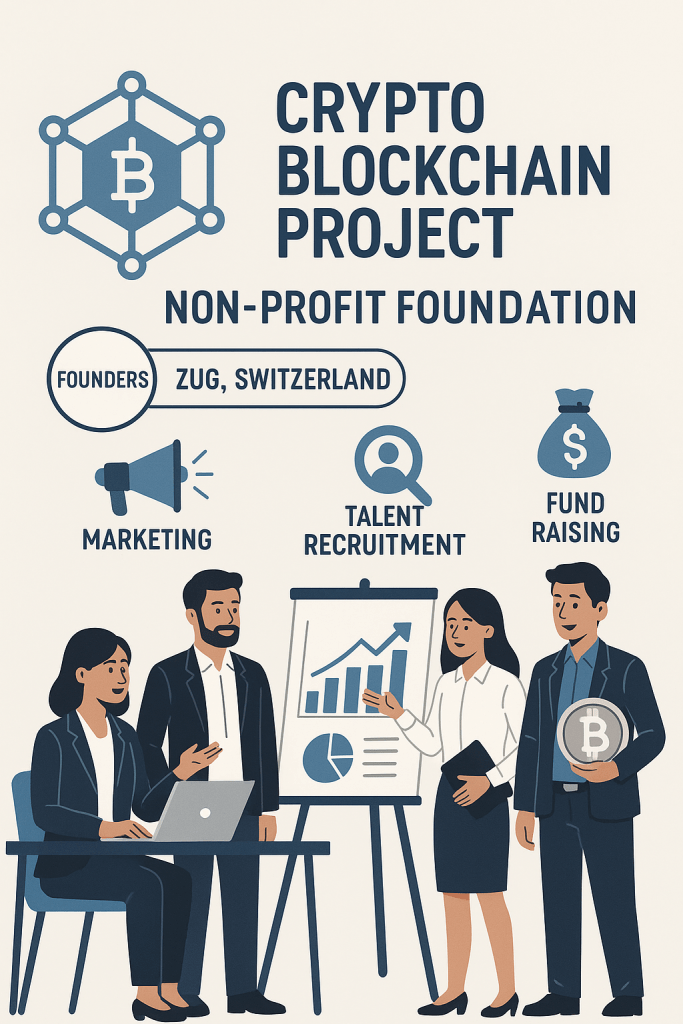
 🏛️ Why Do Crypto Companies Set Up Foundations?

🌱 What Is a Crypto Foundation?

🧰 What Do Crypto Foundations Actually Do?

🚀 How Do Foundations Help a Crypto Project Grow?

💸 How Are Foundations Funded?

🇨🇭 Why Are So Many Crypto Foundations Based in Switzerland?

🧾 Final Thoughts

📚 Sources

Banking, Blockchains, Decentralized, Digital Currency, International Finance, Science, tokenization, Uncategorized

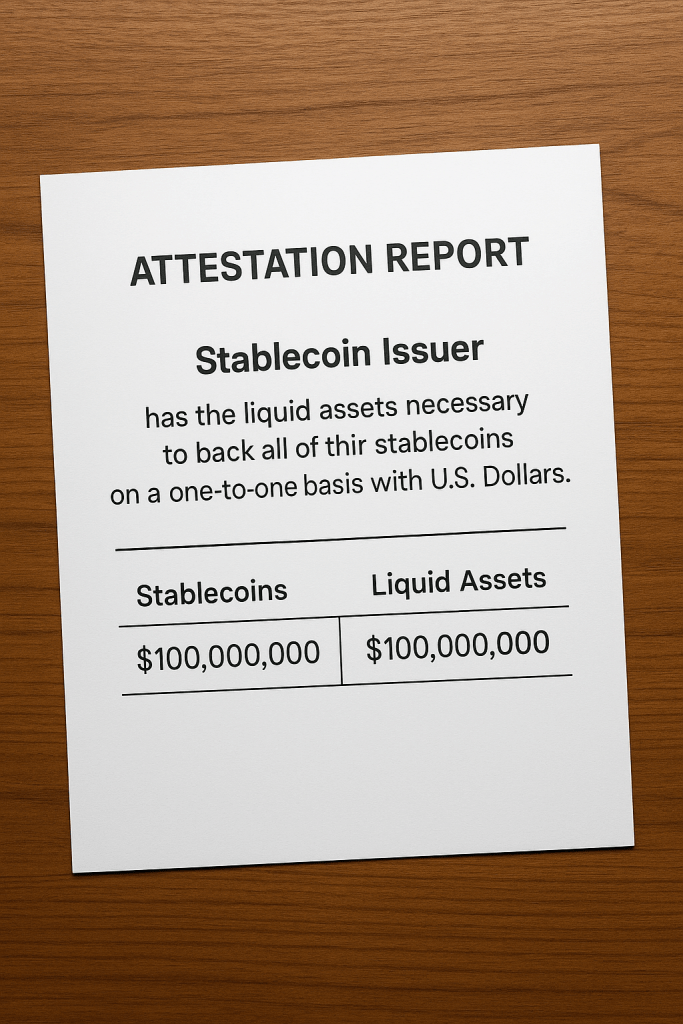
🏦 Proof of Reserves in the Age of the Genius Act–How On-Chain Transparency is About to Get Smarter, Safer, and Federally Regulated

Welcome to the BlockchainAIForum

by Yogi Nelson

  1. Snapshot of Liabilities
    The platform takes a cryptographic snapshot of its liabilities—i.e., user account balances—using a Merkle Tree to protect user privacy.
  2. Auditor Verification
    A third-party auditor verifies that wallet balances match the claimed reserves, both on-chain and off-chain (e.g., fiat).
  3. Merkle Proof for Users
    Users can verify their individual balances were included, without seeing anyone else’s data.
  4. Public Publication
    The proof and auditor certification are published online, for full transparency.
  • ✅ Mandatory monthly PoR audits for stablecoin issuers
  • ✅ Auditors must register with the Fed or OCC
  • ✅ Support for smart contract-based reporting
  • ✅ Consumer-facing transparency dashboards
  • ✅ Criminal penalties for reserve misreporting
  • 🔐 Greater Trust: Real-time proof builds credibility.
  • 📈 Mass Adoption: Retail and institutional users feel safer.
  • 💻 Better UX: Wallets and apps can display verified reserve info.
  • 🏛️ Regulatory Clarity: Clear rules mean better innovation pathways.
  • 🔄 Continuous, on-chain reserve reporting
  • 📊 Unified federal dashboards
  • 🔍 Fewer excuses for hidden risks

Banking, Blockchains, cryptography, Digital Currency, Productivity, Science, tokenization, Uncategorized, Yogi Nelson

🔐 What Is Crypto Staking? A Beginner’s Guide

Welcome to the BlockchainAIForum


  1. You hold a PoS-supported cryptocurrency (e.g., Ethereum, Cardano, Solana).
  2. You lock up your tokens in a wallet or with a staking provider.
  3. The network selects stakers (or validators) to confirm transactions.
  4. You earn staking rewards, typically paid out regularly.
  • Solo staking: You run your own validator node. This requires technical expertise and minimum token requirements (e.g., 32 ETH for Ethereum).
  • Pooled staking: You join a group of stakers to combine assets and share rewards. Good for beginners.
  • Exchange staking: Centralized platforms (like Coinbase or Binance) offer staking-as-a-service.
  • Research the blockchain you want to stake on (e.g., its inflation rate, validator performance, and reward schedule).
  • Use a reputable wallet or exchange with transparent fees and security.
  • Start small to learn how the process works before committing large amounts.
  • Stay updated with network upgrades and policy changes.
CoinNetworkEst. Annual Reward
EthereumEthereum 2.0~3–5%
CardanoADA~3–6%
SolanaSOL~5–8%
AI Agents, AI Tools, Artificial Intelligence, Banking, Blockchains, cryptography, Decentralized, Digital Currency, Science, tokenization, Uncategorized, Yogi Nelson

🕵️ The Perils of a Central Bank Digital Dollar: A Privacy Advocate’s Perspective

Welcome to the BlockchainAIForum.

As the U.S. government explores the creation of a Central Bank Digital Currency (CBDC)—often referred to as a Digital Dollar—privacy advocates are raising serious concerns. Supporters say it could make payments faster and more efficient. But critics warn that a government-issued digital currency might also bring surveillance, financial control, and an unprecedented invasion of personal privacy. In this article, we break down the risks that worry privacy advocates most.


🏛️ What Is a Central Bank Digital Currency?

A Central Bank Digital Currency (CBDC) is a digital version of a country’s national currency, issued and backed by its central bank. In the U.S., this would mean digital dollars issued by the Federal Reserve. Unlike cryptocurrencies such as Bitcoin or Ethereum, a CBDC would not be decentralized. It would be fully controlled by the government. You wouldn’t hold it in a private wallet—you’d likely hold it in a centralized account, possibly maintained by the Fed or in partnership with commercial banks.


👀 Total Transaction Visibility

One of the biggest concerns about a digital dollar is that it could give the federal government complete visibility into your financial life.

  • Every transaction could be tracked in real time.
  • Anonymous cash payments would become nearly impossible.
  • Spending habits, charitable donations, political contributions, and personal purchases would all leave a digital trail.

For privacy advocates, this level of financial surveillance is unacceptable. It could allow the government to create detailed profiles of every citizen’s economic behavior.


🎛️ Programmable Money = Programmable Control

CBDCs could also be programmable, meaning the government (or authorized entities) could set rules for how the money is used. For example, in theory:

  • Your digital dollars could expire after a certain date.
  • You could be restricted from spending money on specific products or services.
  • Your funds could be frozen or withdrawn instantly without due process.

While this kind of programmability might sound useful for fraud prevention or emergency aid, privacy advocates argue it gives the state too much power over personal economic freedom.


🧱 End of Financial Anonymity

Today, cash allows for a degree of financial privacy. You can give to charity, buy a book, or tip someone without it being logged forever in a database. With a digital dollar:

  • Every dollar you spend or receive would be logged.
  • The government (and possibly third-party contractors) could access and analyze this data.
  • Over time, this could lead to profiling, behavioral predictions, or even social scoring.

For those concerned about civil liberties, this opens the door to a surveillance state unlike anything previously seen in the U.S.


⚖️ Potential for Abuse

Even if the current government promises to respect privacy, future administrations may not. History has shown that surveillance tools are often expanded, repurposed, or abused over time.

  • What begins as a tool for stopping crime could be used to monitor protestors.
  • What begins as financial oversight could be twisted into financial censorship.

CBDCs could allow future governments to punish dissent, blacklist individuals, or target communities—all with the push of a button.


🔓 Cybersecurity & Data Breaches

A digital dollar system would become a prime target for hackers, both foreign and domestic.

  • What happens if the central database is breached?
  • Could bad actors steal identities or manipulate balances?
  • What if a state-level actor tampers with data to destabilize the U.S. economy?

Centralizing the financial infrastructure introduces a single point of failure, putting every citizen’s finances and personal data at risk.


🌐 The End of Decentralization?

Privacy advocates and crypto enthusiasts believe that money should be decentralized, like Bitcoin and Ethereum. These decentralized systems:

  • Allow users to hold and spend funds without a central authority.
  • Provide transparency without surveillance.
  • Empower individuals, especially in countries with unstable governments.

A CBDC moves in the opposite direction: toward centralized control, top-down regulation, and government oversight.


📉 Chilling Effect on Free Speech and Behavior

Imagine a world where your digital dollar account is flagged because you donated to an “unpopular” cause or purchased politically sensitive material. Even if nothing illegal has occurred, knowing you’re being watched changes how you behave. This is known as the chilling effect—and it undermines free speech, free association, and personal autonomy.


✅ Key Takeaways

Privacy rights advocates worry that a Central Bank Digital Dollar could:

  • 👁️ Enable mass financial surveillance
  • 🎛️ Give the government programmable control over your money
  • 🚫 Erase financial anonymity
  • 🧱 Be abused by future administrations
  • 🔓 Introduce cybersecurity risks
  • 🌐 Undermine decentralized, citizen-led finance
  • 📉 Chill personal freedom and speech

While efficiency and modernization are important goals, critics argue they should not come at the cost of basic civil liberties.


💡 Conclusion

A Central Bank Digital Dollar might seem like a high-tech upgrade to the financial system, but privacy advocates see it as a dangerous leap toward total government control. Without robust safeguards, transparency, and citizen oversight, a digital dollar could become a tool not of empowerment—but of financial surveillance and political control. As discussions continue in Washington and at the Federal Reserve, now is the time for citizens to speak up and demand that privacy—not just convenience—be a non-negotiable cornerstone of any future financial system.

Until next time,

Yogi Nelson

AI Agents, Artificial Intelligence, Banking, Blockchains, cryptography, Digital Currency, International Finance, Stocks, tokenization, Uncategorized, Yogi Nelson

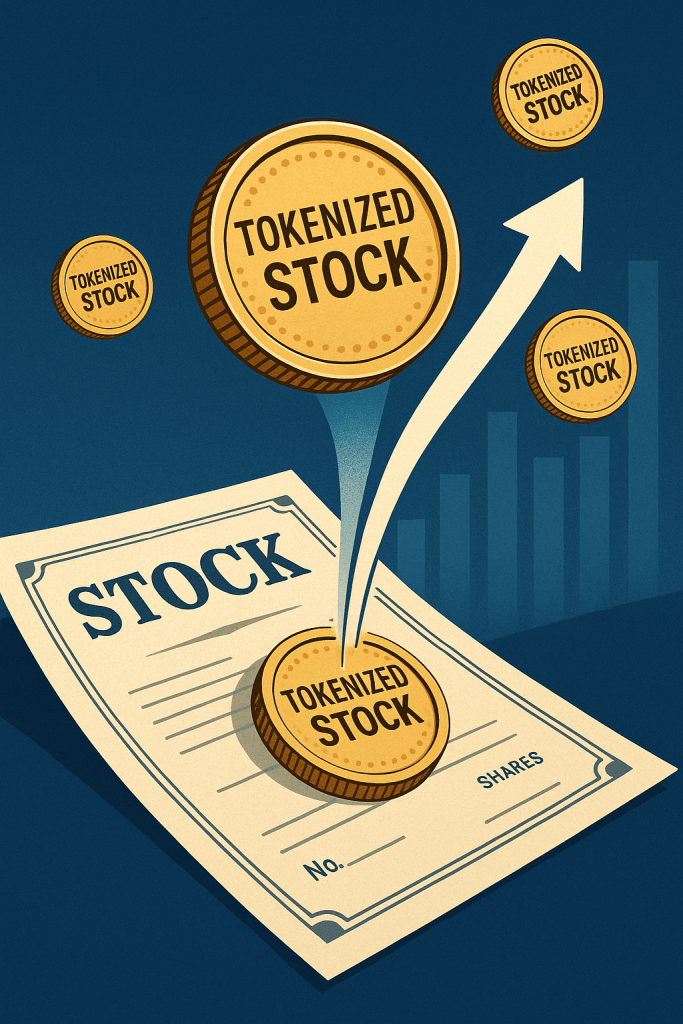
📈 The Rise of Tokenized Stocks: A Beginners Guide

Welcome to the BlockchainAIForum


🪙 What Are Tokenized Stocks?


  • 24/7 Trading
    Unlike traditional stock markets that close overnight and on weekends, tokenized stocks can trade at any time.
  • Global Access
    Anyone with an internet connection and a crypto wallet can invest, opening markets to investors in regions without traditional brokerages.
  • Fractional Shares
    Tokenization lowers the barrier to entry. Instead of buying a whole $1000 share, you can invest $10.
  • Faster Settlement
    Blockchain-based settlement can be near-instant, reducing counterparty risk and eliminating some middlemen.
  • Improved Transparency
    All transactions are recorded on-chain, enhancing traceability and auditability.

  • Regulatory Uncertainty
    Regulators are still figuring out how to treat these assets. This uncertainty can lead to sudden changes in availability.
  • Counterparty Risk
    Tokens are only as good as the custodian holding the real shares. If that custodian is dishonest or goes bankrupt, the backing can vanish.
  • Limited Platforms
    Not all exchanges support tokenized stocks. Liquidity can be limited compared to traditional markets.
  • Jurisdictional Restrictions
    Many tokenized stocks cannot legally be sold in certain countries (for example, the U.S.) due to securities laws.

  • In the United States, the SEC generally considers these tokens securities. Selling them without proper licenses can be illegal.
  • Some platforms have previously offered tokenized stocks without full regulatory approval, drawing heightened scrutiny.
  • The European Union is taking a more controlled approach. The EU’s MiCA (Markets in Crypto-Assets) framework sets rules for digital assets, but tokenized stocks may fall under existing securities laws.
  • Countries like Switzerland and Singapore have clearer guidelines encouraging innovation while protecting investors.


  • Stronger custodial frameworks
  • Clearer, harmonized regulations
  • Greater public awareness and education