AI Agents, AI Tools, Artificial Intelligence, cryptography, Oracles, tokenization, Yoga

Amperity: The AI-Infused Customer Data Cloud Driving Strategic Insight

by Yogi Nelson

Welcome to the BlockchainAIForum

In the Beginning

What is Amperity’s Specialty

  • AI-Powered Identity Resolution: Uses deterministic and probabilistic matching to merge records into a stable, persistent ID, reconciling online and offline identifiers.
  • Customer 360 Profiles: Produces comprehensive, analysis-ready profiles with governance and quality checks built in.
  • Segmentation & Activation: Business users can explore data, build segments (including with generative-AI assistance), and push audiences to hundreds of downstream tools.
  • Data & API Flexibility: Robust connectors and APIs plus lakehouse integrations (e.g., Snowflake, Databricks) enable seamless fit into enterprise data stacks.
  • Security & Compliance: Enterprise-grade controls and auditing aligned to major standards help teams operate safely at scale.

Amperity Service Offerings

  • Core Enablement: Implementation guidance, training, documentation, and monitoring of data pipelines.
  • Premium / Advisory Services: Strategic solution design, advanced configuration, audience and campaign orchestration assistance, and analytics advisory tailored to industry needs.

What Makes Amperity Unique

  1. Identity Excellence: Customer identity is notoriously messy. Amperity’s ML-driven matching is engineered to maximize precision and recall, improving the reliability of customer profiles that power analytics and activation.
  2. From Unification to Action: Many tools stop at data consolidation. Amperity adds audience building, activation workflows, and bidirectional integrations so teams can translate data into business results quickly.
  3. Enterprise-Grade Flexibility: The platform fits complex architectures—supporting hybrid cloud, lakehouse, and real-time patterns—without sacrificing governance or performance.
  4. Empathy-Driven Product Design: The company’s roadmap has been shaped with close customer collaboration, prioritizing usability for marketers, analysts, and data teams alike.
  5. Ecosystem Alignment: Native interoperability with popular data and marketing tools reduces integration friction and speeds time-to-value.

Amperity Client Profiles

Amperity primarily serves mid-market and enterprise organizations that need trustworthy customer data across touchpoints. Typical industries include:

  • Retail & eCommerce: Personalization at scale, loyalty growth, churn reduction, LTV optimization.
  • Travel & Hospitality: Unified profiles across channels and brands, loyalty uplift, offer targeting.
  • Financial Services: Accurate householding, cross-sell/upsell, and compliant data activation.
  • Sports, Fitness & Entertainment: Fan data unification, ticketing and merch personalization, omnichannel engagement.
  • Consumer Products & Memberships: Subscription analytics, retention, and lifecycle marketing.

How Teams Use Amperity

  • Loyalty Acceleration: Build look-alike audiences, suppress low-propensity segments, and boost conversions by unifying program and purchase data.
  • Paid Media Efficiency: Reduce wasted ad spend via better seed audiences, suppression lists, and conversion feedback loops.
  • Personalized Campaigns: Trigger messaging based on lifecycle events, predicted value, and real-time behaviors.
  • Analytics & Measurement: Improve attribution, incrementality studies, and forecasting with a reliable customer spine.

Why It Matters Now

AI Agents, AI Tools, Artificial Intelligence, Banking, Blockchains, content creation, cryptography, Decentralized, Digital Currency, Euro, International Finance, Productivity, Switzerland, tokenization, Yogi Nelson

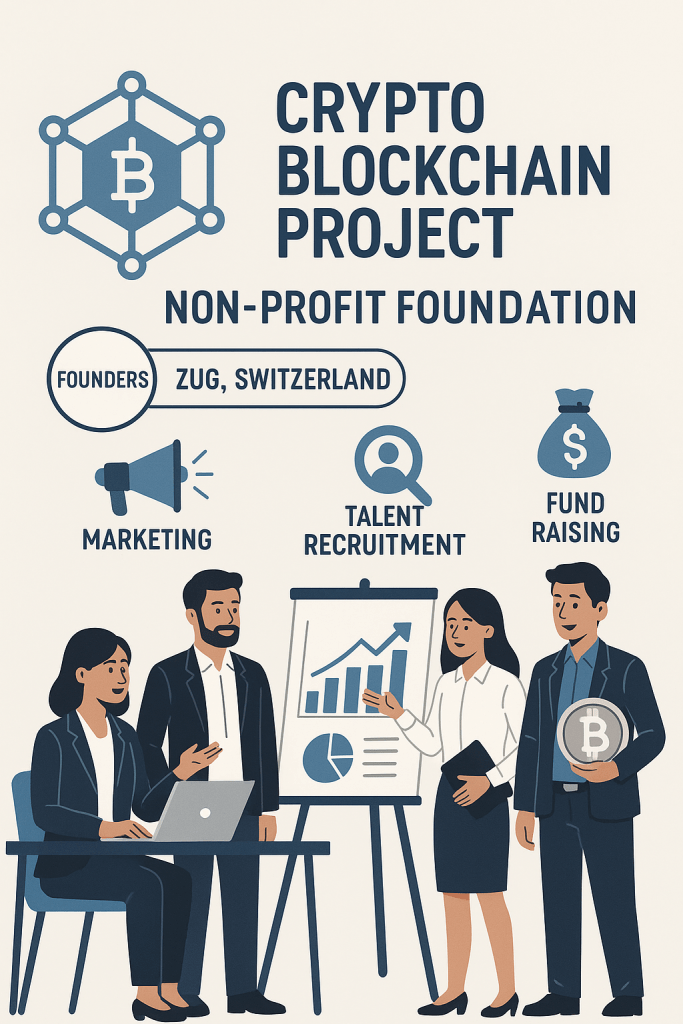
 🏛️ Why Do Crypto Companies Set Up Foundations?

🌱 What Is a Crypto Foundation?

🧰 What Do Crypto Foundations Actually Do?

🚀 How Do Foundations Help a Crypto Project Grow?

💸 How Are Foundations Funded?

🇨🇭 Why Are So Many Crypto Foundations Based in Switzerland?

🧾 Final Thoughts

📚 Sources

AI Agents, AI Tools, Artificial Intelligence, Blockchains, computer vision, Decentralized, Healtlh, Productivity, Science, Sports AI, Uncategorized, Yogi Nelson

🏀 Blockchain and AI: The Winning Combo for Basketball Performance and Game Planning

by Yogi Nelson

Welcome to the BlockchainAIForum

  • Shot accuracy by zone
  • Defensive movement patterns
  • Reaction times
  • Player fatigue indicators
  • Injury risk prediction
  • Play recognition: AI systems can watch game footage and label each possession by type (e.g., pick-and-roll, isolation, zone defense).
  • Tactical suggestions: AI compares past matchups and simulates different lineup combinations to predict which defensive sets will neutralize an opponent’s offense.
  • Opponent weaknesses: AI can flag patterns like a team’s tendency to overcommit to screens or struggle in transition defense.
  • Performance-based bonuses: A contract could be tied to verified performance metrics (e.g., scoring 20+ points in 10 consecutive games).
  • Training commitments: Athletes can log their workouts via blockchain-based platforms that timestamp and verify effort, giving coaches confidence in off-season commitments.
TaskAI RoleBlockchain Role
Injury predictionAnalyze biometric trendsSecure the source data
Game prepAnalyze video and statsCertify footage origin
Player developmentTailor skill improvement plansStore verified progress logs
ScoutingCompare player data across teamsEnable trusted cross-org data sharing
  • A player wears a smart shirt and AR glasses during a practice session.
  • AI tracks shooting mechanics, dribble speed, and lateral movement.
  • After the session, AI generates a personalized performance report.
  • That report is encrypted and stored on a blockchain.
  • The player shares access with their personal trainer and team coach.
  • Smart contracts automatically update team dashboards and player health status if pre-set performance benchmarks are hit.
  1. Infrastructure Investment: Teams must adopt smart wearables, AI platforms, and secure blockchain networks.
  2. Education: Players and coaches need training to understand and trust these technologies.
  3. Cross-platform Standards: Interoperability between AI and blockchain systems across leagues is key.
  4. Data Privacy Regulations: Systems must comply with health and privacy laws (e.g., HIPAA, GDPR).

AI Agents, AI Tools, Artificial Intelligence, Banking, Blockchains, content creation, cryptography, Healtlh, Uncategorized, Yoga, Yogi Nelson

🧘‍♀️ Empowering Yoga Instructors with NFTs: A Digital Credentialing Revolution

Welcome to the BlochchainAIForum

by Yogi Nelson

  • Easily forged or manipulated
  • Hard to verify for employers or students
  • Inconvenient to update or reissue
  • Centralized and often siloed within specific organizations
  • Tamper-proof: Once issued, the certificate cannot be altered or forged
  • Easily verifiable: Anyone with access to the blockchain can confirm authenticity
  • Portable: Instructors can share their credentials across platforms, applications, or countries
  • Programmable: Metadata can include training hours, school affiliation, specialization, and date of issue
  • Only recognized schools can issue tokens
  • Each NFT links directly to a verified course and instructor ID
  • Schools retain control over their credentialing integrity
  • The Yoga Alliance can monitor and audit issuance patterns

✅ Easier Job Applications. Studios or wellness platforms can instantly verify an applicant’s credentials by scanning a wallet address or QR code linked to the NFT.

  • Faster, more reliable hiring processes
  • Increased trust in instructor qualifications
  • Protection against fraudulent claims
  • Simplified compliance with insurance or legal requirements
  • Schools pay a nominal fee to mint each NFT
  • Instructors pay to renew or update their credentials
  • Third-party platforms pay for API access to verify NFT credentials
  • Public blockchain (e.g., Ethereum or Polygon) for issuance and verification
  • Decentralized storage (e.g., IPFS) for metadata like course materials or images
  • User-friendly interface for non-technical instructors to access their credentials
  1. Pilot Program: Select Yoga Alliance UK-accredited schools to test NFT issuance
  2. Instructor Outreach: Educate teachers on how to claim and use their NFTs
  3. Studio Integration: Build simple verification tools for employers
  4. Platform Partnerships: Partner with teaching marketplaces and retreat platforms
  5. Policy Support: Engage with insurers and government bodies for recognition

Until next time,

Yogi Nelson

AI Agents, AI Tools, Artificial Intelligence, Banking, Blockchains, cryptography, Decentralized, Digital Currency, Science, tokenization, Uncategorized, Yogi Nelson

🕵️ The Perils of a Central Bank Digital Dollar: A Privacy Advocate’s Perspective

Welcome to the BlockchainAIForum.

As the U.S. government explores the creation of a Central Bank Digital Currency (CBDC)—often referred to as a Digital Dollar—privacy advocates are raising serious concerns. Supporters say it could make payments faster and more efficient. But critics warn that a government-issued digital currency might also bring surveillance, financial control, and an unprecedented invasion of personal privacy. In this article, we break down the risks that worry privacy advocates most.


🏛️ What Is a Central Bank Digital Currency?

A Central Bank Digital Currency (CBDC) is a digital version of a country’s national currency, issued and backed by its central bank. In the U.S., this would mean digital dollars issued by the Federal Reserve. Unlike cryptocurrencies such as Bitcoin or Ethereum, a CBDC would not be decentralized. It would be fully controlled by the government. You wouldn’t hold it in a private wallet—you’d likely hold it in a centralized account, possibly maintained by the Fed or in partnership with commercial banks.


👀 Total Transaction Visibility

One of the biggest concerns about a digital dollar is that it could give the federal government complete visibility into your financial life.

  • Every transaction could be tracked in real time.
  • Anonymous cash payments would become nearly impossible.
  • Spending habits, charitable donations, political contributions, and personal purchases would all leave a digital trail.

For privacy advocates, this level of financial surveillance is unacceptable. It could allow the government to create detailed profiles of every citizen’s economic behavior.


🎛️ Programmable Money = Programmable Control

CBDCs could also be programmable, meaning the government (or authorized entities) could set rules for how the money is used. For example, in theory:

  • Your digital dollars could expire after a certain date.
  • You could be restricted from spending money on specific products or services.
  • Your funds could be frozen or withdrawn instantly without due process.

While this kind of programmability might sound useful for fraud prevention or emergency aid, privacy advocates argue it gives the state too much power over personal economic freedom.


🧱 End of Financial Anonymity

Today, cash allows for a degree of financial privacy. You can give to charity, buy a book, or tip someone without it being logged forever in a database. With a digital dollar:

  • Every dollar you spend or receive would be logged.
  • The government (and possibly third-party contractors) could access and analyze this data.
  • Over time, this could lead to profiling, behavioral predictions, or even social scoring.

For those concerned about civil liberties, this opens the door to a surveillance state unlike anything previously seen in the U.S.


⚖️ Potential for Abuse

Even if the current government promises to respect privacy, future administrations may not. History has shown that surveillance tools are often expanded, repurposed, or abused over time.

  • What begins as a tool for stopping crime could be used to monitor protestors.
  • What begins as financial oversight could be twisted into financial censorship.

CBDCs could allow future governments to punish dissent, blacklist individuals, or target communities—all with the push of a button.


🔓 Cybersecurity & Data Breaches

A digital dollar system would become a prime target for hackers, both foreign and domestic.

  • What happens if the central database is breached?
  • Could bad actors steal identities or manipulate balances?
  • What if a state-level actor tampers with data to destabilize the U.S. economy?

Centralizing the financial infrastructure introduces a single point of failure, putting every citizen’s finances and personal data at risk.


🌐 The End of Decentralization?

Privacy advocates and crypto enthusiasts believe that money should be decentralized, like Bitcoin and Ethereum. These decentralized systems:

  • Allow users to hold and spend funds without a central authority.
  • Provide transparency without surveillance.
  • Empower individuals, especially in countries with unstable governments.

A CBDC moves in the opposite direction: toward centralized control, top-down regulation, and government oversight.


📉 Chilling Effect on Free Speech and Behavior

Imagine a world where your digital dollar account is flagged because you donated to an “unpopular” cause or purchased politically sensitive material. Even if nothing illegal has occurred, knowing you’re being watched changes how you behave. This is known as the chilling effect—and it undermines free speech, free association, and personal autonomy.


✅ Key Takeaways

Privacy rights advocates worry that a Central Bank Digital Dollar could:

  • 👁️ Enable mass financial surveillance
  • 🎛️ Give the government programmable control over your money
  • 🚫 Erase financial anonymity
  • 🧱 Be abused by future administrations
  • 🔓 Introduce cybersecurity risks
  • 🌐 Undermine decentralized, citizen-led finance
  • 📉 Chill personal freedom and speech

While efficiency and modernization are important goals, critics argue they should not come at the cost of basic civil liberties.


💡 Conclusion

A Central Bank Digital Dollar might seem like a high-tech upgrade to the financial system, but privacy advocates see it as a dangerous leap toward total government control. Without robust safeguards, transparency, and citizen oversight, a digital dollar could become a tool not of empowerment—but of financial surveillance and political control. As discussions continue in Washington and at the Federal Reserve, now is the time for citizens to speak up and demand that privacy—not just convenience—be a non-negotiable cornerstone of any future financial system.

Until next time,

Yogi Nelson