
by Yogi Nelson
I no longer have complete faith in the USA’s financial system. That is a significant statement from someone who spent years in the federal government as a bank examiner and compliance expert. What triggered the conversion—the ever-growing USA national debt. In other words, I wasn’t always a sound money guy nor a “gold bug.” My evolution has become a much deeper intellectual journey.
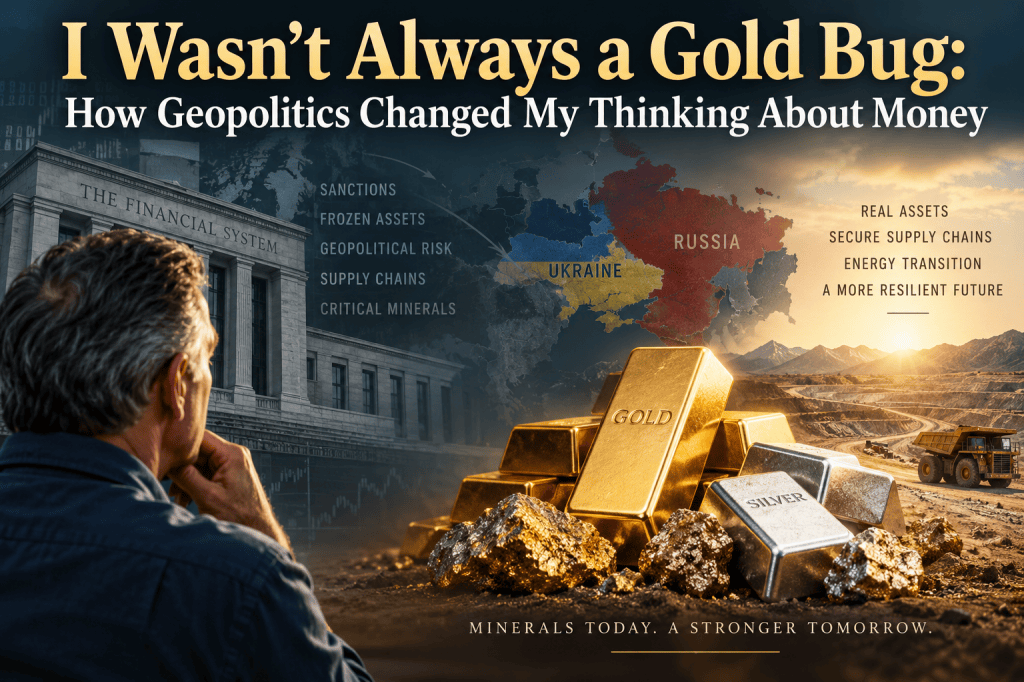
The journey began in 2022. As the war between Russia and Ukraine unfolded, one event in particular caught my attention: the decision by the United States and its allies to freeze $300B of Russia’s foreign exchange reserves. Whether one agreed with the war, or the response of the USA and its friends, it demonstrated that assets held within the USA financial system, or under the control of any third party, can be subject to geopolitical risk. Moreover, the geopolitical importance of critical minerals has become increasingly apparent as governments compete to secure resilient supply chains for technologies, defense, and industrial development. When I fully realized the facts, it caused me to think more seriously about owning tangible stores of value such as gold and silver and, eventually, investing in the companies that discover and produce them.
Like many investors, I quickly learned that buying shares of large mining companies is very different from buying physical gold or silver. It’s also not the same as buying gold or silver through an ETF. And it’s definitely not identical to purchasing shares of a junior miner. In the junior mining space, a company can have an outstanding deposit and still become a poor investment. Actually, to be fair, this can happen with large miners, but it is less likely. Conversely, an average deposit, managed by exceptional people with disciplined capital allocation, can create significant long-term value. At that point, I knew I had to study the mining industry more systematically. That’s when the education began in earnest.
I started by reading books such as The Art of Investing in Junior Miners, How to Invest in Gold and Silver, and Mining Is Dead. Long Live Geopolitical Mining, while also working through The Geology of Ore Deposits to deepen my understanding of the technical foundations of mineral deposits. The number of mining articles is too many to mention. And, in July, I attended the Rule Symposium in Florida; it was a fantastic event.
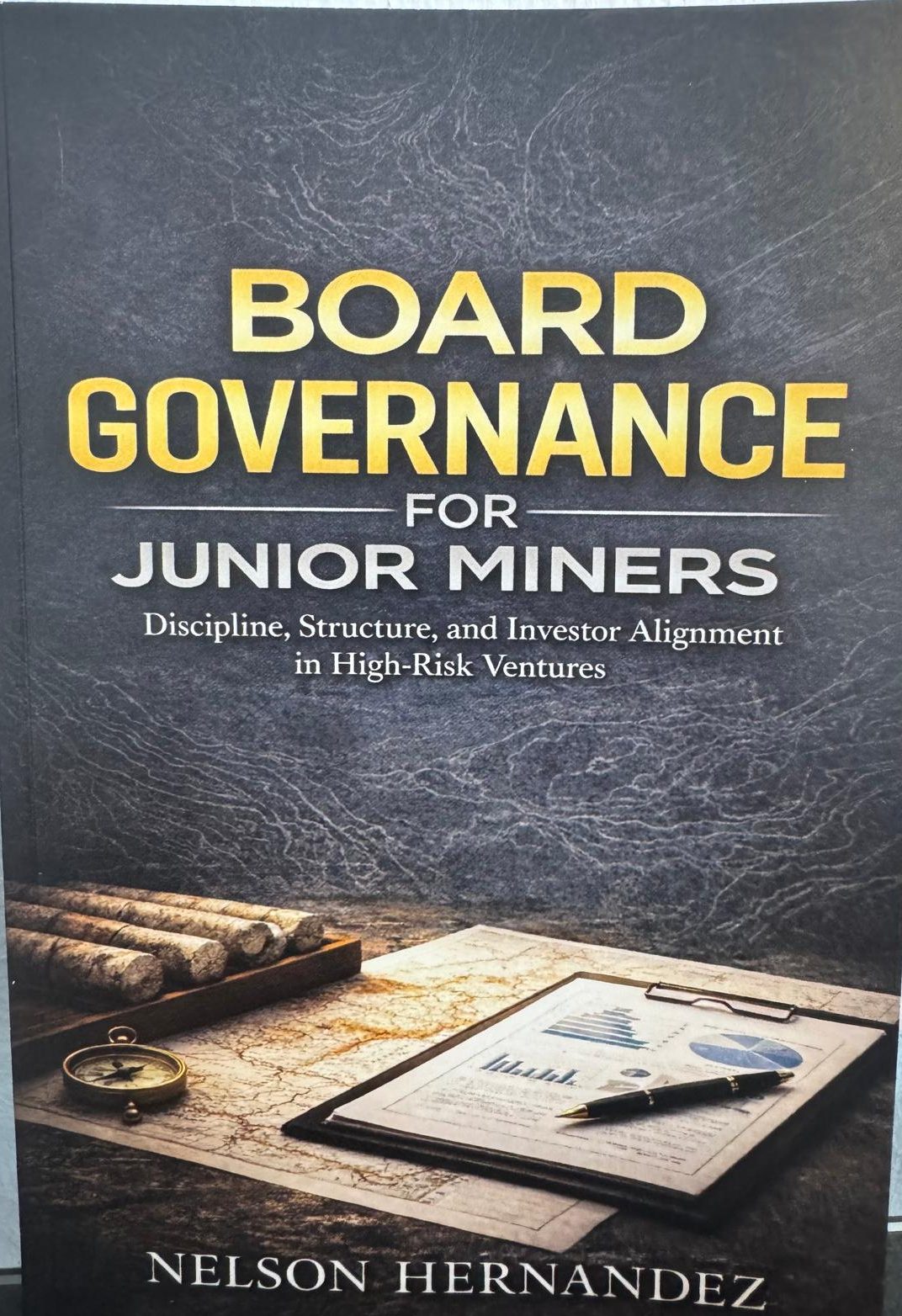
With a background in compliance and audits, I naturally gravitated to those issues within the mining sector. I find that I learn most when I am compelled to explain what I learned after reading about a topic. Hence, I decided to write a book on the topic of board governance in junior mining based on my extensive knowledge of governance issues and what I have learned thus far about mining companies. The book, Board Governance for Junior Miners: Discipline, Structure, Investor Alignment in High-Risk Ventures, is essentially a manual on what makes for great governance in junior mining.
While governance is essential, I came to appreciate that it represents only one dimension of evaluating a mining company. As a result, I began developing what I call the Mining SCOREcard™—a structured framework designed to evaluate junior mining companies across five dimensions:
- Strategy & Stewardship
- Commodity
- Opportunity
- Risk
- Execution
The objective is not to predict share prices or recommend specific stocks. Rather, it is to create a disciplined, repeatable process for asking better questions before committing capital.
Over the coming weeks, I’d like to share some of the lessons I’ve learned while building this framework and studying the mining industry. Rather than focusing on market predictions, I’ll explore ideas that I believe remain valuable regardless of where we are in the commodity cycle.
The topics will include:
- Why Most Junior Mining Investors Lose Money
- The Difference Between Speculation and Analysis
- Why Great Deposits Don’t Always Become Great Investments
- Five Questions Every Mining Investor Should Ask
- Why I Began Developing the Mining SCOREcard™
- Lessons Learned While Building a Structured Mining Evaluation Framework
These articles are designed to encourage thoughtful discussion among investors, geologists, mining professionals, and anyone interested in the fascinating intersection of geology, finance, governance, and geopolitics. As always, I welcome your comments, questions, and differing perspectives. Some of the best ideas emerge from thoughtful conversation.
Sincerely,
Yogi Nelson

 Governance and Tokenization in the Junior Mining Space