Uncategorized

ARTIFICIAL INTELLIGENCE AND AUTOMOBILES, WHAT’S THE LATEST?

Uncategorized

SHOULD YOU BE WORRIED IF YOU LAWYER USES ARTIFICIAL INTELLIGENCE (AI)

Uncategorized

WHAT TOOLS ARE BEING CREATED TO ENSURE ARTIFICIAL INTELLIGENCE SECURITY?

  1.  Link up with relevant stakeholders to proactively track and analyze the landscape of tools for trustworthy AI in the UK, the US and beyond.
  2. Systematically capture experiences and lessons learnt on tools for trustworthy AI, share those insights with stakeholders and use them to anticipate potential future directions.
  3. Promote the consistent use of a common vocabulary for trustworthy AI among stakeholders in the UK and the US.
  4. Encourage the inclusion of assessment processes in the development and use of tools for trustworthy AI to gain a better understanding of their effectiveness.
  5. Continue to partner and build diverse coalitions with international organizations and initiatives, and to promote interoperable tools for trustworthy AI.
  6. Join forces to provide resources such as data and computing power to support and democratize the development of tools for trustworthy AI.

Artificial Intelligence, Blockchains, France, Yogi Nelson

A GLIMPSE AT MISTRAL—THE FRENCH LEADER IN THE AI REVOLUTION

Namaste Yogis.   Welcome to the Blockchain & AI Forum, where your blockchain and artificial intelligence technology questions are answered!   Here no question is too mundane.  As a bonus, a proverb is also included.  Today’s question, was submitted by Luis from Malibu and he wants to know is Mistral leading the French AI revolution?

Luis, you came to the right place. Your question has perfect timing. I just returned from France and am feeling the French vibe! Rather than covering the entire waterfront of AI developments in France, I’ll limit myself to a French company named Mistral.  Let’s start with a bit of background on Mistral, including its name which is French to the core–c’est la vie!

The word mistral has multiple uses in French.  Not only does Mistral mean a cold northwesterly wind, but it’s also not uncommon for companies in industries related to wind energy, sailing, or the environment to use it in their name. The French say it evokes a sense of power, speed, and a connection to the natural world. It can also mean masterly.  While traveling in France, I noticed Mistral as a last name as we say in the USA or as they say in France, the family name.  Holy multi-tasking word, Batman!  Now a word about the Mistral team and company mission.

With fewer than two dozen members, the Mistral team is small.  According to Mistral, their mission is to make frontier AI ubiquitous, and to provide tailor-made AI to all developers.  Mistral says, their mission requires fierce independence, strong commitment to open, portable, and custom solutions, and an extreme focus on shipping the most advanced technology in limited time.  How I discovered Mistral comes next, followed by what Mistral does, and what it offers.

Approximately three months ago I discovered Mistral while researching AI projects for this blog.  I attempted access but was denied.  Instead, Mistral put me on a waiting list of interested users and recently granted me access with a full disclosure that their large language model (LLM) is in beta testing status. 

Today, I put Mistral’s LLM, Le Chat, to the test against, two American companies—Open AI’s ChatGPT and Microsoft’s Co-Pilot– by asking all three identical questions.  All three-offer free access to their LLM services.  I won’t detail the contest; it’s not necessary.  Essentially, Mistral is lacking behind the competition.  Why Mistral trails, is a matter of speculation.  Perhaps its funding related?  Or maybe Mistral team size means it’s too small to compete with the titans? Could be they started later?  I don’t know, but I do know the competition is ahead.  Okay, now we go beyond their LLM to a preview of Mistrals AI products. 

On their website, Mistral has a click option labeled La Plataforme (the Platform).  This is where you’ll find the heart of their offerings and services.  Basically, La Plataforme is a subscription service.  For a fee, Mistral offers access to their AI developer tools. Mistral claims the tools permits users to develop AI agents and other related products.  The subscription grants access to the latest Mistral models and to pay based on what you use.  That’s a good feature.  Moreover, users can set monthly spending limits and if there are multiple users with an enterprise, Mistral will centralize billing.  The subscription grants access to the corresponding documentation and of course users can create API keys to access Mistral AI.

Time to say “au revoir” (goodbye) but not before sharing this French proverb:  Only imbeciles don’t change their opinions.”   Well said, my French friends!

Sincerely,

Yogi Nelson

Artificial Intelligence, Blockchains, China, international aid

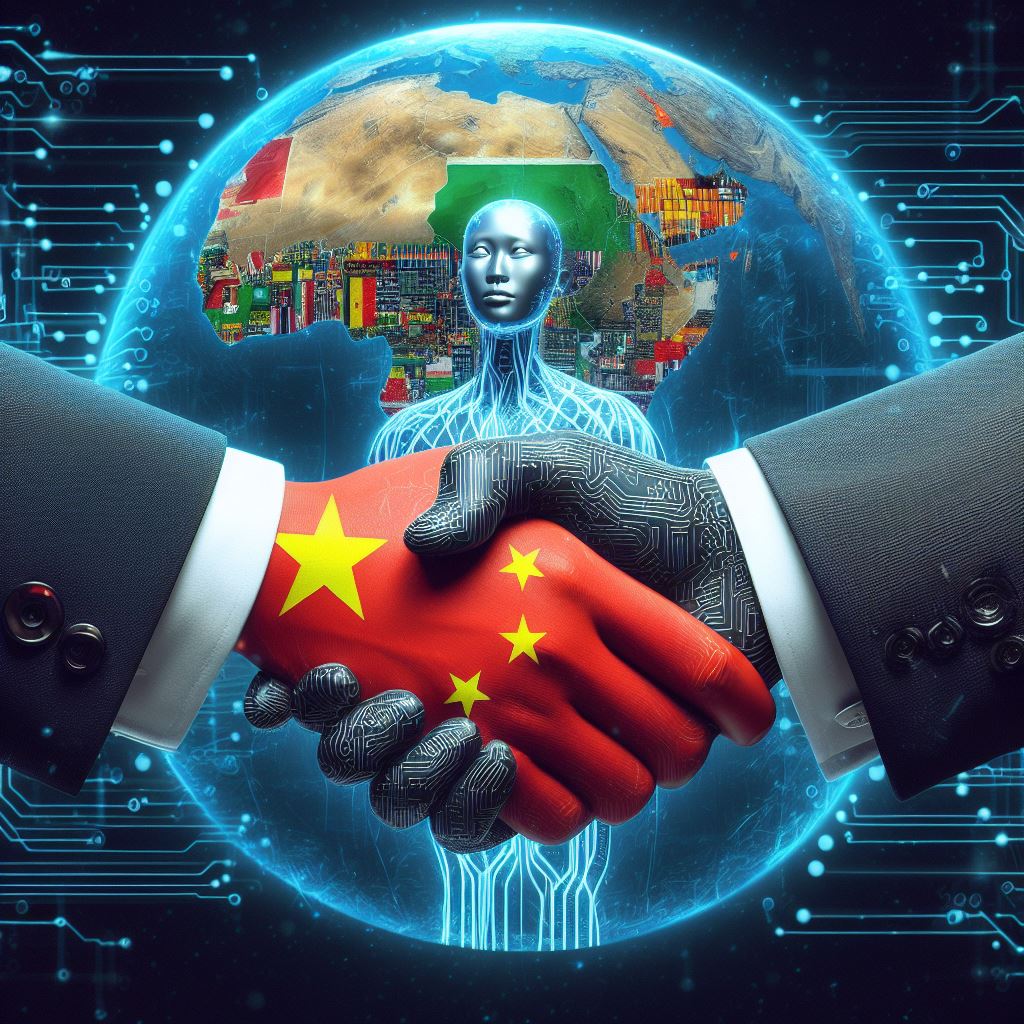
IS CHINA USING ITS INTERNATIONAL AID TO PROMOTE ITS ARTIFICIAL INTELLIGENCE TECH AND GAIN MARKET DOMINANCE IN DEVELOPING COUNTRIES?

Namaste Yogis.   Welcome to the Blockchain & AI Forum, where your technology questions are answered!   Here no question is too mundane.  As a bonus, a proverb is also included.  Today’s question, was submitted by Marcia in Palmdale, CA and she wants to know is China using its international aid to advance use of its artificial intelligence technology and gain market dominance in developing countries?

Marcia, you came to the right place.  You ask a tough question, fortunately there is an organization headquartered in Santa Monica, CA that researches the subject and their name is RAND.  RAND stands for Research and Development Corporation. Let’s understand RAND then answer your specific question.  

RAND is a non-profit public policy research organization.  RAND was established in 1948 with the intent of providing non-partisan policy research and analysis.  Almost 100% of RAND’s 1,800 research staff members have either a Ph.D. or master’s degree.   With seven offices spread across the globe in the USA, UK, and Australia, RAND has a worldwide audience.  Last year RAND launched 800+ new research projects funded by more than 350 clients.  RAND conducts policy research across 10 subjects, including national security.  Bottom line–RAND is an impressive research organization consisting of brainy people.  Holy nerds, Batman!  Now let’s turn to the question asked by Marcia.

According to RAND, at $85B per year, China is the world leader in development finance.  USA development finance falls a far second at only $45B per year.  RAND says, Chinese tech companies can use this large government funding support to deploy state-of-the-art artificial intelligence (AI) tools in development contracts in recipient countries. And therefore, the AI exports facilitated by these arrangements are likely to bolster China’s growing global AI technology-related supply chains, trade flows, technology standards, and regulatory systems.  In other words, when China provides development finance (aid) to Pakistan, for example, the contract with Pakistan, will include conditions that require Pakistan to use Chinese AI technology.  Holy foot in the door, Batman! 

Given the situation, RAND’s national security team was contracted (they don’t say by whom, but you can safety assume a branch of the U.S. government) to explore two questions:

1.  How can China’s AI exports be systematically tracked and analyzed using reliable data sources?

2.  What would promote a better understanding of the global landscape of China’s AI exports?

China does not participate in the International Aid Transparency Initiative.  Hence, researchers tracked Chinese development finance by receiving countries. Researchers used OCED (Organization for Economic Cooperation and Development) data in their research. The dataset captured all official financial and in-kind commitments from China from 2000–2021 to developing countries.

First, let’s look at the published findings of the 33-page report.   https://www.rand.org/pubs/research_reports/RRA2696-1.html  followed by a few words regarding unpublished findings, as perhaps those too are interesting. 

Reported Findings:

  • Researchers discovered 155 AI applications and AI infrastructure projects that were exported to 64 countries
  • The researchers used GIS to map their findings.  Although Pakistan was the largest beneficiary, the map clearly shows most Chinese aid was dedicated to African nations.   

Unreported Findings:

The report has six blank pages and no explanation for the blank pages is offered. The blank pages are not labeled, “Intentionally Left Blank”.  The pages are simply blank with no explanation whatsoever.  And no mention of what who paid for the report!  Holy mystery, Batman!

I end with a proverb from Pakistan:  The friend appears in hard times, not at big dinners.

Until next time,

Yogi Nelson