Board of Directors, Governance, Mining, Uncategorized

Governance Before Revenues: The Case for Independent Board Members in Junior Mining

by Yogi Nelson

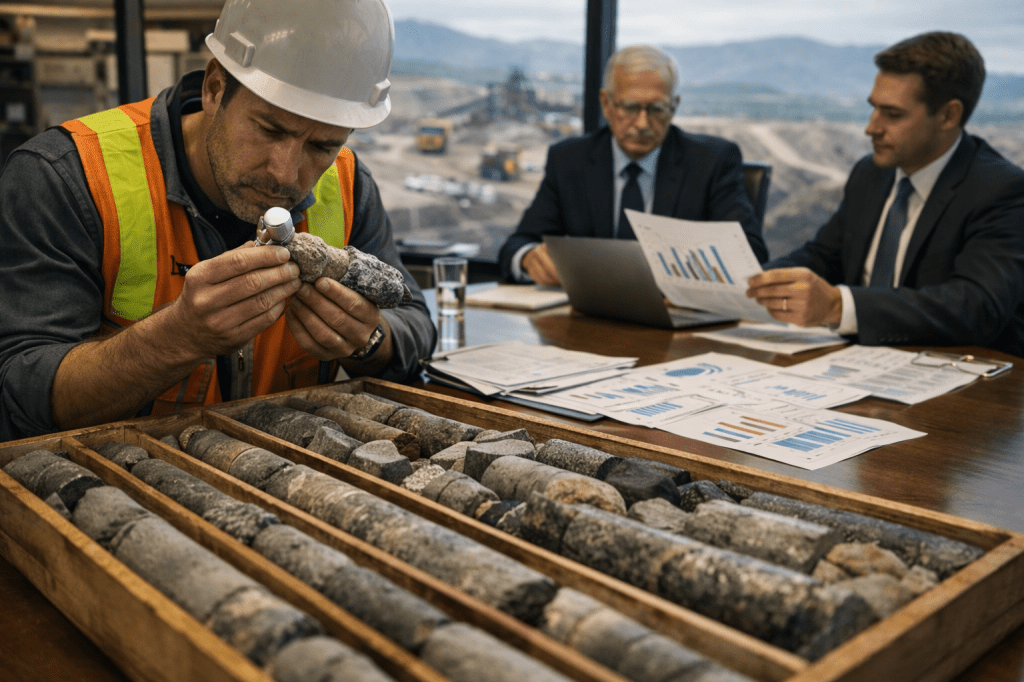
In junior mining companies, board composition often reflects the company’s origins. Many junior miners begin as founder-led exploration ventures where the board includes geologists, project sponsors, early investors, and technical advisors who helped initiate the company’s first exploration programs.

This structure is understandable during the earliest stages of development. Technical knowledge is essential in evaluating geological opportunities, exploration programs, and project viability. However, as junior mining companies evolve and begin raising larger amounts of capital, the composition of the board becomes increasingly important.

Let’s be direct–investors do not evaluate geology alone. They also evaluate governance. Board composition is a clear signal to the market: does this company take seriously oversight, accountability, and capital stewardship.

Strong independent boards signal transparency, discipline, and credibility to investors in early-stage mining companies.

The Founder-Driven Board

In many junior mining companies, the initial board consists largely of individuals closely connected to the founding team. These may include technical experts, major shareholders, early-stage investors, and long-time industry colleagues.

Such boards often bring valuable operational experience. Directors may possess decades of geological expertise, exploration management knowledge, or familiarity with mining jurisdictions and permitting processes. This operational insight is indispensable. However, when boards consist primarily of insiders or closely aligned individuals, a governance imbalance can emerge.

Boards are responsible not only for supporting management but also for overseeing management. When too many directors share the same perspective, the board may struggle to exercise independent judgment. This is where independent directors can step-in.

The Role of Independent Directors

Independent directors serve a critical function in corporate governance. Their role is to provide objective oversight, challenge assumptions when necessary, and ensure that decisions are evaluated from the perspective of all shareholders. To this I can attest from direct experience.

In the junior mining sector, independence does not require directors to lack industry knowledge. In fact, effective independent directors often bring valuable experience from finance, governance, law, or mining operations. What distinguishes an independent director is not the absence of expertise, but the absence of conflicts of interests, real and perceived.

Independent directors are able to evaluate strategic decisions, compensation structures, related-party transactions, and financing arrangements without personal financial ties that could compromise their judgment. For investors, the presence of independent directors signals that oversight mechanisms exist beyond the founding management team.

Balancing Expertise and Oversight

The most effective junior mining boards strike a balance between operational expertise and governance independence. Clearly, technical knowledge remains essential. Mining projects are complex and capital intensive. Directors must be capable of understanding geological data, exploration results, development timelines, and operational risks. However, governance competence is equally important.

Boards benefit when they include directors with expertise in areas such as:

  • Corporate governance and board leadership
  • Finance and capital markets
  • Risk management and compliance
  • Environmental and regulatory oversight
  • International operations and jurisdictional risk

This diversity of perspective strengthens board deliberation. Technical insight ensures operational realism, while governance expertise ensures disciplined oversight.

Investor Perception Matters

Board composition plays a meaningful role in how investors evaluate junior mining companies. Institutional investors, strategic partners, and sophisticated market participants routinely review the composition of the board before committing capital. They assess whether directors possess the independence, experience, and judgment necessary to oversee management during both growth and adversity.

Companies that rely exclusively on founder-aligned boards may unintentionally signal governance weakness. Even when management is highly capable, investors may hesitate if oversight appears limited. Conversely, companies that demonstrate a thoughtful balance between operational experience and independent governance often inspire greater investor confidence.

Strong boards do not replace strong management. They reinforce it.

Board Evolution as Companies Grow

Board composition should evolve as junior mining companies progress through development stages.

Early-stage explorers may initially prioritize technical directors who can guide exploration programs and evaluate geological opportunities. As companies advance toward feasibility studies, development partnerships, and larger capital raises, governance needs expand. At that stage, boards often benefit from adding directors with backgrounds in finance, governance, and corporate oversight.

This evolution reflects a natural progression. The governance needs of a small exploration company differ from those of a company preparing to attract institutional investors or development partners. Forward-looking boards anticipate this progression and begin strengthening governance capacity before it becomes urgent.

The Value of Constructive Challenge

Effective boards are not ceremonial bodies. They serve as strategic partners to management while maintaining independent judgment. Directors must be willing to ask difficult questions, challenge assumptions, and encourage disciplined decision-making. Constructive challenge does not undermine leadership; it strengthens it.

When boards include a mix of operational expertise and independent oversight, discussions tend to become more robust and strategic. Management benefits from broader perspectives, and shareholders benefit from stronger governance.

Governance as Strategic Infrastructure

Ultimately, board composition should be viewed as part of a company’s governance infrastructure. Just as exploration programs require careful planning and execution, governance structures require thoughtful design. Companies that invest in balanced, capable boards position themselves to manage risk more effectively, communicate more credibly with investors, and navigate the complex path from exploration to development.

In junior mining, geology may create opportunity. But strong governance—starting with board composition—helps ensure that opportunity is pursued with discipline, transparency, and accountability.

Until next time,

Yogi Nelson

Governance, Mining

Governance as a Value Multiplier in Junior Mining

by Yogi Nelson

In the early stages of a junior mining company, the focus is understandably technical. Geological potential, drill programs, resource estimates, and exploration targets dominate discussions among management teams and investors alike. Discovery is the catalyst that creates excitement and attracts initial capital. Obvious. Yet as companies evolve, another factor increasingly determines whether they can continue to raise capital and attract serious institutional investors. What is that factor? Governance, with a capital “G”!

In many junior mining companies, governance is viewed primarily as a regulatory requirement — a series of policies and disclosures necessary to satisfy stock exchanges, securities regulators, and auditors. It is sometimes treated as administrative overhead rather than strategic infrastructure. That’s unfortunate. This perspective overlooks an important reality of capital markets: investors price risk. Governance, when implemented thoughtfully and proportionately, reduces perceived risk. And when perceived risk declines, access to capital improves.

In this sense, governance functions as a value multiplier.

Investors increasingly view governance quality as a key factor in valuing junior mining companies

Credibility as Currency

Unlike producing mining companies, junior miners often operate for years without generating revenue. Exploration companies rely almost entirely on investor capital to finance drilling programs, geological analysis, permitting work, and feasibility studies.

Because revenue is absent, investors rely heavily on documentation, trust, and credibility when allocating capital. They must believe that management is deploying funds responsibly, that financial reporting is reliable, and that internal oversight mechanisms exist to prevent costly mistakes or conflicts of interest. Investors believe in management when and if governance structures signal that credibility.

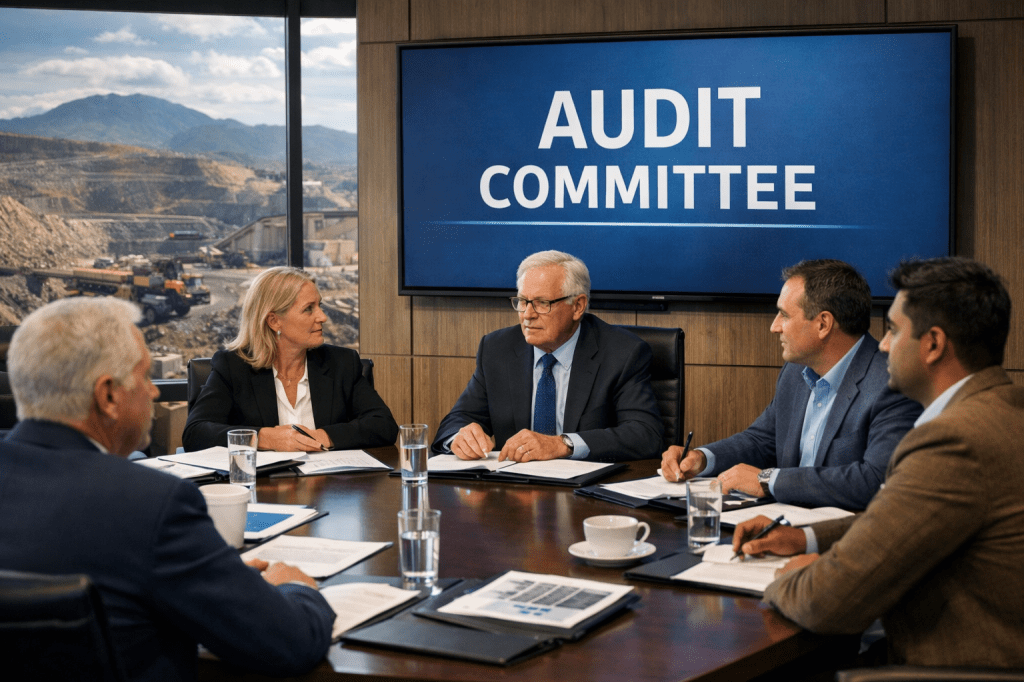
A well-constructed board, functioning audit committee, clear internal controls, and transparent reporting practices reassure investors that capital will be managed with discipline. These signals may not appear on a geological map, but they influence financing decisions in very real ways.

The Cost of Capital Connection

For junior mining companies, capital is the lifeblood of operations. Exploration programs, environmental studies, engineering work, and permitting processes require substantial funding long before any production revenue is possible. Companies that demonstrate governance maturity often benefit from improved financing conditions. Investors are more comfortable participating in private placements, strategic partnerships, and project financing when governance frameworks are visible and credible.

This can translate into:

  • More consistent access to financing
  • Broader investor participation
  • Improved valuation stability
  • Stronger relationships with institutional investors

In practical terms, governance can influence the price at which companies raise capital and the reliability of their funding sources. When investors perceive governance weakness, the opposite occurs. Capital becomes more expensive, investor participation narrows, and financing windows become more difficult to access.

Governance and Strategic Optionality

Governance also affects a company’s long-term strategic flexibility. Let me explain.

Junior mining companies often aim to progress through several stages: exploration, resource definition, feasibility analysis, development partnerships, and ultimately production or acquisition by a larger mining company. At each stage, the company interacts with increasingly sophisticated stakeholders.

Strategic partners, institutional investors, and major mining companies evaluate more than geological potential. They examine board composition, financial controls, disclosure practices, and risk management frameworks. Companies that have already developed disciplined governance structures are easier to evaluate, easier to partner with, and easier to finance.

In contrast, companies that postpone governance development may find themselves scrambling to retrofit policies and oversight structures precisely when potential partners are conducting due diligence.

Strong governance, implemented early, expands strategic options later. Keep that in mind.

Proportionate Governance for Small Companies

It is important to emphasize that governance does not mean bureaucracy.

Junior mining companies typically operate with lean teams and limited administrative capacity. Governance systems designed for multinational producers would be unnecessarily burdensome for early-stage explorers. What is needed is effective governance that is proportionate. Effective governance focuses on a small number of essential elements:

  • Independent board oversight
  • Clear financial reporting discipline
  • Basic internal controls over cash and expenditures
  • Transparent handling of related-party transactions
  • Thoughtful risk management and disclosure

These elements do not require large teams or expensive infrastructure. They require clarity, consistency, and leadership commitment.

Governance as Leadership Signal

Perhaps the most important function of governance in junior mining is the signal it sends about leadership culture. Companies that embrace governance early demonstrate that management and the board take stewardship responsibilities seriously. That message flows throughout the organization. They communicate that shareholder capital will be treated with care and that transparency is valued even during challenging periods.

This leadership signal becomes particularly important during moments of stress — when exploration results disappoint, commodity markets weaken, or financing conditions tighten. During such periods, investors gravitate toward companies that demonstrate discipline, accountability, and openness. Governance, in other words, reinforces confidence when it is most needed.

Building Governance Early

The most effective junior mining companies do not wait until they approach production or institutional financing to develop governance frameworks. That can often be too late. Smart miners incorporate governance as they evolve while their organizations are expanding.

Early governance adoption provides several advantages:

  • It builds credibility with investors from the outset
  • It prevents governance gaps from emerging as companies grow
  • It prepares companies for future partnerships and financing
  • It establishes internal discipline that supports operational efficiency

A Strategic Perspective

Ultimately, governance should not be viewed as an administrative requirement imposed from outside the organization. It is a strategic tool that strengthens the company’s ability to attract capital, manage risk, and pursue long-term opportunities. For junior mining companies operating in uncertain markets and capital-intensive environments, those advantages are significant.

Good geology creates potential. Good governance helps convert that potential into sustained investor confidence. And in the junior mining sector, investor confidence is often the decisive factor that allows companies to move from promising exploration stories to institutionally credible enterprises.

Until next time,

Yogi Nelson

Governance, Mining, Risk Management

Governance as Strategy: A 10-Part Series for Junior Mining Leaders

by Yogi Nelson

Junior mining companies operate in one of the most, perhaps these most, capital-intensive, risk-exposed, and credibility-sensitive sectors in the global economy. They raise money before revenue. Moreover, they make technical promises before production. If that were enough, miners operate in jurisdictions where regulatory, environmental, and political variables can change quickly. And they do all of this, out of necessity, with lean teams and limited administrative and management infrastructure.

In that environment, governance is often viewed as an obligation — a regulatory requirement to satisfy exchanges, securities commissions, or auditors. Too frequently it becomes a checklist exercise. That perspective is shortsighted. In mining governance is not overhead. It is a strategic asset.

Strong governance frameworks help junior mining companies navigate risk, attract investment, and build enduring companies.

Over the next ten weeks, this series will explore how thoughtful governance and disciplined compliance frameworks can materially improve resilience, investor confidence, and long-term value creation in junior mining companies. The objective is not to advocate bureaucracy. To the contrary. It’s to demonstrate how structured oversight strengthens execution, reduces preventable risk, and positions companies for institutional capital.

This series is designed for directors, CEOs, CFOs, compliance officers, and serious investors who understand that governance is inseparable from capital formation. Below is an overview of what readers can expect.


1. Governance as a Value Multiplier in Junior Mining

We begin by reframing governance from a cost center to a value multiplier. Markets reward credibility. Institutions allocate capital where risk is understood and managed. Junior mining companies that articulate clear oversight structures, internal controls, and transparent reporting reduce perceived risk — and perceived risk directly affects valuation. In a business where risks are ubiquitous, strong governance enhances shareholder value.

This article will examine how governance maturity influences financing terms, investor retention, and strategic optionality.

2. Board Composition: Independence Versus Operational Expertise

Junior mining boards are often composed of geologists, founders, or major shareholders. Technical depth is essential — but independence and financial oversight are equally critical.

  • What true board independence means in a small company
  • How to balance technical knowledge with governance competence
  • When adding an independent director materially changes investor perception

The goal is not to replace industry expertise, but to complement it with structured oversight.

3. Audit Committees in Pre-Production Companies

Many early-stage companies view audit committees as formalities. Yet the absence of revenue does not eliminate financial risk–it often increases it!

  • The minimum functional standards for an effective audit committee
  • Oversight of cash management and exploration expenditures
  • Financial disclosure discipline in volatile commodity environments

A disciplined audit function signals seriousness to markets.

4. Internal Controls in Lean Organizations

Junior mining companies may operate with fewer than 25 employees. Segregation of duties can be challenging. Informal processes can emerge. We will explore how to implement practical internal controls without creating administrative burden, including:

  • Cash disbursement controls
  • Contract approval frameworks
  • Documentation protocols
  • Basic fraud prevention mechanisms

Strong controls do not require large teams. They require clarity.

5. Managing Related-Party Transactions in Small Teams

In closely held companies, related-party transactions are common. They are not inherently problematic — but they require transparency and structured oversight.

  • Disclosure best practices
  • Conflict-of-interest policies
  • Board review procedures
  • Protecting both insiders and minority shareholders

Proper handling of related-party matters strengthens trust.

6. CEO Oversight Without Micromanagement

Junior mining CEOs are often founders or highly technical leaders. Boards must support management while maintaining independent oversight.

  • Performance evaluation frameworks
  • Information rights and reporting cadence
  • Constructive challenge versus operational interference
  • Succession planning in early-stage companies

Healthy governance enhances leadership rather than constraining it.

7. ESG Reporting: Substance Versus Marketing

Environmental, social, and governance reporting has become unavoidable. Yet in junior mining, ESG narratives can outpace operational capacity.

  • Aligning ESG disclosures with actual practices
  • Avoiding reputational risk from overstated claims
  • Community engagement documentation
  • Governance oversight of sustainability reporting

Authenticity matters. Markets increasingly detect exaggeration.

8. Crisis Governance: When Exploration Results Disappoint

Commodity cycles fluctuate. Drill programs sometimes fail. Financing windows close unexpectedly.

  • Board protocols during operational setbacks
  • Disclosure discipline in adverse conditions
  • Liquidity oversight during market stress
  • Maintaining investor credibility during downturns

Crisis does not create governance weakness — it reveals it.

9. Jurisdictional Risk and Cross-Border Oversight

Many junior mining companies operate in Latin America, Africa, or other emerging markets. Cross-border operations introduce legal, political, and compliance complexity.

  • Anti-corruption controls
  • Local partner due diligence
  • Regulatory monitoring frameworks
  • Board-level oversight of geopolitical exposure

Risk awareness must extend beyond geology.

10. Governance Readiness for Institutional Capital

The final article in this series will synthesize the prior themes into a practical readiness framework.

Institutional investors assess:

  • Board independence
  • Financial reporting discipline
  • Risk management structures
  • ESG credibility
  • Executive compensation alignment

We will provide a structured checklist that junior mining boards can use to evaluate their governance posture before pursuing larger capital raises.


Why This Series Matters Now

Commodities are in a long-tend bull market. Miners that demonstrate strong governance attract higher quality investors. Investors increasingly differentiate between companies that treat governance as a formality and those that treat it as infrastructure. Junior mining companies do not need bureaucratic systems designed for multinational producers. They do need disciplined oversight tailored to their scale and stage of development.

The purpose of this series is practical: to offer clear frameworks, actionable insights, and governance standards that are achievable — even in lean organizations. Governance does not eliminate geological risk. It does not control commodity prices. But it reduces preventable errors, clarifies accountability, and strengthens credibility. And in capital markets, credibility compounds.

Over the next ten weeks, we will examine how junior mining companies can build governance systems that are proportionate, strategic, and aligned with long-term shareholder value.

The objective is not perfection. It is preparedness.

And in junior mining, preparedness often makes the difference between survival and sustainable growth.

Until next time,

Yogi Nelson