
by Yogi Nelson
There are three primary ways investors gain exposure to gold today: physical ownership, ETFs, and futures. Each exists for a reason. Each solves a different problem. And each comes with its own tradeoffs.
Tokenized metals add a fourth dimension—not by replacing these structures, but by forcing a more precise question:
Are you buying ownership, or are you buying exposure?
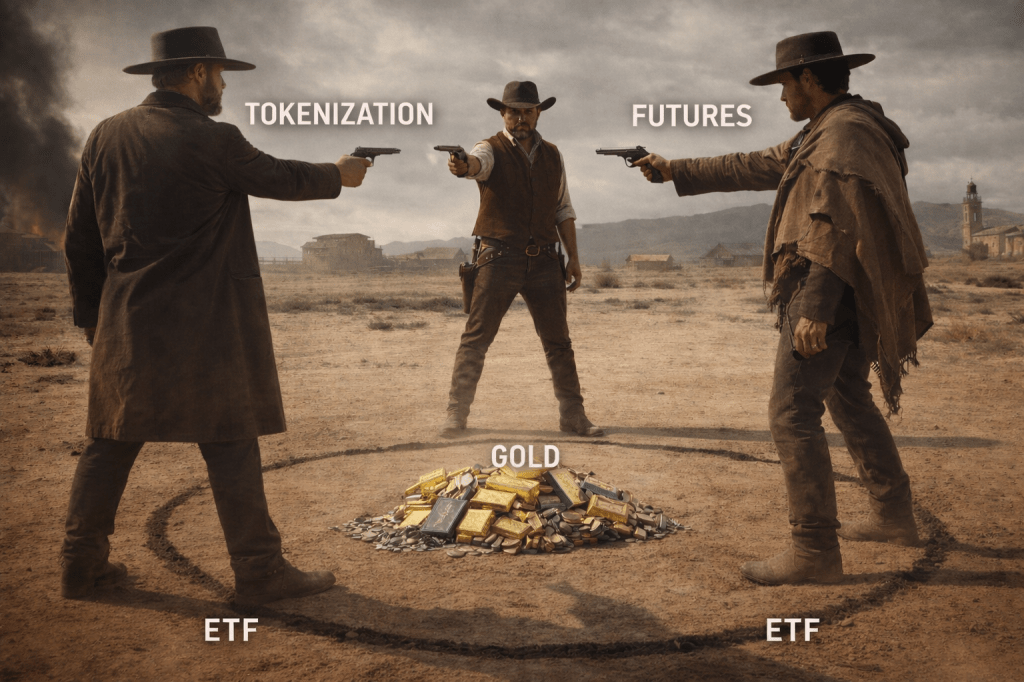
ETFs deliver efficient price exposure, but usually through pooled structures with limited redemption rights. Futures provide price discovery and hedging power, but they are contracts—not assets. Physical gold offers direct ownership, but comes with real-world friction: storage, insurance, and logistics.
Tokenization sits between these models. When structured properly, it can combine digital transferability with claims on physically vaulted metal. When structured poorly, it becomes just another derivative with a new label.
That distinction matters—especially for institutions. What they care about is not speculation, but market plumbing: settlement, custody, collateral mobility, auditability, and counterparty risk. Tokenization becomes interesting only when it improves those foundations.
The future of metals is not a shootout between ETFs, futures, and tokenization. It is a question of which structures best serve ownership, transparency, and settlement in a digital economy.
—
Yogi Nelson
This post is part of an ongoing weekly series on the tokenization of precious metals, published on BlockchainAIForum and LinkedIn, examining custody, regulation, issuer structure, and settlement infrastructure.

 Blockchain & AI Forum