
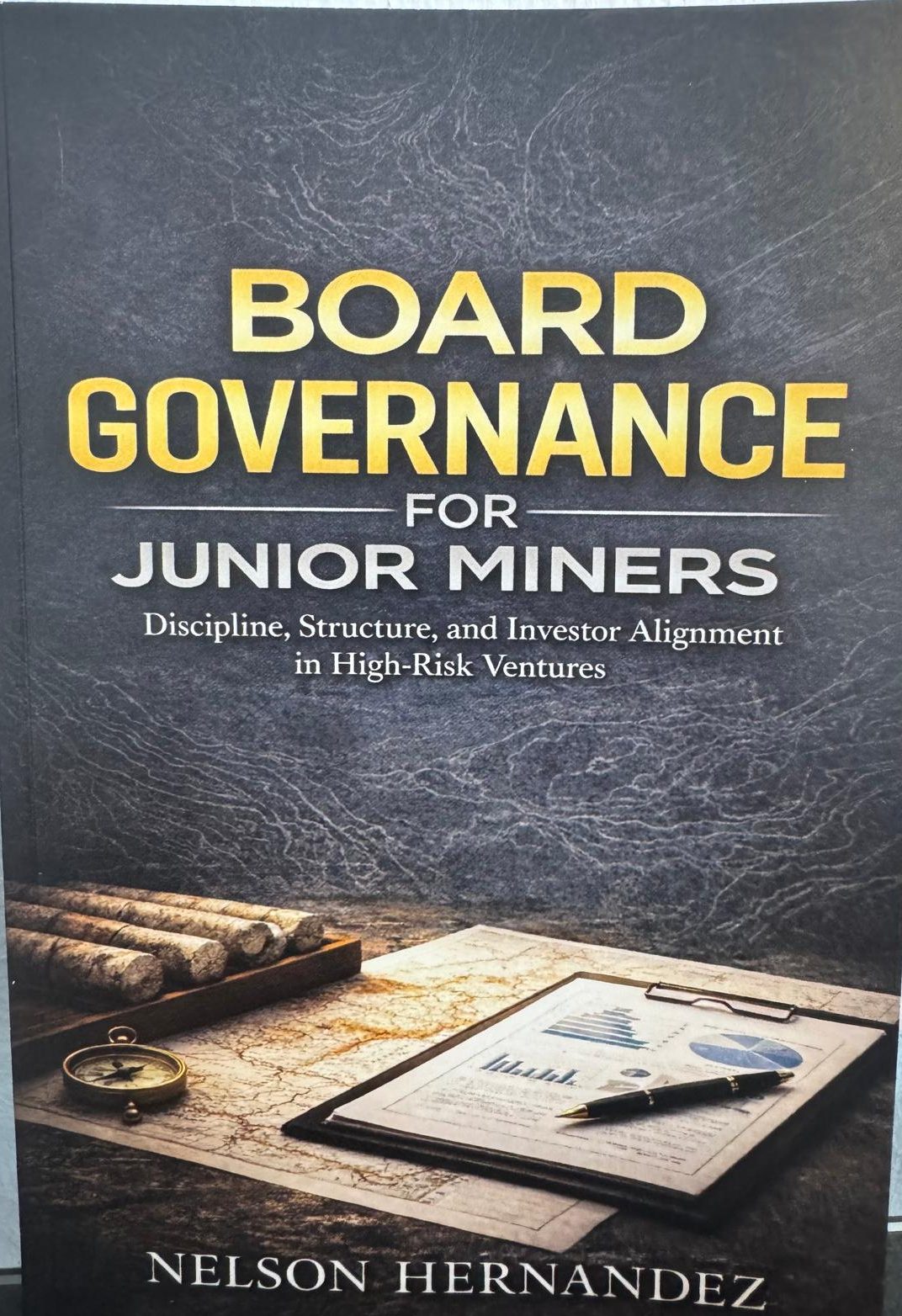
by Yogi Nelson
Why Geography Requires Governance Discipline
Mining spans the globe. Mineral deposits do not appear conveniently inside “stable” jurisdictions with predictable legal systems and transparent regulatory frameworks. Even the so-called “stable” jurisdictions can be unpredictable occasionally. Unfortunately, some of the world’s most promising geological opportunities are located in regions where political systems are evolving, regulatory regimes are complex, and governance expectations vary widely.
Regardless of preference, miners must go where the earth has placed deposits. That is why junior—and major—mining companies must pursue opportunities in emerging markets. Geological potential can be extraordinary. However, the opportunity comes with an additional layer of risk: jurisdictional exposure.
For boards of directors, this reality introduces an important governance responsibility. Geological potential alone cannot guide investment decisions. Boards must ensure that jurisdictional risk receives the same disciplined oversight as exploration strategy, capital allocation, and financial reporting. In other words, geology may attract investors—but governance keeps them invested.

Smart boards evaluate geology and jurisdiction with equal discipline.
The Nature of Jurisdictional Risk
Jurisdictional risk refers to the political, legal, regulatory, and social uncertainties associated with operating in a particular country or region. These risks include, but are not limited to, the following:
- Political instability
- Regulatory unpredictability
- Corruption
- Weak rule of law
- Changing tax or royalty regimes
- Community conflict
- Criminal gangs
- Wars
Large multinational mining companies have the resources to support dedicated risk teams—either internally or via outside consultancy—to monitor these factors. Junior mining companies rarely have that luxury. Why? Management teams are smaller and their administrative infrastructure leaner.
That reality places a greater responsibility on the board of directors to ensure that jurisdictional exposure is carefully evaluated and monitored. After all, the greatest geological discovery in the world cannot create shareholder value if the operating environment becomes unstable or hostile.
Anti-Corruption Frameworks
One of the most important governance considerations when operating across borders is corruption risk. Actually, based on my 30+ years working in government in the USA, corruption considerations apply to the USA as well. In this article, however, the focus will be outside the United States. Many jurisdictions where mining occurs have different norms regarding government interaction, permitting processes, and local business practices.
Public companies listed in North America or Europe, however, remain subject to strict anti-corruption laws such as the Foreign Corrupt Practices Act (FCPA) in the United States and the UK Bribery Act. These regulations apply regardless of where the mining activity occurs. Boards must therefore ensure that management implements appropriate compliance structures, including:
Clear anti-corruption policies
Employee training regarding prohibited practices
Documentation of interactions with government officials
Internal reporting procedures for potential violations
These safeguards are not bureaucratic formalities. Violations of anti-corruption laws can result in severe financial penalties, reputational damage, and loss of investor confidence. Governance discipline begins with prevention, not remedy.
Local Partner Due Diligence
Out of necessity and common sense, junior mining companies often work with local partners when entering new jurisdictions. Quality local partners have the expertise to effectively manage permitting processes, land access, community relations, or logistical support that are specific to the task at hand. Such partnerships can be valuable—sometimes essential. Do they come with risk? Yes.
Boards must ensure that management conducts thorough due diligence before entering into agreements with local partners—actually with all partners regardless of jurisdiction. This process typically includes, at a minimum, reviewing:
- Ownership structures
- Political connections
- Business reputation
- Financial stability
- Past legal and regulatory issues
Failure to perform adequate due diligence can expose the company to significant legal and reputational risk. In many cases, governance failures in emerging markets do not originate from the mining company itself. But that does not make any material difference. The problem exists. The issue may originate from poorly vetted local intermediaries. Right or wrong, these local intermediaries reflect on the mining company.
In other words, you pick them, you are stuck with them.
A disciplined board ensures that partnerships strengthen operations rather than create vulnerabilities.
Monitoring Geopolitical Exposure
Political environments can change quickly. Elections shift policy priorities. Governments revise mining codes based on election results—or the threat of an election result. National resource strategies evolve. Boards must therefore monitor geopolitical developments continuously rather than assuming that current conditions will remain stable.
Is it wise to contract with politically connected persons? Some might say yes. Prudence says beware. Those on the inside today might be on the outside tomorrow. With that as a note of caution, best practices in oversight often include reviewing:
- Changes in mining legislation
- Tax and royalty adjustments
- Resource nationalism trends
- Local election outcomes
- Regional security conditions
While none of these developments are within the control of a mining company, that does not mean they can be ignored. To the contrary, they must be understood. Boards that monitor geopolitical developments proactively are better prepared to adapt when conditions change. Those that ignore these signals often discover the risks only after they materialize.
Community and Social License Considerations
Jurisdictional risk is not limited to government policy. Community relationships play an equally important role in determining whether a mining project can advance successfully. A strong argument can be made that government policy is often the sum of community relations. Establish and maintain healthy community relations and government policy will likely break in favor of the mining company.
Exploration and development activities often occur near local communities that rely on land, water, and environmental stability for their livelihoods. If community concerns are not addressed early, projects can encounter delays, protests, or legal challenges. Once an opposition narrative takes root, weeding it out may be impossible.
Therefore boards should encourage management to maintain transparent and respectful engagement with local communities. Below are a few best practices:
- Community consultation practices
- Environmental impact mitigation strategies
- Local employment and training commitments
- Community investment initiatives
Responsible engagement strengthens a company’s social license to operate. And social license, while difficult to measure on a balance sheet, can determine whether a project ultimately moves forward. The bottom line is this: establish and maintain healthy community relations and government policy will likely break in favor of the mining company.
Board-Level Oversight of Jurisdictional Exposure
Jurisdictional risk oversight should not be treated as an occasional discussion item. It should be integrated into regular board deliberations. A standing agenda item. The agenda item should consider:
- Updated country risk assessments
- Political developments affecting operations
- Regulatory changes
- Compliance and anti-corruption reports
- Community relations updates
These discussions allow the board to understand how external factors may influence the company’s strategic decisions. Importantly, oversight does not mean avoiding emerging markets entirely.
In some cases, for example silver mining, Mexico and Peru cannot be avoided. Many successful mining companies operate in Mexico and Peru. Yes, those jurisdictions may appear complex or uncertain, but with proper board governance smart decisions are possible.
In other words, the objective is not avoidance—it is preparedness.
Governance as Risk Discipline
Mining companies cannot control where mineral deposits occur. What can they control? How responsibly they operate after deciding to enter a jurisdiction.
Strong governance structures provide the discipline necessary to manage complex environments. Boards that take jurisdictional risk seriously encourage management to adopt professional compliance practices, maintain transparent relationships with regulators and communities, and anticipate geopolitical developments.
Companies that ignore these governance responsibilities often encounter difficulties later.
Remember this—markets have long memories when governance failures occur.
Final Thoughts
Many of the world’s most attractive mineral opportunities exist in jurisdictions where political, regulatory, and social dynamics require careful navigation. This may be a considerable understatement. Junior mining companies pursuing these opportunities must therefore match geological ambition with governance discipline. Boards that oversee jurisdictional exposure thoughtfully protect not only the company’s operations but also its credibility in capital markets.
Get the geology right and the project may succeed. Get the governance right and investors stay with you long enough to see it through. In the global mining industry, both are essential.
Until next time,
Yogi Nelson

