Decentralized, finance, tokenization, Uncategorized, Yogi Nelson

Are Tokenized Precious Metals a Hedge Against Inflation or Hype?

by Yogi Nelson

When geopolitical tensions rise, markets respond quickly—and often predictably. The recent escalation of conflict involving Iran and the resulting spike in oil prices have once again pushed inflation concerns back to the forefront. Energy costs ripple through the global economy, raising transportation, production, and ultimately consumer prices. This is where we find ourselves now. That’s why its no surprise that in moments like these, investors instinctively return to a familiar question:

Where can capital go to preserve value when inflation accelerates?

For centuries, the answer has often been precious metals, particularly gold. But in 2026, a new variation of that question is emerging: do tokenized precious metals offer the same protection—or are they simply a digital wrapper around an old idea?


Inflation, Uncertainty, and the Return of Hard Assets

Inflation is not merely a number—it is a psychological force. I say psychological force based on my recent trip through Argentina; a nation where inflation was running at 200% just a few years ago. The people who I interacted with were definitely impacted psychologically–they don’t believe in fiat.

When prices begin to rise, confidence in fiat currency weakens, and investors look for assets that are:

  • Scarce
  • Tangible
  • Globally recognized

Gold has historically met all three criteria. Silver, to a lesser extent, has followed a similar path. These metals are not tied to any single government or monetary policy, making them attractive during periods of uncertainty. Neither gold or silver is subject to counter-party risk if they are in your possession.

The current environment—marked by geopolitical tension, energy price volatility, and shifting monetary expectations—has once again highlighted the role of hard assets as a defensive allocation. But traditional ownership of precious metals comes with friction:

  • Storage costs
  • Limited liquidity
  • Physical transfer challenges

This is where tokenization enters the conversation.


What Tokenized Precious Metals Actually Represent

At their core, tokenized precious metals are digital tokens issued on a blockchain that represent ownership of physical metal held in custody. When properly executed, each token corresponds to:

  • A specific quantity of metal (e.g., one troy ounce of gold)
  • Stored in a professional vault
  • Backed by audited reserves

This is no longer theoretical. Well-known examples include:

  • Paxos Gold (PAXG)
  • Tether Gold (XAUT)
  • Kinesis (KAU/KAG)

The promise is straightforward: Combine the stability of physical metals with the efficiency of digital assets. Investors can:

  • Buy fractional amounts
  • Transfer instantly
  • Trade globally
  • Potentially redeem for physical metal

On paper, this appears to solve many of the traditional limitations of owning gold or silver. But the key question remains: Does tokenization enhance, dilute, or have no impact on the inflation-hedging properties of metals?


The Case FOR Tokenized Metals as an Inflation Hedge

1. Direct Exposure to Physical Assets

Unlike mining stocks or derivatives, tokenized metals are designed to represent direct ownership of underlying bullion. During inflationary periods, investors are not seeking leverage or speculation—they are seeking preservation of capital and their purchasing power. Tokenized metals, when properly structured, maintain this direct linkage.


2. Improved Liquidity and Accessibility

Traditional gold ownership can be cumbersome. Tokenization lowers barriers by allowing:

  • Fractional ownership
  • 24/7 trading
  • Global access

This expands participation and allows more investors to allocate to hard assets quickly—particularly during fast-moving macro events like energy-driven inflation spikes. The more gold is used as a store of value versus fiat currency, whether physical or tokenized, gold holders are better off.


3. Faster Settlement in Uncertain Markets

In times of crisis, liquidity matters as much as asset quality. This is where tokenized gold “shines”; no pun intended. Tokenized metals can settle transactions in minutes, or even seconds, rather than days, offering:

  • Greater flexibility
  • Faster reallocation of capital

This is especially relevant in volatile environments where timing becomes critical. Just think about trying to leave Dubai, for instance, with physical gold on an airplane during these moments.


4. Integration with Digital Financial Systems

As financial systems evolve, tokenized assets are increasingly positioned to interact with:

  • Digital wallets
  • Decentralized finance platforms
  • Cross-border payment systems

This may enhance their utility compared to traditional bullion, particularly in a world where financial infrastructure is becoming more digitized. Consider this question: is there any good reason why gold holders should function with 2026 BC technology? I say no. I say 2026 AD technology should be the way.


The Case AGAINST: Where the Risks and “Hype” Begin

While the advantages are real, tokenized metals introduce a new layer of risk that investors must understand. Should this be a surprise? Of course not. Nothing is risk free in life. Hence, let’s examine the case against tokenized gold and silver.


1. Counterparty and Custody Risk

Unlike holding physical gold directly, tokenized metals rely on a chain of trust:

  • Issuer
  • Custodian
  • Auditor

If any link in that chain fails, the integrity of the token is compromised. Therefore, investors should ask, at a minimum:

  • Is the metal allocated and segregated?
  • Are bar lists publicly available?
  • How frequently are audits conducted—and by whom?

Without clear answers, the “token” may be more symbolic than secure.


2. Redemption Practicality

Many tokenized metals advertise physical redemption, but the reality can be more complex:

  • Minimum redemption thresholds
  • Fees and logistics
  • Geographic limitations

If redemption is impractical for most holders, the token behaves less like physical ownership and more like a synthetic instrument. Check into these consideration before, much before, spending a dollar on tokenized gold or silver.


3. Regulatory Ambiguity

Tokenized metals exist at the intersection of commodities, securities, and digital assets. Regulatory frameworks are still evolving.

This creates uncertainty around:

  • Investor protections
  • Legal recourse
  • Jurisdictional oversight

In times of market stress, these uncertainties can become more pronounced.


4. Market Perception Risk

An inflation hedge must not only function—it must be trusted. Gold’s value is reinforced by centuries of acceptance. Tokenized metals, by contrast, are still establishing credibility. With time, the younger generation will consider tokenized gold and silver as natural. They may even ask, why all the fuss in 2026. However, during this period of transition perception risk is a factor in the market among the boomer generation. If confidence in a specific issuer weakens, the token’s price may diverge from the underlying metal—undermining its role as a hedge.


Tokenized Metals vs Traditional Alternatives

To understand whether tokenized metals are a true hedge, they must be compared to existing options:

Physical Bullion

  • Highest level of control
  • Lowest counterparty risk
  • Lowest liquidity

Gold ETFs

  • Highly liquid
  • Easy to trade
  • Indirect ownership (no redemption for most investors)

Futures Contracts

  • Leverage available
  • Complex and time-sensitive
  • Not designed for long-term holding

Tokenized Metals

  • Direct (but mediated) ownership
  • High liquidity
  • Dependent on issuer structure and trust

So—Hedge or Hype?

The answer is not binary. Tokenized precious metals are not hype in the sense that they represent a real and meaningful innovation. They address genuine inefficiencies in how physical metals are owned and traded. However, they are also not a perfect substitute for traditional safe-haven assets yet. On the way; not there yet.

Essentially, their effectiveness as an inflation hedge depends on one critical factor: The strength and transparency of the underlying structure. When properly designed—with:

  • Allocated, audited reserves
  • Clear redemption mechanisms
  • Credible custodians

—they can function as a legitimate extension of physical metals into the digital age.

When poorly structured, they risk becoming:

  • Opaque
  • Illiquid in practice
  • Dependent on trust rather than verification

Final Thoughts

The current geopolitical environment serves as a reminder that inflation is not an abstract concept—it is a lived reality driven by events, policy, and market psychology. As oil prices rise and uncertainty spreads, the search for stability intensifies.

Tokenized precious metals sit at an interesting intersection:

  • Old-world value (gold and silver)
  • New-world infrastructure (blockchain)

They are not a replacement for traditional hedges—but they are an evolution. For investors willing to do the work—examining custody, auditing, and redemption—tokenized metals can play a role in a modern portfolio. Discipline matters in every system of governance system and market structure.

Not all tokens are created equal. And in inflationary environments, the difference between structure and assumption can determine whether an asset protects value—or merely promises to.

Until next time,

Yogi Nelson

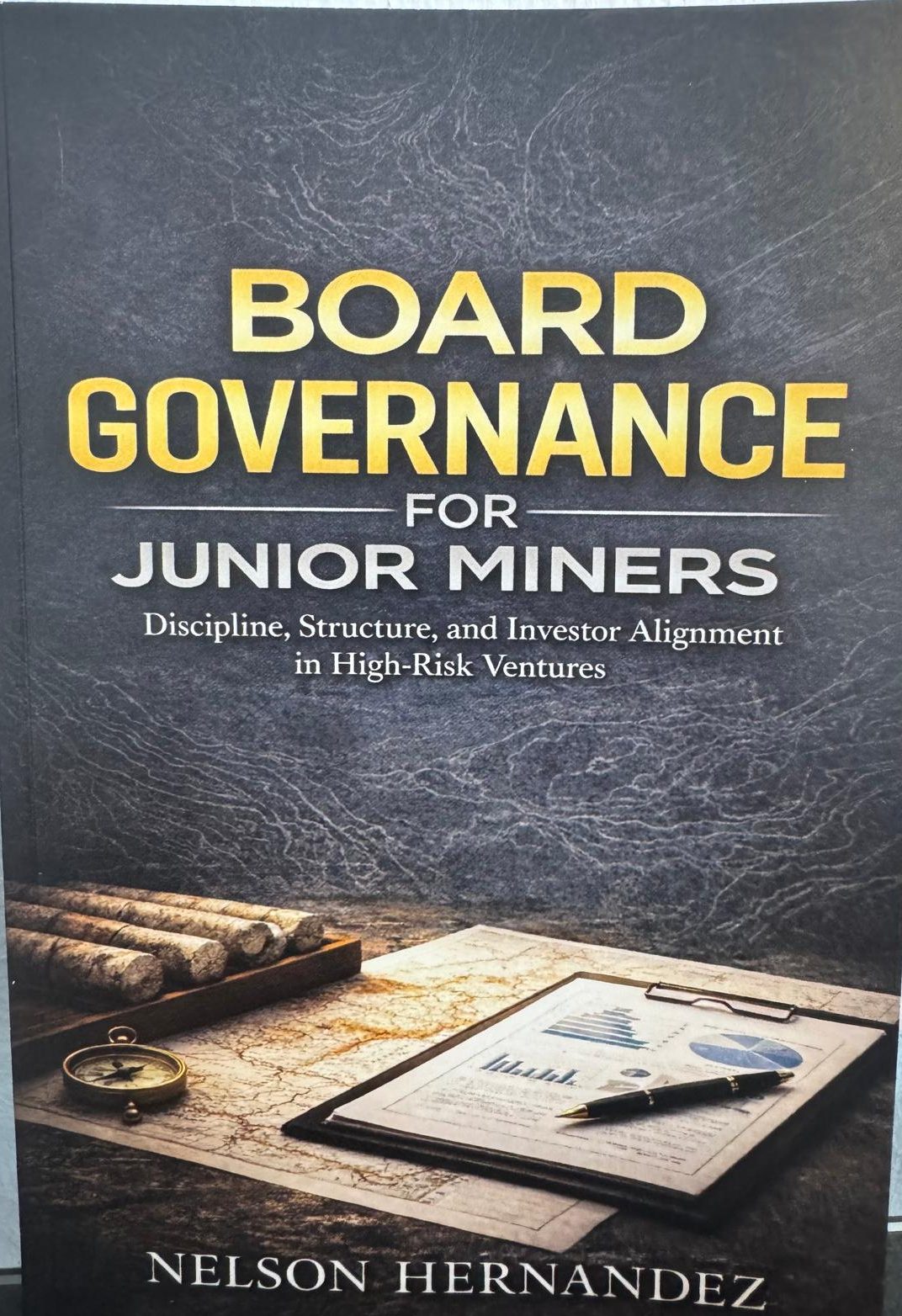
Board of Directors, Governance, Mining, Uncategorized, Yogi Nelson

Governance Before Revenue: The Case for Audit Committees in Junior Mining

by Yogi Nelson

Why Junior Mining Companies Must Establish Financial Oversight Early

In the early life of a junior mining company, nearly every ounce of energy goes toward geology, exploration programs, and financing the next drilling campaign. Teams are small, budgets are tight, and leadership is focused on proving the resource. Governance structures—particularly formal committees—often seem like something that can wait until the company becomes larger or begins generating revenue. In 2026, that assumption is outdated.

One of the most important governance structures a junior mining company can establish early in its development is the Audit Committee. While traditionally associated with large, revenue-producing corporations, audit committees are just as critical—perhaps even more so—for early-stage resource companies.

In fact, establishing an audit committee before revenue begins sends a powerful signal to investors, potential acquisition suitors, and merger candidates: the company takes financial discipline, transparency, and accountability seriously. For junior miners seeking credibility in capital markets, that signal can make a meaningful valuation difference.

Effective audit committees provide independent financial oversight that strengthens investor confidence in junior mining companies

Why Early Governance Matters in Exploration Companies

Junior mining companies operate in a unique financial environment. Unlike traditional operating businesses, exploration companies often spend years—sometimes a decade or more—raising capital and deploying it into exploration activities before generating any revenue.

During this time, investors are funding geological risk, operational risk, and management execution. With little or no operating income to measure success, investors are compelled to rely heavily on trust across three fundamental factors:

  • Effective and efficient use of funds
  • Accurate financial reporting
  • Management decisions that are subject to appropriate oversight

Without these safeguards, even promising exploration programs can struggle to attract sustained investor support.

Below I will explain why an effective audit committee is the best tool available to reinforce that trust. But first, it is useful to understand the work of an audit committee.

What an Audit Committee Actually Does

An audit committee is a specialized committee of the board of directors responsible for overseeing the company’s financial reporting, internal controls, and relationships with external auditors.

While the responsibilities vary by jurisdiction and listing exchange, the core functions generally include:

  • Overseeing financial statements and disclosures
  • Monitoring internal financial controls
  • Supervising the relationship with independent auditors
  • Reviewing risk management practices
  • Ensuring compliance with regulatory reporting requirements

For larger companies, these duties are often supported by internal finance teams and internal audit departments. Junior mining companies, however, typically operate with much leaner administrative resources. Consequently, audit committees of the board are essential to maintaining the financial integrity of the organization.

Preventing Problems Before They Start

One of the greatest advantages of establishing an audit committee early is that it helps prevent financial problems before they arise. As the old proverb reminds us, an ounce of prevention is worth a pound of cure.

Exploration companies regularly handle significant capital inflows from equity financings. These funds must be allocated across drilling programs, geological studies, environmental compliance, and administrative costs. Without structured oversight, financial reporting processes can become informal or inconsistent—especially during periods of rapid growth or multiple financings.

An engaged audit committee helps ensure that:

  • Financial controls are implemented early
  • Accounting policies are applied consistently
  • Disclosure practices meet regulatory standards
  • Financial risks are identified quickly

This proactive oversight can prevent small issues from becoming major problems. In capital markets, credibility lost is difficult to regain. Early governance safeguards help preserve that credibility.

Building Investor Confidence

Institutional investors increasingly evaluate governance structures when considering investments in junior resource companies. Typically, professional investors analyze three key questions—among others—before committing capital:

  • Is the geology promising?
  • Is the management team capable?
  • Is the governance structure trustworthy?

The presence of a well-structured audit committee directly addresses the third question.

Investors want reassurance that the financial reporting process is independent from management and that qualified directors are overseeing financial matters. When an audit committee includes members with accounting, financial, or capital markets experience, it signals that the company understands the importance of financial transparency.

This can make fundraising significantly easier, particularly when seeking larger institutional investors rather than relying solely on generalist capital.

Exchange Requirements and Best Practices

Many stock exchanges already require listed companies to maintain audit committees composed largely of independent directors. Companies listed on exchanges such as the TSX Venture Exchange, the Toronto Stock Exchange, and U.S. markets must comply with governance rules that include audit committee structures and financial expertise requirements.

However, merely complying with minimum regulatory requirements is not enough.

Best-practice junior miners treat the audit committee not as a regulatory checkbox, but as a strategic governance asset. That means selecting committee members carefully, ensuring they possess relevant financial expertise, and empowering them to actively oversee financial reporting and risk management.

The Value of Financial Expertise

An effective audit committee typically includes at least one member who qualifies as a financial expert—someone with deep experience in accounting, finance, or financial oversight. In the junior mining sector, this expertise can be invaluable.

Exploration companies face complex accounting questions related to:

  • Capitalization of exploration expenses
  • Impairment of mineral assets
  • Share-based compensation structures
  • Flow-through financing arrangements
  • Regulatory reporting obligations

Directors with financial expertise can help the board navigate these complexities and ensure the company’s disclosures remain accurate and compliant. This expertise also strengthens the company’s relationship with external auditors, who rely on audit committees to provide oversight and independence.

Strengthening Internal Controls

One of the most overlooked aspects of junior mining governance is the importance of internal financial controls. Even small organizations must ensure that financial responsibilities are properly separated, documented, and reviewed. Without these safeguards, errors—or worse, financial mismanagement—can occur.

An audit committee plays a critical role in evaluating and strengthening these controls. Typical oversight areas include:

  • Cash management procedures
  • Authorization of expenditures
  • Financial reporting processes
  • Budget monitoring
  • Risk assessment practices

By reviewing these systems regularly, the audit committee helps ensure that the company’s financial operations remain transparent and accountable.

Preparing for Future Growth

Junior mining companies that eventually transition from exploration to development and production face a dramatic increase in operational complexity. Project financing, construction budgets, joint ventures, and revenue recognition—just to name a few—introduce new layers of financial reporting.

Companies that establish strong governance structures early—including an effective audit committee—are far better prepared for this transition. Instead of scrambling to build governance systems during periods of rapid growth, they already have established frameworks for financial oversight and risk management. In other words, early governance creates organizational resilience.

Governance as a Strategic Advantage

In competitive capital markets, governance can become a meaningful differentiator. Hundreds of junior mining companies compete for investor attention each year. While geology and project potential remain primary drivers of valuation, governance quality increasingly influences investor confidence.

Companies that demonstrate disciplined oversight, transparent reporting, and strong board committees stand out from peers that operate with minimal governance infrastructure. Establishing an audit committee before revenue generation sends a clear message:

This company intends to operate with the same financial discipline as much larger organizations.

That message resonates with investors, lenders, and strategic partners alike.

Final Thoughts

Junior mining companies often view governance structures as something to implement later—after discovery success, after financing growth, or after revenue begins. But the companies that build credibility in capital markets are usually the ones that implement governance early, not late.

An effective audit committee strengthens financial oversight, improves transparency, and enhances investor trust during the most fragile stages of a company’s development. For junior mining companies—whether explorers, developers, or producers—operating in high-risk, capital-intensive environments, those advantages are invaluable.

Establishing an audit committee before revenue is not simply a compliance exercise. It is a strategic decision that signals maturity, discipline, and a commitment to responsible stewardship of investor capital.

In the crowded junior mining sector, that commitment can make all the difference.

Until next time,

Yogi Nelson

Board of Directors, Governance, Mining, Uncategorized

Governance Before Revenues: The Case for Independent Board Members in Junior Mining

by Yogi Nelson

In junior mining companies, board composition often reflects the company’s origins. Many junior miners begin as founder-led exploration ventures where the board includes geologists, project sponsors, early investors, and technical advisors who helped initiate the company’s first exploration programs.

This structure is understandable during the earliest stages of development. Technical knowledge is essential in evaluating geological opportunities, exploration programs, and project viability. However, as junior mining companies evolve and begin raising larger amounts of capital, the composition of the board becomes increasingly important.

Let’s be direct–investors do not evaluate geology alone. They also evaluate governance. Board composition is a clear signal to the market: does this company take seriously oversight, accountability, and capital stewardship.

Strong independent boards signal transparency, discipline, and credibility to investors in early-stage mining companies.

The Founder-Driven Board

In many junior mining companies, the initial board consists largely of individuals closely connected to the founding team. These may include technical experts, major shareholders, early-stage investors, and long-time industry colleagues.

Such boards often bring valuable operational experience. Directors may possess decades of geological expertise, exploration management knowledge, or familiarity with mining jurisdictions and permitting processes. This operational insight is indispensable. However, when boards consist primarily of insiders or closely aligned individuals, a governance imbalance can emerge.

Boards are responsible not only for supporting management but also for overseeing management. When too many directors share the same perspective, the board may struggle to exercise independent judgment. This is where independent directors can step-in.

The Role of Independent Directors

Independent directors serve a critical function in corporate governance. Their role is to provide objective oversight, challenge assumptions when necessary, and ensure that decisions are evaluated from the perspective of all shareholders. To this I can attest from direct experience.

In the junior mining sector, independence does not require directors to lack industry knowledge. In fact, effective independent directors often bring valuable experience from finance, governance, law, or mining operations. What distinguishes an independent director is not the absence of expertise, but the absence of conflicts of interests, real and perceived.

Independent directors are able to evaluate strategic decisions, compensation structures, related-party transactions, and financing arrangements without personal financial ties that could compromise their judgment. For investors, the presence of independent directors signals that oversight mechanisms exist beyond the founding management team.

Balancing Expertise and Oversight

The most effective junior mining boards strike a balance between operational expertise and governance independence. Clearly, technical knowledge remains essential. Mining projects are complex and capital intensive. Directors must be capable of understanding geological data, exploration results, development timelines, and operational risks. However, governance competence is equally important.

Boards benefit when they include directors with expertise in areas such as:

  • Corporate governance and board leadership
  • Finance and capital markets
  • Risk management and compliance
  • Environmental and regulatory oversight
  • International operations and jurisdictional risk

This diversity of perspective strengthens board deliberation. Technical insight ensures operational realism, while governance expertise ensures disciplined oversight.

Investor Perception Matters

Board composition plays a meaningful role in how investors evaluate junior mining companies. Institutional investors, strategic partners, and sophisticated market participants routinely review the composition of the board before committing capital. They assess whether directors possess the independence, experience, and judgment necessary to oversee management during both growth and adversity.

Companies that rely exclusively on founder-aligned boards may unintentionally signal governance weakness. Even when management is highly capable, investors may hesitate if oversight appears limited. Conversely, companies that demonstrate a thoughtful balance between operational experience and independent governance often inspire greater investor confidence.

Strong boards do not replace strong management. They reinforce it.

Board Evolution as Companies Grow

Board composition should evolve as junior mining companies progress through development stages.

Early-stage explorers may initially prioritize technical directors who can guide exploration programs and evaluate geological opportunities. As companies advance toward feasibility studies, development partnerships, and larger capital raises, governance needs expand. At that stage, boards often benefit from adding directors with backgrounds in finance, governance, and corporate oversight.

This evolution reflects a natural progression. The governance needs of a small exploration company differ from those of a company preparing to attract institutional investors or development partners. Forward-looking boards anticipate this progression and begin strengthening governance capacity before it becomes urgent.

The Value of Constructive Challenge

Effective boards are not ceremonial bodies. They serve as strategic partners to management while maintaining independent judgment. Directors must be willing to ask difficult questions, challenge assumptions, and encourage disciplined decision-making. Constructive challenge does not undermine leadership; it strengthens it.

When boards include a mix of operational expertise and independent oversight, discussions tend to become more robust and strategic. Management benefits from broader perspectives, and shareholders benefit from stronger governance.

Governance as Strategic Infrastructure

Ultimately, board composition should be viewed as part of a company’s governance infrastructure. Just as exploration programs require careful planning and execution, governance structures require thoughtful design. Companies that invest in balanced, capable boards position themselves to manage risk more effectively, communicate more credibly with investors, and navigate the complex path from exploration to development.

In junior mining, geology may create opportunity. But strong governance—starting with board composition—helps ensure that opportunity is pursued with discipline, transparency, and accountability.

Until next time,

Yogi Nelson

Uncategorized

How to Redeem Tokenized Metals for Physical Bullion (Step-By-Step Guide)

by Yogi Nelson

Tokenized metals sound straightforward: you acquire a digital token representing gold or silver, and you redeem it for physical bullion when desired. In practice, redemption is absolutely possible—but it is not universal, instantaneous, or frictionless. Redemption sits at the intersection of blockchain mechanics, professional vaulting, compliance obligations, and real-world logistics.

This article explains how redemption typically works, step by step, and where nuance matters. It also examines how different tokenized metal issuers approach redemption in practice. The issuer examples below are listed in alphabetical order.


Why Redemption Exists (and Why It Matters)

Redemption is the ultimate trust test. If a tokenized metal product cannot be converted into physical bullion through a clear, enforceable process, the token may still track price—but it begins to resemble synthetic exposure rather than ownership.

Even if most holders never redeem, the existence of redemption:

  • Anchors the token to physical reality
  • Disciplines issuers to maintain reserves and procedures
  • Reduces the risk of “paper gold” problems migrating into token form

Redemption answers one essential question: Can digital ownership be converted into physical control under real-world rules?


Before You Redeem: What to Confirm Up Front (and How to Confirm It)

This is the due diligence section. Most redemption headaches come from skipping these checks.

1) Allocated vs Unallocated

Do not assume “backed by gold” means allocated.  Here’s how to confirm it:

  • Read the issuer’s legal terms, not just the marketing page. Look for explicit language such as “allocated,” “segregated,” “specific bars,” or “direct ownership interest in physical bullion.”
  • Look for bar list language: credible allocated systems often publish (or can provide) bar lists with identifiers such as refiner, serial number, weight, and purity.
  • Confirm whether the metal is on the custodian’s balance sheet. Unallocated structures often operate like a claim on a pool. Allocated structures generally aim to be bankruptcy-remote through custody/bailment frameworks.

A practical rule: if you cannot find any clarity about bar-level identification or allocation, assume it may be unallocated until proven otherwise.

2) Custodian Quality: How to Evaluate

Custody is the center of gravity in tokenized metals. Assess the custodian using the same mindset institutions use:

  • Reputation and specialization: Is the custodian a recognized bullion vault operator or a generic storage provider?
  • Jurisdiction: Where is the vault located? Jurisdiction affects legal enforceability, bankruptcy treatment, and dispute remedies.
  • Audit access and reporting: Does the custodian support third-party audits and bar-list reconciliation?
  • Insurance coverage clarity: Is there clear documentation that the stored bullion is insured, by whom, and for what categories of loss?

High-quality custody is boring by design. It should feel procedural, controlled, and document-heavy. If custody feels vague, that is a signal.

3) Compliance Requirements

Compliance can surprise crypto-native users. It should not. You are redeeming a high-value physical asset. Typical compliance requirements include:

  • KYC (Know Your Customer): verifying identity (government ID, address verification, sometimes proof-of-funds).
  • AML (Anti-Money Laundering): issuer review of transactions to ensure the redemption is not linked to illicit activity.
  • Sanctions screening: confirming the person and destination are not prohibited.
  • Shipping restrictions: some jurisdictions have import rules or restrictions on precious metals shipments.

How to stay compliant:

  • Use your own verified account; do not “redeem for a friend.”
  • Keep transaction records and invoices.
  • Do not route tokens through questionable mixers or obscure hops right before redemption.
  • Ensure the delivery destination is legally permissible (customs and duties matter).

Compliance is not there to annoy you; it is there because issuers that ignore it do not survive.


The Step-By-Step Redemption Process

Step 1: Choose Your Redemption Outcome

Most issuers support one or more of the following:

A) Insured Delivery

This is the most intuitive option: bullion arrives at your address.

But “insured delivery” is a chain of real-world responsibilities:

  • The issuer or logistics partner packages bullion using tamper-evident procedures.
  • A carrier transports it under insured conditions (insurance may be carried by the vault, carrier, issuer, or third-party policy depending on the arrangement).
  • Delivery often requires signature, ID verification, or secure drop protocols.

Costs usually include:

  • handling/processing fees
  • shipping fees
  • insurance premiums
  • sometimes fabrication fees if the redemption requires specific minted products

Important nuance: insured does not mean “risk-free.” Insurance coverage has definitions and exclusions. You should know when liability shifts (more on that in Step 9).

B) Vault Pickup

Vault pickup can reduce shipping complexity and cost, but it introduces operational burden:

  • You may need a scheduled appointment and identity verification at the vault.
  • Some vaults require specific authorization letters from the issuer.
  • There may be restrictions on how bullion can be transported out.

Vault pickup is best for:

  • those traveling near the vault
  • larger redemptions where shipping costs are significant
  • individuals who prefer to control transport

It also introduces personal security considerations. Leaving a vault with bullion is not a theoretical risk. It is a real-world one.

C) Conversion to an Allocated Vault Account

This is often overlooked. In many systems, “redemption” can mean converting your token claim into a direct allocated vault holding without shipping. This is popular among:

  • institutions
  • high-net-worth holders
  • anyone who wants ownership clarity without delivery risk

Step 2: Confirm Token Eligibility and Network (Canonical vs Wrapped Tokens)

This step avoids a common and painful mistake.

  • A canonical token is the issuer’s “official” token contract that represents the underlying metal according to the issuer’s terms.
  • A wrapped token is a derivative representation issued by another protocol or bridge. It may track the canonical token, but it is not necessarily redeemable by the issuer.

Example conceptually:

  • You might hold “wrapped XAUT” on a DeFi platform.
  • The issuer may only redeem the original XAUT held in eligible form.

Practical takeaway: redemption almost always requires you to hold the canonical token in a wallet/account format the issuer can recognize.


Step 3: Open or Verify a Redemption Account

Expect identity verification. Even if you acquired tokens anonymously, physical delivery forces compliance.


Step 4: Request a Redemption Quote

Before you select bars vs coins, the issuer typically needs:

  • your verified identity status
  • your destination country/state
  • your preferred delivery method
  • your redemption quantity
  • whether you want specific formats

Then you receive:

  • an itemized fee estimate
  • available product formats
  • processing timeline
  • terms of risk transfer and insurance

This is effectively your “term sheet” for physical settlement. Read it like one.

Only after that quote phase do you select:

  • bar vs coin format
  • weight sizes
  • delivery vs pickup option

Step 5: Lock the Redemption Order

Pricing may be locked at:

  • the moment you confirm the quote, or
  • the moment tokens are received, or
  • the moment the bullion leaves the vault

This matters in volatile markets.


Step 6: Transfer or Retire Tokens

Redemption requires that the digital claim be removed from circulation in a controlled way.

Mechanically, one of three models is used:

  1. Transfer-to-issuer model
    • Send tokens to an issuer-controlled redemption address.
    • Issuer confirms receipt on-chain.
    • Issuer later burns/locks/marks tokens as redeemed internally.
  2. Smart-contract burn/lock model
    • Send tokens to a contract that programmatically locks or burns them.
    • The contract emits an event that triggers off-chain fulfillment.
  3. Partner/dealer model
    • Transfer tokens to an authorized dealer or partner.
    • The partner executes redemption through its custody channels.

Why this matters: the issuer must ensure redeemed tokens cannot be resold while physical bullion is being delivered. That is the core integrity requirement.


Step 7: Off-Chain Verification and Reserve Reconciliation

Once tokens are received/retired, the issuer must reconcile:

  • token supply changes
  • reserve records
  • custody documentation
  • internal controls

This is where proof-of-reserves discipline becomes operational. In other words, reserve verification stops being a periodic report and becomes an active process that must hold up under transaction pressure.

A serious issuer must be able to show, in operational terms:

  • which inventory is being released
  • how it matches allocation records
  • how token supply changes reflect the release
  • who approved and documented the transaction

If this step is weak, redemption becomes the moment where a system breaks.


Step 8: Picking, Fabrication, and Packing

If you redeem for a standard bar that already exists in inventory, the process may be “pick and pack.”

If you redeem for coins or specific branded bars:

  • metal may need to be fabricated (minted)
  • the product may require assay verification
  • packaging must preserve chain-of-custody
  • serial documentation may be generated or confirmed

This is why minimum redemption sizes exist. Logistics and fabrication do not scale down smoothly. The hidden truth: redemption is often less about blockchain and more about inventory management.


Step 9: Delivery or Vault Pickup

When I say “risk transfers from issuer to holder,” I mean there is a contractual moment when liability shifts. For delivery, that moment might be:

  • when the vault hands the package to the carrier
  • when the carrier confirms delivery
  • when you sign for receipt

The issuer’s terms should specify:

  • who bears risk in transit
  • what insurance covers
  • how claims are handled
  • what happens if delivery fails

For pickup, risk may transfer:

  • the moment the vault releases the bullion to you

This is not fine print trivia. It determines who eats the loss in a rare but real adverse event.


Step 10: Final Documentation

Keep records:

  • redemption confirmations
  • invoices
  • shipping docs
  • serial/bar docs (if provided)

These can matter for tax, insurance, resale, and audit questions later.


Real-World Issuer Examples (Alphabetical Order; Not Ranked)

CACHE Gold (CGT): CACHE emphasizes transparency, audits, and bar-level visibility. Redemption is conventional, structured, and logistics-driven.

Comtech Gold: Comtech’s model leans institutional and commerce-oriented. Redemption typically aligns with regulated commodity settlement pathways, not retail convenience.

Kinesis (KAU/KAG): Kinesis integrates redemption into a broader “metals as money” system. Redemption exists, but the design emphasizes circulation and settlement within the ecosystem.

Paxos Gold (PAXG): PAXG focuses on disciplined custody, formal procedures, and regulatory posture. Redemption is strong but not designed for casual users.

T-Gold (SchiffGold): T-Gold uses tokenization as a modern wrapper around traditional bullion acquisition and custody workflows. Redemption mirrors bullion reality, not crypto convenience.

Tether Gold (XAUT): XAUT is widely distributed and liquid; physical redemption exists but generally favors larger holders and structured processes.


Institutional Perspective: Why Settlement Finality Matters

Finality reduces risk, that appeals to institutions.

Settlement finality means the transaction is completed in a legally enforceable way such that:

  • ownership transfer is final and cannot be reversed
  • the asset is not subject to unsettled counterparty obligations
  • the institution can treat the asset as “real” for accounting, collateral, and compliance purposes

From a risk management perspective, finality reduces:

  • counterparty risk
  • operational risk (failed settlement, reconciliation disputes)
  • legal risk (unclear title or claim priority)

From a compliance perspective, finality strengthens:

  • audit trails
  • demonstrable ownership
  • controlled custody
  • clear redemption rights

Institutions do not embrace tokenization because it is modern. They embrace it when it produces cleaner, faster, more verifiable finality than legacy settlement systems.


Final Thought: Redemption Is the Bridge

Tokenized metals do not promise magic. They offer a bridge:

  • blockchain for ownership transfer
  • vaults for physical custody
  • audits for verification
  • redemption for enforceability

When that bridge is well built, tokenization earns trust.


This article is part of an ongoing weekly series on the tokenization of precious metals, published on BlockchainAIForum and LinkedIn, examining custody, regulation, issuer structure, and settlement infrastructure.

Until next time,


Yogi Nelson

Uncategorized

Gold, the UNIT, and mBridge: How Tokenization May Rewire Global Settlement

by Yogi Nelson

For most of modern history, gold-backed money has been declared obsolete. And yet, whenever trust in global monetary architecture becomes strained, gold has a way of quietly re-entering the conversation.

That appears to be happening again—this time through the combined emergence of mBridge, the proposed UNIT, and tokenization.

The distinction matters:

  • The UNIT is best understood as a trade settlement and accounting unit, reportedly backed by a mix of gold and participating fiat currencies within the BRICS bloc.
  • mBridge is not money at all. It is infrastructure—a blockchain-based settlement rail designed to move value directly between central banks without relying on correspondent banking networks like SWIFT.
  • Tokenization is the force multiplier. It enables verification, transparency, and enforceability—turning gold backing from a political promise into something that can be digitally confirmed.

Individually, each is interesting. Together, they suggest a system-level shift.

This does not overthrow the U.S. dollar. It does not replace SWIFT overnight. But it does introduce functional competition:

  • Alternative settlement rails
  • A gold-referenced unit for trade
  • A verification layer previous gold-backed systems never had

Historically, gold-backed money failed not because gold was flawed—but because trust was discretionary and opaque.

Tokenization changes that.

Whether or not the UNIT is ever fully tokenized remains to be seen. But the direction is clear: in a multipolar, digital world, global settlement may increasingly depend on systems that are verifiable, programmable, and less reliant on political assurances.

Tokenization may not be the headline—but it may be what rewires the system.


Yogi Nelson