

Namaste Yogis. Welcome to the Blockchain & AI Forum, where your blockchain and artificial intelligence technology questions are answered! Here no question is too mundane. As a bonus, a proverb is also included. Today’s question, was submitted by Stelios from California and he wants to know what is happening with artificial intelligence (AI) in automobiles?
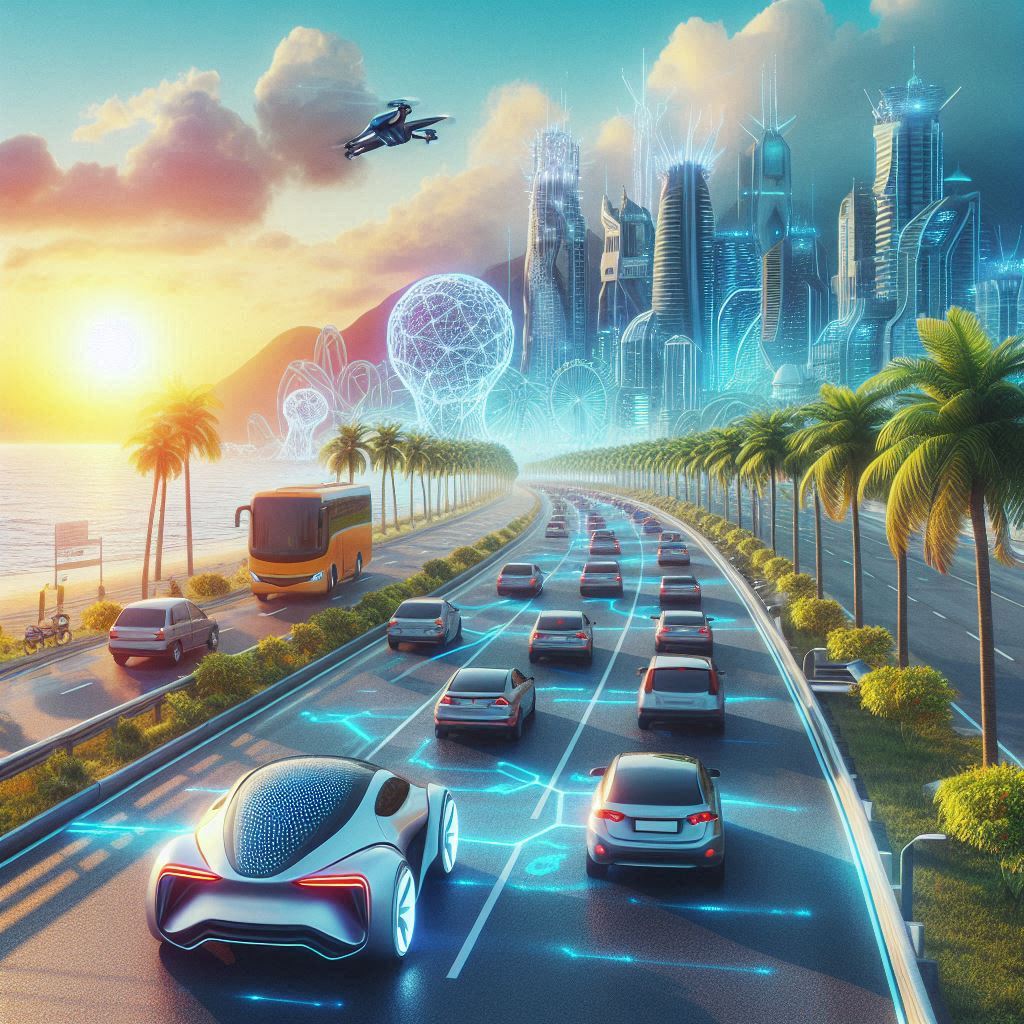
Stelios, you came to the right place. After you asked me this question, I decided to do a little research and found an informative article from PwC. I’ll start with a word about PwC and thereafter dive into their findings.
Who is PwC? PwC is one of the Big 4 accounting firms in America. PwC is also a major international firm, with offices across the globe. In addition to accounting services, PwC offers business consulting, market intelligence, and strategic development. Recently PwC produced a report titled, Is GenAI a game changer for the e-mobility ecosystem?
https://www.pwc.com/m1/en/publications/is-gen-ai-a-game-changer-for-the-emobility-ecosystem.html
Okay, now it’s time to examine the fundamental premise from where PwC begins.
Anyone who has purchased a new car recently knows automobiles are increasingly more electronic and software driven than mechanical. The trend started 10 – 15 years ago and has accelerated quickly. PwC says, software and electric vehicles will be the largest value pool of cars by 2030!
With that as a baseline premise, PwC explored the following question “… how can Generative AI (GenAI) catalyze a transformative revolution in the electric mobility sector leveraging its novel capabilities to build predictive models, develop bespoke services, optimize processes across the value chain and much more”. Holy forecasting insight Batman! Let’s check out the six predictions in greater detail below.
Research and Development (R&D). PwC asserts AI will accelerate research and development (R&D) of new materials and testing processes and thereby reduce production of prototype timelines drastically. PwC envisions AI will analyze a wide range of potential battery chemistries, for instance.
Generative Design: PwC reports that by using GenAI to analyze the significant increase in data, more design possibilities are accessible. GenAI enable the design process leading to innovations in and optimized vehicles.
Demand Forecasting and Inventory Optimization: Essentially, the argument PwC makes here is that with GenAI automobile manufacturers will be able to forecast with greater precision and thus reduce waste. For example, the GenAI system will identify demand patterns, seasonality, and potential fluctuations.
In-Car Personalization: This one could be particularly cool if done right. PwC says that with GenAI user preferences, historical user interactions, sensor data, etc., could be used to customize the driving experience to the vehicle owner. We need this for the Batmobile, Batman!
Intelligence Energy Management Systems: Clearly an electric vehicle is energy efficient, that we know. However, the point PwC makes goes beyond a particular car and includes the entire production chain. Wow, I hadn’t considered that. Good point.
Traffic Control and Optimization: With GenAI says PwC, traffic patterns, route optimization, and of course congestion management.
Although AI in cars has existed for 10+ years, PwC concludes with the assertion that GenAI technology will hit the mass market by 2030 and become the dominant technology. I don’t think there is any reason to disagree. What say you, Stelios?
I conclude with a proverb from Chile, where they say: liar falls faster than a thief.
Until next time,
Yogi Nelson
 Blockchain & AI Forum