
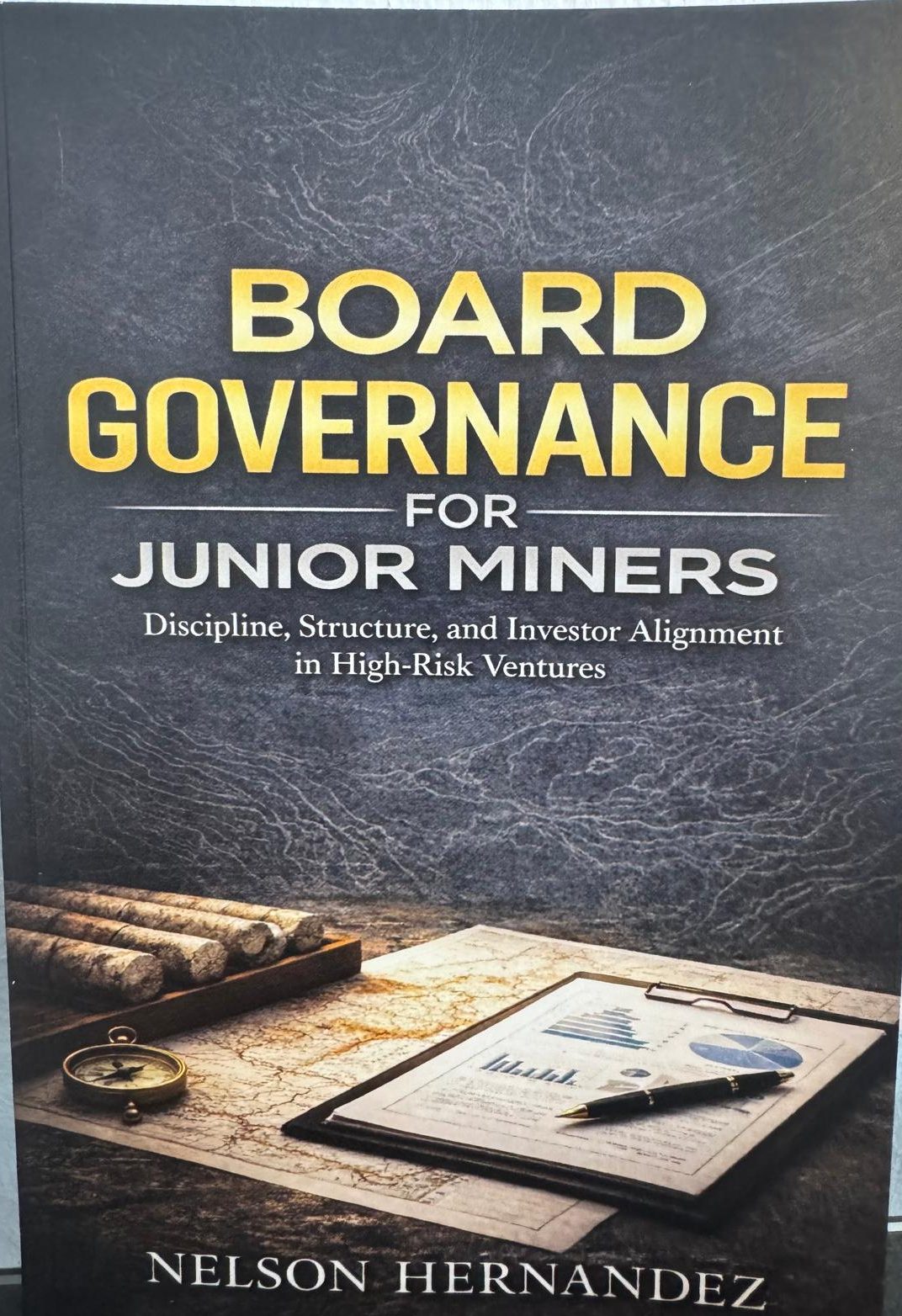
by Yogi Nelson
Why Strong Boards Matter Most When Markets Turn Against You
Commodity markets are cyclical. Up for years; down for years. Every mining professional knows it. Periods of enthusiasm and abundant capital are followed by eras of contraction, declining commodity prices, and investor retreat. When markets tighten, financing windows close, exploration programs slow, and companies must adjust quickly.
In junior mining companies, where operations are funded almost entirely by investor capital, these market cycles can determine whether a company advances its projects or struggles to survive. During boom periods governance can appear easy. Bull markets can make a genius of any investor. Capital is available. Investor sentiment is positive. Exploration results receive attention. Boards meet, decisions are approved, and the company moves forward.
But is governance truly tested during good times? No. Governance is tested when conditions deteriorate. When commodity prices fall, as they inevitably do, exploration results disappoint, as sometimes happens, or financing becomes scarce, the quality of a company’s governance structure becomes paramount. Under these circumstances, boards must provide steady leadership, disciplined oversight, and clear communication with investors.
Crisis governance is not about panic management. It is about maintaining structure, discipline, and credibility when markets become uncertain.
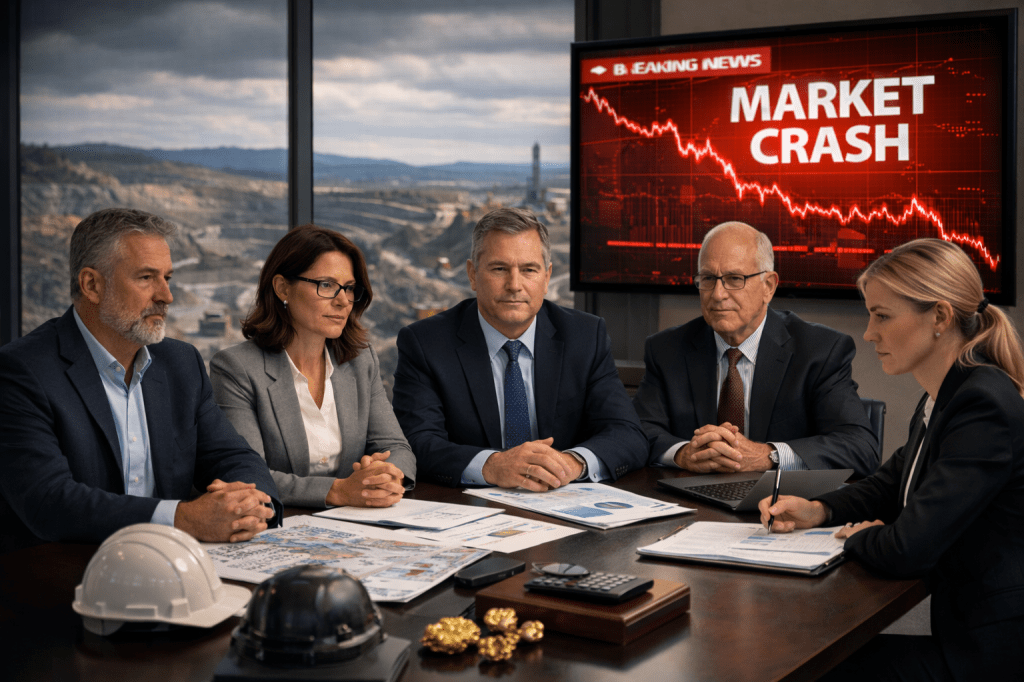
Markets may panic. Strong boards do not.
Cycles Are Built Into the Mining Industry
Mining has always been cyclical, and that is unlikely to change. Commodity prices respond to global economic conditions, supply constraints, geopolitical developments, and investor sentiment. These cycles influence exploration spending, project development timelines, and capital availability. Junior mining companies feel these cycles more acutely than large producers.
Major mining companies, by contrast, typically have operating mines generating revenue and cash flow. Junior exploration companies, however, often operate without revenue for years. Their ability to continue operating depends on access to capital markets.
When market conditions weaken, junior companies face several simultaneous pressures:
• Exploration programs may require additional funding.
• Share prices may decline.
• Investors may become more selective.
• Financing terms may become more dilutive.
Under these circumstances, the board of directors must ensure that management responds strategically rather than reactively. The key to a successful response is to anticipate one or more of the pressures listed above and have an action plan ready when necessary.
Let us discuss, in general terms, the nature of that plan below.
The Board’s Role During Market Stress
During periods of market volatility, the board’s role becomes more active—but not more intrusive. Directors must avoid the temptation to manage daily operations. That remains the responsibility of management and no one else. However, boards must provide structured oversight and strategic guidance during difficult periods, beginning with liquidity.
Exploration companies operate on finite capital. Directors must understand how much cash the company has, how long that capital will last, the type of cash available (for example, whether the capital comes from long-term investors), and what operational adjustments may be necessary if financing conditions deteriorate.
Second, boards must review and impose spending discipline.
During favorable markets companies may pursue aggressive exploration programs. When market conditions tighten, the board must ensure that expenditures are aligned with the company’s most critical priorities. Cash is king.
Third, boards must review risk exposure. Market downturns often expose operational, financial, or strategic risks that may not have been visible during stronger market conditions.
These discussions require thoughtful analysis—not rushed decisions.
Liquidity Oversight: The Lifeline of Exploration Companies
In cyclical downturns liquidity becomes the single most important governance issue facing junior mining companies. Run out of cash equals run out of operations.
Without sufficient capital, even the most promising exploration programs can stall or be forced to sell far below potential valuation. Boards must therefore monitor several key financial indicators:
• Cash reserves relative to projected expenditures
• Expected timelines for future financing
• Budget flexibility if conditions deteriorate
• Commitments related to drilling contracts, property payments, or technical studies
In all cases, boards must work closely with management to evaluate whether exploration programs should be scaled back, delayed, or refocused. These decisions are rarely easy, which is why board composition—and particularly the presence of independent directors—is essential.
Governance requires confronting financial reality early rather than ignoring warning signs.
Strategic Discipline During Downturns
Periods of market stress can create pressure to act quickly. Share prices fall. Investors demand progress. Management teams may feel compelled to accelerate activity in order to restore investor confidence.A steady board is never more important during these moments.
Boards must resist the temptation to pursue short-term actions that undermine long-term strategy. What should be done instead? Directors should ask disciplined questions:
• Does the company’s exploration strategy remain valid?
• Are limited resources being deployed where they generate the greatest geological value?
• Is management communicating realistically with investors?
• Is the company preserving capital where appropriate?
In difficult markets, governance requires patience. Exploration companies that maintain strategic discipline often emerge stronger when market conditions improve, thus preserving shareholder value.
Disclosure Discipline in Adverse Conditions
Timely and complete disclosures—whether times are good, bad, or in between—are always essential. During adverse conditions they move up to supreme importance.
Junior mining companies must communicate with investors openly and accurately, particularly when challenges arise. Exploration results may not meet expectations. Financing may be delayed. Project timelines may shift. Boards must ensure that disclosure remains transparent and balanced. Neither shrill nor cheerleader.
Investors understand that mining involves risk. What damages credibility is not the presence of risk—but the absence of honest communication. Clear disclosure during difficult periods strengthens investor confidence because it demonstrates professionalism and accountability. In contrast, overly optimistic messaging during challenging conditions can damage credibility quickly.
Markets eventually recognize reality. Good governance ensures that companies acknowledge it early.
Maintaining Investor Confidence
Investor confidence is one of the most valuable assets a junior mining company possesses. It may not appear on the balance sheet as a line item, but it matters greatly during capital calls.
Junior miners often return repeatedly to capital markets over the life of a project. Companies that maintain credibility with investors are far more likely to secure financing when conditions improve. Boards play an important role in protecting that credibility. To maintain investor confidence, directors should ensure that:
• Management communicates clearly and often with shareholders
• Exploration results are disclosed accurately and responsibly
• Financing discussions are conducted professionally
• Governance standards remain consistent even during periods of stress
Companies that maintain disciplined governance during downturns often find that investors remember that discipline when markets recover.
The Difference Between Leadership and Panic
Market downturns inevitably create anxiety. No one enjoys a sloping share price. Shareholders worry about dilution. Management teams worry about financing. Directors worry about preserving long-term value. Under these conditions governance must emphasize calm leadership rather than reactive decision-making. It is in these moments where great boards distinguish themselves.
Boards that panic often make poor decisions. Solid boards have a plan, reevaluate that plan based on new data, and adjust accordingly. Weak boards may approve overly dilutive financings. They may pursue short-term strategies that undermine long-term project value. They may pressure management into unrealistic operational timelines.
Effective boards do the opposite. They slow the decision-making process when necessary. They analyze risks carefully. They focus on preserving long-term value rather than reacting to short-term market pressure. In short, governance replaces panic with discipline.
Governance as a Stabilizing Force
During favorable markets governance structures may operate quietly in the background. To say companies run on autopilot during bull markets would be an overstatement—there is no autopilot in the mining sector.
What can be said is this: during turbulent markets, good governance becomes the stabilizing force that keeps a company focused and credible.
Boards provide:
• Financial oversight
• Strategic guidance
• Independent judgment
• Clear communication standards
These qualities become particularly valuable when external conditions deteriorate.mExploration companies cannot control commodity cycles—no one can, nor are they expected to. But they can and must control how they respond to them.
Final Thoughts
Cyclical markets are an unavoidable reality of the mining industry. Periods of strong investor enthusiasm (for example 2025–2026) will inevitably be followed by periods of uncertainty and contraction.
For junior mining companies, these downturns test both financial resilience and leadership discipline. Some companies will be shaken out. Others will emerge stronger.
During these periods the role of the board becomes especially important. Directors must monitor liquidity, preserve strategic focus, maintain transparent disclosure, and support management without succumbing to panic. Get it right and credibility grows stronger. Get it wrong and markets remember.
In junior mining, governance is never more visible than when markets turn against you. And in cyclical industries, those moments inevitably arrive.
Until next time,
Yogi Nelson


