

by Yogi Nelson
Welcome to the BlockchainAIForum
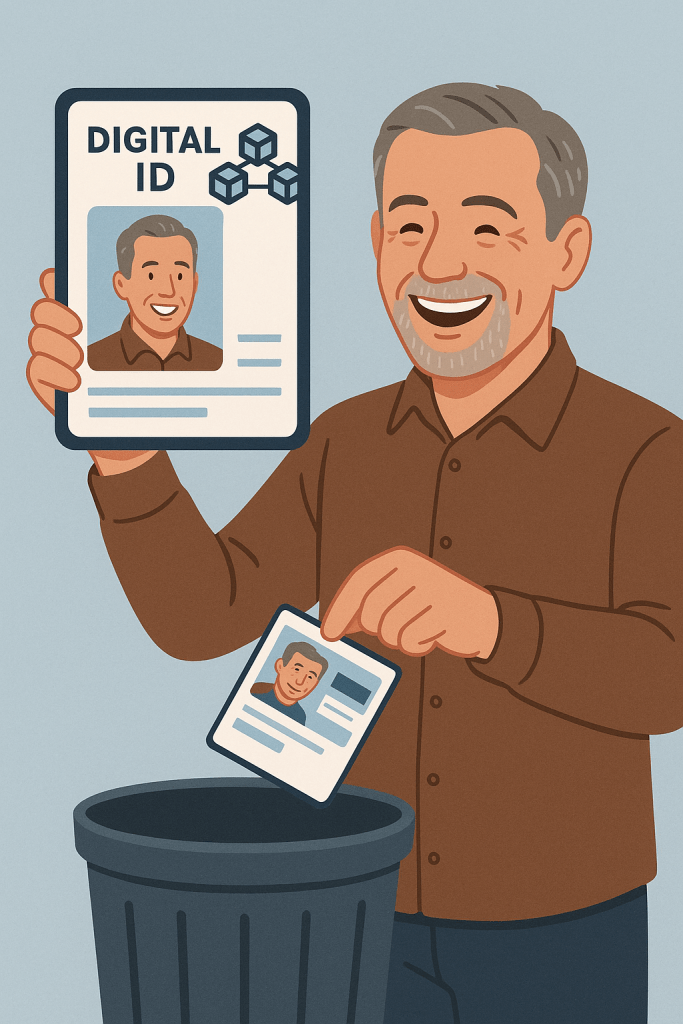
Three years ago, I was selected to serve on the Federal Deposit Insurance Corporation’s (FDIC) Digital ID Advisory Committee. It was an honor and fantastic learning experience. Now three years later, our lives are ever more digitized hence the impetuous for this blog post. We all know, secure and reliable digital identification (ID) is essential for everything from opening bank accounts to accessing healthcare services. Traditional systems, however, often depend on centralized databases that are vulnerable to hacking, data leaks, and identity theft. Blockchain technology offers a decentralized alternative that could revolutionize digital identity management. This article explores how blockchain-based digital identification works, its benefits, potential drawbacks, and real-world use cases.
🏗️ How Blockchain Digital Identification Works
Fundamentally, blockchain digital identity solutions use distributed ledgers to create and store identity information. Unlike centralized systems, no single entity controls the data. Instead, identity credentials are stored across multiple nodes in a blockchain network.
Key Components:
- Decentralized Identifiers (DIDs): Unique cryptographic keys that link an individual to their identity.
- Verifiable Credentials: Digitally signed proofs of attributes such as name, age, or employment status.
- Zero-Knowledge Proofs (ZKPs): Cryptographic methods that allow users to verify identity attributes without revealing underlying information.
The user retains full control over their data, deciding who can access which pieces of information and when. This concept is often referred to as Self-Sovereign Identity (SSI).
✅ Advantages of Blockchain-Based Digital IDs
1. Enhanced Security. Data is stored on a decentralized blockchain, making it extremely difficult for hackers to compromise the entire system. Each transaction is cryptographically secured and immutable.
2. User Control. Users own their identity data, determining what information is shared and with whom. This reduces the risk of misuse by third parties.
3. Interoperability. With proper execution, blockchain IDs can be used across multiple platforms and services, eliminating the need for repetitive registration and verification processes. The key is making blockchains interoperable. In other words, think about WiFi. It works because it is interoperable; blockchains need this additional layer of functionality.
4. Fraud Prevention. Immutable records on the blockchain make it nearly impossible to forge or tamper with identity credentials.
5. Global Accessibility. Blockchain digital IDs can provide a secure identity to the 850 million people worldwide who currently lack government-issued documentation.
⚠️ Challenges and Limitations
While promising, blockchain digital identification also faces challenges that must be addressed before widespread adoption.
1. Regulatory Uncertainty: Countries have different rules for identity verification, making it complex to create a system that works globally.
2. Scalability Issues: Blockchain networks must be capable of handling massive numbers of transactions quickly. Current solutions may face performance bottlenecks.
3. Privacy Concerns. Although blockchain data is encrypted, once information is on the chain, it cannot be removed. This immutability could conflict with data privacy laws such as GDPR’s “right to be forgotten.”
4. Adoption Barriers. Organizations must be willing to integrate blockchain-based IDs into their systems, which may require significant investment and training.
🌍 Real-World Use Cases
Several organizations and governments are experimenting with blockchain digital identity solutions. Below is a sampling of projects that demonstrate the versatility and potential of blockchain-based identity systems:
- Microsoft’s ION: A decentralized identity system built on the Bitcoin blockchain.
- Estonia’s e-Residency Program: Uses blockchain elements to authenticate foreign entrepreneurs.
- ID2020 Alliance: A global initiative leveraging blockchain to provide digital identities to underserved populations.
- Dock.io: Provides a platform for creating verifiable credentials used in healthcare, finance, and education.
🔮 What’s Next?
The future of digital identification will likely involve a hybrid approach, blending blockchain with traditional systems. Technologies such as Zero-Knowledge Proofs and biometric authentication will play key roles in enhancing security while protecting user privacy. To achieve mainstream adoption, collaboration among governments, private companies, and standards organizations is essential. Legal frameworks must evolve to ensure blockchain digital identities comply with international data protection laws.
⚖️ Final Thoughts: Balancing Pros and Cons
Blockchain offers a powerful solution to the vulnerabilities of traditional digital identity systems, providing security, user control, and global reach. However, challenges around regulation, privacy, and scalability must be addressed. For now, blockchain-based digital identification is most effective in specific use cases, such as cross-border verification, secure credentialing, and providing identities to unbanked populations. As technology matures, these systems could become the foundation of a more secure and inclusive digital world.
Until next time,
Yogi Nelson

 Blockchain & AI Forum