
Namaste Yogis. Welcome to the Blockchain & AI Forum, where your technology questions are answered! Here no question is too mundane. As a bonus, a proverb is also included. Today’s question was submitted by Nikki and she wants to know what are AI agents and is there a way of classifying them?
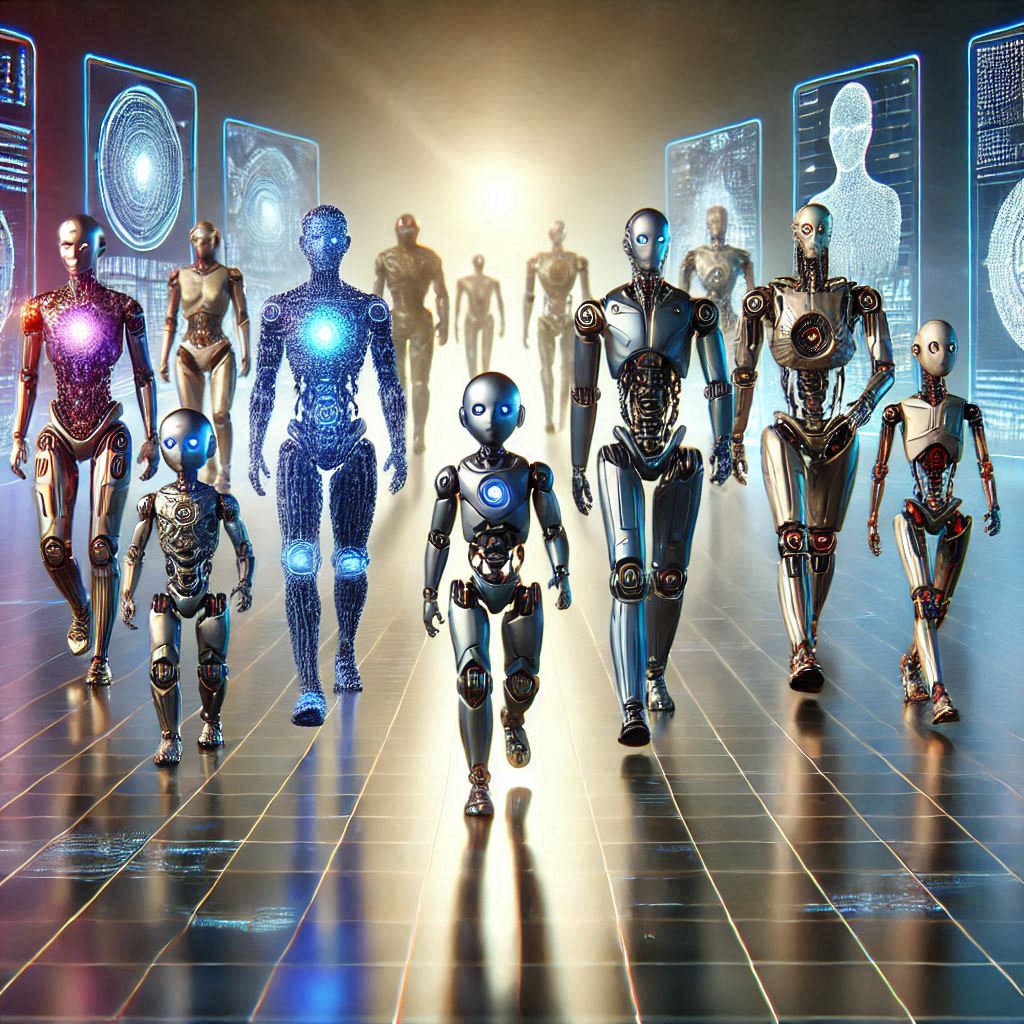
Nikki, you came to the right place to find an answer. Your question gets to the core of artificial intelligence. Let’s start by defining what is an AI agent?
WHAT IS AN AI AGENT
According to IBM, “an AI agent refers to a system or program that is capable of autonomously performing tasks on behalf of a user or another system by designing its workflow and utilizing available tools.” The key is autonomously. Furthermore, says IBM AI agents can encompass a wide range of functionalities beyond natural language processing including decision-making, problem-solving, interacting with external environments and executing actions. AI agents says IBM, use the advanced natural language processing techniques of large language models (LLMs) to comprehend and respond to user inputs step-by-step and determine when to call on external tools.
CLASSIFICATION OF AI AGENTS
Nikki when it comes to classification of AI agents, there is no standard answer, nevertheless let’s proceed.
Reactive Machines: Simple reflex agents are the most basic forms of artificial intelligence. These agents make decisions based solely on their current sensory input, responding immediately to environmental stimuli without needing memory or learning processes. Their behavior is governed by predefined condition-action rules, which specify how to react to particular inputs. The beauty of reactive AI is that it is highly efficient and easy to implement, especially in environments where the range of possible actions is limited.
Model-based Reflex Agents: These AI agents are a more advanced and designed to operate in partially observable environments. Model-based agents maintain an internal representation, or model, of the world. This model tracks how the environment evolves, allowing the AI agent to infer unobserved aspects of the current state. While these agents don’t actually “remember” past states in the way more advanced agents do, they use their world model to make better decisions about the current state.
Goal-based Agents. These are designed to pursue specific objectives by considering the future consequences of their actions. Wow! Goal-based agents plan sequences of actions to achieve desired outcomes. Effectiveness depends on a clear description of the goal. With a clear goal the AI agent is able to search through possible sequences of actions that could lead toward or to the goal. It then moves on to choosing actions based on their predicted contribution toward reaching the goal. Industrial robots are examples.
Learning Agents: Learning agents improve behavior over time by interacting with its environment and learning from its experiences. These agents modify their behavior based on feedback and experience, using various learning mechanisms to optimize their performance. These AI agents can discover how to achieve their goals through experience rather than purely relying on pre-programmed knowledge. An example would be an energy management system that learns the patterns of usage to optimize resource consumption.
Utility-based Agents: A utility-based agent makes decisions by evaluating the potential outcomes of its actions and choosing the one that maximizes overall utility. Unlike goal-based agents that aim for specific states, utility-based agents can handle tradeoffs between competing goals by assigning numerical values to different outcomes.
Hierarchical Agents: These agents are structured in a tiered system, where higher-level agents manage and direct the actions of lower-level agents. In other words, task decomposition and task coordination! This architecture breaks down complex tasks into manageable subtasks, allowing for more organized control and decision-making.
Multi-agent System: Nikki this is team AI! This AI agent system involves multiple autonomous agents interacting within a shared environment, working independently or cooperatively to achieve individual or collective goals.
I end with a proverb from Netherlands: “trust comes on foot and leaves on horseback”.
Until next time,
Yogi Nelson
https://www.ibm.com/think/topics/ai-agents
https://www.digitalocean.com/resources/articles/types-of-ai-agents

 Blockchain & AI Forum