Uncategorized

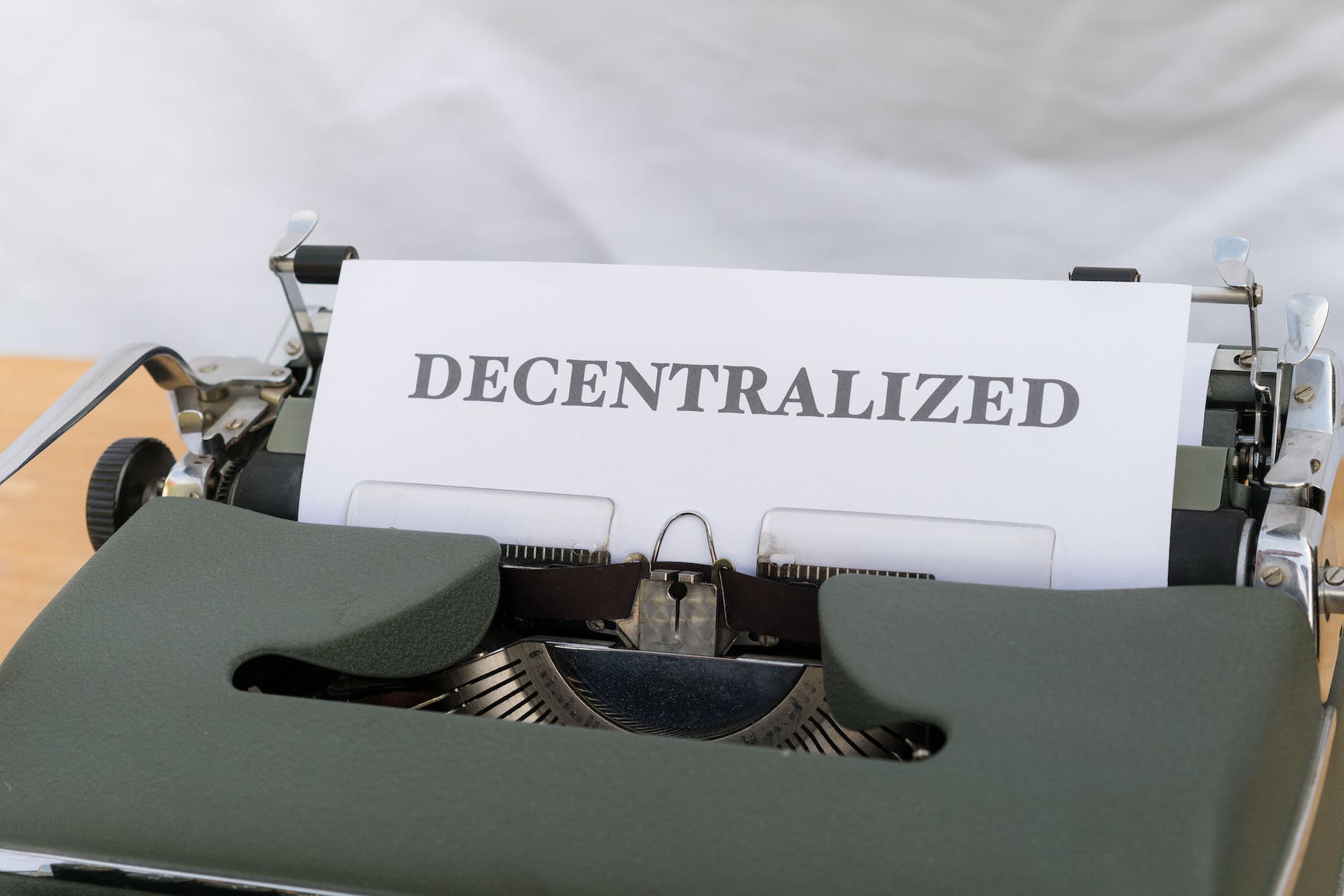
WHAT IS A DECENTRALIZED AUTONOMOUS ORGANIZATION?

Namaste Yogis. Welcome to the Blockchain & AI Forum, where your blockchain and artificial intelligence technology questions are answered, mostly correct! Here no question is too mundane. As a bonus, a proverb is also included. Today’s question, comes from Michael in Washington, and he wants to know, what the heck is a decentralized autonomous organization (DAO)?

Michael, you came to the right place. When I heard the term DAO, I too had no idea what it meant. Was it tasty Chinese cuisine? Or maybe the latest fashion from Milan? Perhaps a government document? Let me briefly explain DAOs and summarize what proponents and opponents say.

According to Consensys, a major blockchain player, DAOs are community-led organization with no central authority constructed by rules encoded on a computer program. Proponents say DAOs are transparent and controlled by the organization’s members, not by a central figure. A libertarian utopia? Maybe. Proponents point to smart contracts in setting foundational rules and to execute the agreed upon decisions.

The Emurgo Academy, Cardano’s teaching arm, explains that under a DAO community members create proposals concerning operations and vote on each proposal. Proposals that achieve predefined levels of agreement are accepted and enforced by smart contract rules. Moreover, the very code itself can be publicly audited. Further, DAOs are responsible for tracking the ownership of tokens from point-to-point. Intriguing?

DAO backers say their system produces community collaboration. Their theory is DAOs align incentives; therefore, the best interest of every member is congruent with the best interest of the protocol itself. A healthy, robust protocol will garner more usage, and in turn, increase the value of the DAOs tokens. As the protocol succeeds, so do members. That’s the theory. Opponents say?

DAO supporters are correct, DAOs are built on code that can’t be changed, or not easily changed. Is that a strength or liability? When an Ethereum based DAO was hacked due to programming errors, over $50M was stolen due to there being no central authority to stop the theft. Hence, strength or liability?

Second, to make a major correction or change a programming hard fork is required. Essentially a hard fork means a fundamental modification to the protocol. Think of it as a constitutional amendment in the U.S.A. Difficult under ideal circumstances.

DAOs make extensive use of smart contracts. The problem is “smart contracts” are neither smart nor contracts. The term smart contract is a clever marketing phrase, say opponents. Smart contracts are not enforceable in court and only as smart as the computer engineers who programmed the code. Oh my!

Fourth, DAOs rely on oracles to deliver the information needed to execute. For instance, if the smart contract says pay Yogi Nelson $1,000,000 when the Lakers win, the smart contract is incapable of knowing if the Lakers won. The smart contract relies on oracles to supply the information. What if the oracle is wrong or if the oracle is hacked? What would happen to my $1,000,000!

DAO opponents reject the notion that DAOs improve society by decentralizing power. They note a significant number of crypto projects are highly centralized by founders. DAOs backers are fond of saying code is law! Okay, but who wrote the code? Answer. Small groups of humans with all their faults, flaws, prejudices, bias, shortcoming, etc. Hence, perhaps DAOs hide centralization making the problem worse by projecting a false impression, say DAO opponents.

I conclude by sharing the famous French proverb: “All flatterers live at the expense of those who listen to them.”

Until next time.

Yogi Nelson

Photo by Markus Winkler on Pexels.com
Uncategorized

ARE YOU SERIOUS, ARTIFICIAL INTELLIGENCE CAN HALLUCINATE?

Namaste Yogis.   Welcome to the Blockchain & AI Forum, where your blockchain and artificial intelligence technology questions are answered, mostly correct!   Here no question is too mundane.  As a bonus, a proverb is also included.  Today’s question was submitted by Aaron from Dallas, and he wants to know if it’s true that artificial intelligence can hallucinate?

Aaron, you came to the right place.  The short answer is yes, artificial intelligence can and does “hallucinate” but don’t panic it doesn’t mean your AI has taken or was given LSD!  Ha, ha. Instead, let’s take a moment to define what it means for AI to hallucinate. 

Photo by Tara Winstead on Pexels.com

Within the context of AI, hallucinations are outputs, e.g., words, phrases, images, that are generated by the AI model (program) that are non-sensical or grammatically incorrect. In other words, the model made a mistake.  The error can be simple, i.e., a misspelled word.  Or, consequential.  For example, the hallucination could mean the model completely generated “facts”.  Put another way, it made up the facts.  Or, it may signify the model combined data that are individually correct but when fused together are wrong, non-sensical or grammatically incorrect.  Holy, computer glitch Batman!

Why would the AI model hallucinate, you ask?  I offer four reasons.  First, it could be the AI model is not trained on enough data.  Did you know, ChatGPT4 is running on mostly 2021 and 2022 data?  Second, perhaps the model was trained on noisy or dirty data.  The old garbage in and garbage out explanation!  Here is a third reason.  Maybe the model was given insufficient context.  Suppose you were only told the punch line of a joke without context.  The punch line within the context might be the most hilarious statement in Western civilization but would fall flat lacking context.  Last, an AI model may hallucinate if it is not provided sufficient parameters.  Imagine if you were told to guess a number between 1 – 10 compared to having to guess a number between 1 – 1000.  Would the difference in parameters affect your accuracy?  We both know the answer.

Now you know AI models may “hallucinate” and why.  With this new understanding of AI, remember to use common sense.  Remember AI isn’t perfect, subject to errors, and to bias.  Nevertheless, a great leap forward.  In keeping with today’s proverb from Jordan, I will end immediately with this proverb about people who won’t stop talking, they say, “He swallowed a radio”.

Until next time.

Yogi Nelson

Uncategorized

WHAT IS A DECENTRALIZED APPLICATION (D-APP)?

Namaste Yogis.   Welcome to the Blockchain & AI Forum, where your blockchain and artificial intelligence technology questions are answered, mostly correct!   Here no question is too mundane.  As a bonus, a proverb is also included.  Roger from New Hampshire wants to know what is a decentralized application (D-App)?

Roger, you came to the right place. Let’s start by first defining app.  App is an abbreviation for application.  If you say application, you risk being un-cool and might be place in computer lexicon detention!  Ha, ha.  An app is computer software. Apps can be downloaded on to your computer or phone.    The app communicates with the hardware and software on your computer/phone to provide the specific function, think YouTube.  Apps are distributed by a central authority across numerous computers, by Apple for instance.  Now, D-Apps.

D-Apps are also software but differ from apps in important aspects.  For example, D-Apps are executed on decentralized peer-to-peer networks; as noted above, apps are centralized. 

D-Apps are governed by smart contracts, whereas, apps are governed by the distributing authority, such as Apple.  D-apps make use of smart contracts and the rules contained in smart contracts allow D-Apps to run autonomously, that is not the case with apps.  Wait there’s more! 

D-Apps are open-source software; apps are closed-source.  Linux is an open-source software example.  Open-source software is available to everyone for use, modification, and distribution; closed-source apps require permission.  D-Apps store their data on a public blockchain for all to examine anytime from anywhere.  Excellent. Of course, smart contracts connect D-Apps to the blockchain.  Finally, D-Apps use cryptographic tokens and apps don’t. 

I assume your next question is, what are the benefits of D-Apps? I’ll give you three benefits.  First, D-Apps are fault tolerant.  By fault tolerant, I mean D-Apps as a system are more resilient and can operate, if one or more components fail.  I like it.  Second, because D-Apps are decentralized they are censorship resistant.  There is no Big Brother! D-Apps are open source and on a public blockchain, hence they generate confidence because as President Reagan often said, “trust but verify!”  

Is there a “test” to determine if a D-App is truly decentralized?  The short answer is yes!  To assess decentralization, ask these five questions: 1) are all users treated in a fair and equal manner; 2) is the source code open; 3) is the D-App built on top of a decentralized blockchain; 4) key decisions are made by the community; and 5) developers are not exclusively in control of the code.   

Let me wrap it up by offering three D-App use cases.  First, is the management and transfer of money.  Roger, have you transferred money from USA to another country?  I have.  If you have you understand the expense and complication.  Ugly. The fees and hassle are unreal but with a D-App the transfer costs pennies, is painless, and free of intermediaries.  D-Apps can also streamline business processes leading to greater efficiencies.  Last, via their smart contract, D-Apps can power a decentralized autonomous organization. (DAO) DAO is an organization without hierarchical structure.  DAOs are administered, in part, with the assistance of smart contracts. I’ll cover DAOs and smart contracts in greater detail in future editions.

Roger, it’s time to boogie, but not before mentioning that in Yemen there is a proverb that says, “If you give people nuts, you’ll get shells thrown at you.”  Hopefully, the few nuts of information I shared today won’t be thrown back at me!

Until next time,

Yogi Nelson