
Namaste Yogis. Welcome to the Blockchain & AI Forum, where your questions are answered, mostly correct! Here no question is too mundane. As a bonus, a proverb is also included. Today’s question comes from Ashley in Texas, who wants to know, what is the future of blockchain?
Ashley, you came to the right place. Blockchain technology has enormous potential; however, it must conquer immediate challenges. Let’s begin with five challenges facing blockchain technology today: 1) scalability; 2) initial set-up costs; 3) smooth transition; 4) consensus mechanisms; and 5) privacy and security. I’ll focus on a few solutions, commencing with “sharding”
Sharding is a process for handling large data sets. Sharding accelerates processing by dividing the computational workload and storage space issues. It ensures no single mode (computer) is responsible for processing the network’s transactional load. Sharding increases security through transparent processing on a decentralized network. Sharding is not alone; it has a friend known as sidechains; not to be confused with 2Chainz the rapper! Lol.
Sidechains are separate blockchains attached to the mainchain. Often, sidechains are deployed to test new software before joining the mainchain. Sidechains offer more security when moving digital assets from one blockchain to another and reduce the mainchain’s workload; hence, making the blockchain faster and more reliable. What else is under construction? Answer—state channels.
Despite their Orwellian name, state channels are not spooky. State channels basically “lock” the blockchain while participants agree amongst themselves off-chain. Once participants reach consensus the transaction is uploaded onto the mainchain for processing. Let’s keep rolling with “Roll-Ups”.
Rollups are scaling solutions. Roll-ups move computation off-chain while keeping transaction data on-chain. Keeping the data on-chain allows anyone to locally process all computation in the roll-up and detect fraud. There are two types of roll-ups: Optimistic and ZK. Optimistic roll-ups assume the data/transactions are correct. However, to ensure accuracy, transactions are not final for one week. During the data verification week anyone may submit fraud proof. If no honest individual spots an error, transactions are final. If errors are spotted the transactions can be reversed. What about ZK-Rollups? ZK-Rollups stands for zero knowledge. No, it does not mean the protocol is a know nothing, lol! It means every rollup batch contains a cryptographic hash, thus making transaction more secure. In other words, possession of the private key opens the file and nothing else is required. However, with the increase in security also comes computationally intensive processes. Time, money, and energy consumption.
Charles Hoskinson, Cardano founder, is fond of saying blockchains need their “wi-fi” moment. Said differently, blockchains must achieve interoperability. Imagine having to switch providers every moment to access wi-fi. What a mess! Blockchain interoperability equals users having a seamless integration of capabilities, communication with and between intermediaries, and greater decentralization. Get it done!
Let’s wrap it up with Ricardian contracts. A Ricardian contract is a mechanism to record a document as law and link it to other sectors, i.e., accounting. A Ricardian contract is responsible for executing contracts between two parties and recording the details in forms that are readable by humans and machines. Moreover, the dual abilities of Ricardian contracts equal superior user experiences when compared to smart contracts. Holy dual use!
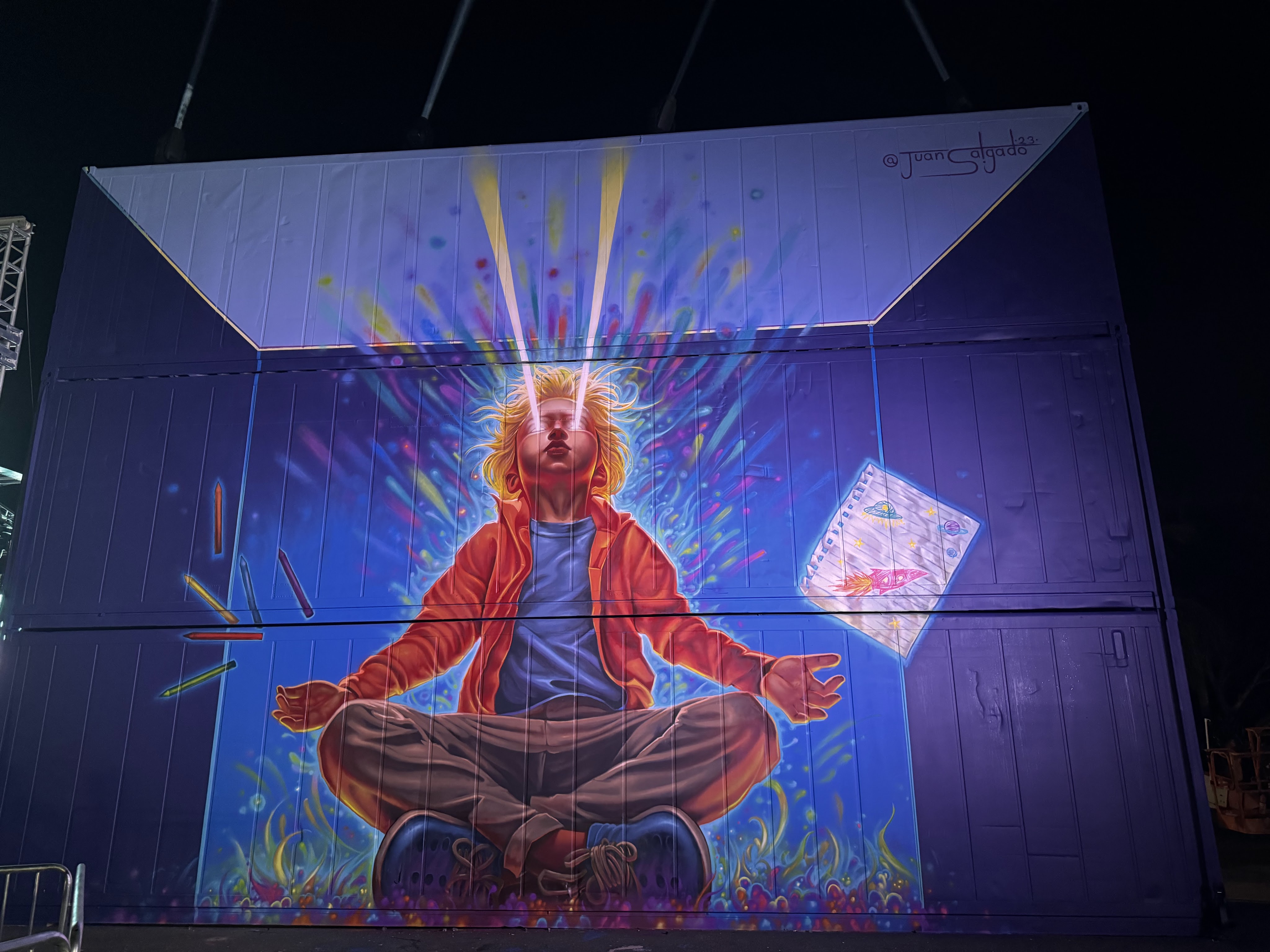
Today’s “proverb” is curtesy of Yogi Berra to old time baseball star who once said, “it’s tough to make predictions, especially about the future”! lol. Nevertheless, I predict blockchain will evolve and eventually become mainstream technology with widespread applications. Thanks to the Emurgo Academy for providing the source material of today’s post. The art work is by Gerardo Cloquell and on display in Dorado, PR.
Until next time,
Yogi Nelson

 Blockchain & AI Forum